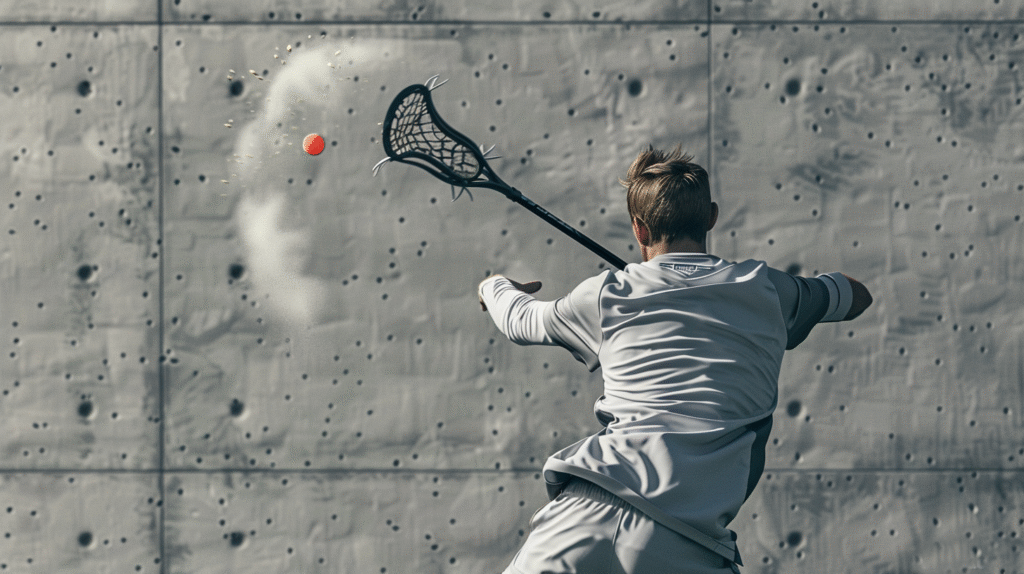
Wall ball is one of the most effective forms of Lacrosse skills training. It improves stick handling, passing accuracy, and overall on-field performance. Although wall ball drills may seem simple, a progressive routine develops hand-eye coordination, reaction speed, and muscle memory—essential skills for any serious Lacrosse player.
Whether you’re a high school player chasing college recruitment or a club athlete aiming to elevate your game, this progressive wall ball plan will guide you from foundational techniques to advanced, game-like drills.
Why Lacrosse Wall Ball Is Essential
Practicing wall ball regularly delivers a unique combination of physical, technical, and mental benefits.
It’s one of the most efficient ways to develop the essential Lacrosse skills every player should master in a controlled environment.
Physical Benefits
- Improved hand-eye coordination for catching and throwing under pressure
- Enhanced forearm, wrist, and shoulder strength for quicker stick movement
- Better reaction time and reflexes for high-speed gameplay
Technical Benefits
- Sharper passing and catching accuracy
- Smooth, consistent shooting mechanics
- Increased dexterity for dodges and stick fakes
Mental Benefits
- Builds focus and concentration
- Reinforces discipline with repetitive skill practice
- Develops confidence in handling the ball under pressure
By dedicating consistent time to wall ball, athletes can see measurable improvements in their on-field performance.
Progressive Wall Ball Skill-Building Plan Overview
The progression below can serve as the skill-development component of a broader weekly Lacrosse workout plan. It balances technique development, speed, and reaction skills while allowing adequate recovery. Adapt intensity and volume for age and skill level.
| Day | Focus | Key Activities | Duration |
|---|---|---|---|
| Monday | Basic Catch & Throw | Stationary passes, one-handed throws, wall catches | 30–40 min |
| Tuesday | Footwork Integration | Passing on the move, shuffle & pivot drills | 30–45 min |
| Wednesday | Off-Hand Training | Left-hand passes & catches, crossover drills | 30–35 min |
| Thursday | Accuracy & Targeting | Hit specific targets, distance throws, rapid-fire wall drills | 40–50 min |
| Friday | Game-Like Simulation | Rapid reaction wall drills, combo passing/shooting | 45–60 min |
| Saturday | Active Recovery | Light wall ball, stick mobility, stretching | 20–30 min |
| Sunday | Rest & Analysis | Review video, mental visualization, strategy planning | – |
This structured approach ensures each aspect of wall ball mastery is addressed progressively while preventing burnout and overuse injuries.
Monday: Basic Catch and Throw Fundamentals
Every successful wall ball session begins with fundamental Lacrosse stick-handling drills performed slowly and with control. Correct technique ensures efficiency, prevents injuries, and builds a strong foundation for advanced drills.
Drills:
- Stationary passes: Stand 5–10 feet from the wall, focus on smooth, controlled throws
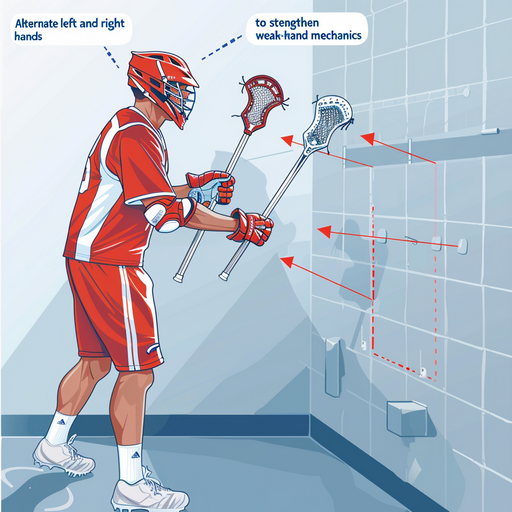
- One-handed throws: Alternate left and right hands to strengthen weak-hand mechanics
- Wall catches: Emphasize soft hands and secure cradle upon catching
Key Tips:
- Keep elbows slightly bent and relaxed to absorb impact
- Focus on a consistent throwing motion
- Begin each session with a 5-minute wrist and shoulder warm-up
💡Pro Tip: Quality over speed, control every throw before adding distance or intensity.
Tuesday: Footwork Integration
Adding movement while practicing how to throw and catch a Lacrosse ball helps those fundamental techniques translate into in-game performance. Agility and footwork are critical for maintaining balance and accuracy under defensive pressure.
Drills:
- Side-to-side shuffle while throwing and catching
- Pivot drills: Throw, pivot, and catch in different directions
- Short sprint to wall, receive, throw back immediately
Transition Tip: Combine footwork with short bursts of speed to simulate dodging a defender while maintaining stick control.
Wednesday: Off-Hand Mastery
A strong off-hand is a game-changer. Practicing your weaker side improves versatility and unpredictability on the field.
Drills:
- Crossover passes: Switch hands mid-drill for ambidextrous development
- Weak-hand stationary throws and catches
- Wall jab drills: Quick touches with off-hand only
Pro Tip: Treat your off-hand like a new skill, start slow, gradually increase speed and complexity.
Thursday: Accuracy and Targeting
Accuracy separates good players from great ones. Hitting precise spots on the wall while moving or stationary hones aim for passes and shots during games.
Drills:
- Target circles: Stick specific marks on the wall and aim for consistency
- Rapid-fire throws: Alternate short, medium, and long distances
- Angle drills: Catch and throw at different angles to simulate game scenarios
Tips for Success:
- Focus on technique first, speed second
- Keep feet aligned to the target for proper body mechanics
- Track progress by counting consecutive target hits
Friday: Game-Like Simulation
By now, strength, dexterity, and accuracy are developing. Game simulation drills connect skills to real-field scenarios.
Activities:
- Rapid reaction wall drills: Coach or partner calls directions randomly
- Combo passing/shooting: Multiple passes followed by a shot at a target
- Simulated under-pressure wall ball: Add a defender or timed challenge
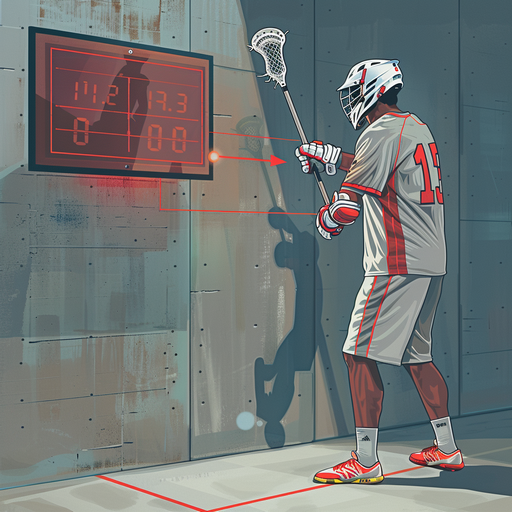
Goal: Combine technical skill with mental processing speed and decision-making.
Saturday: Active Recovery
Recovery is often overlooked but essential for long-term skill retention and injury prevention.
Suggestions:
- Light wall ball focusing on fluid movements
- Stick mobility exercises: rotate wrists, forearms, and shoulders
- Gentle stretching and yoga for flexibility
💡Pro Tip: Active recovery improves blood flow without fatiguing the muscles, allowing faster adaptation of new skills.
Sunday: Rest and Analysis
Rest isn’t just for the body, it’s for the mind. Analyze performance and visualize successful execution.
Focus Areas:
- Watch video footage to identify strengths and weaknesses
- Mental visualization of perfect catches, throws, and movements
- Plan upcoming week’s drills with slight progression
Remember: Overtraining leads to sloppy technique and fatigue. Rest is a strategic component of mastery.
Wall Ball Safety and Injury Prevention
Maintaining long-term performance requires a focus on safety:
- Warm up with dynamic stretches to prepare wrists, shoulders, and forearms
- Start with controlled throws and gradually increase speed
- Use proper stick grip and maintain soft hands to prevent strain
- Include mobility work for joints and muscles
- Avoid overuse, mix wall ball with field practice
FAQ: Lacrosse Wall Ball Training
What are the main benefits of wall ball training?
Improves stick skills, hand speed, accuracy, and consistency, all with high reps in a short time.
How often should players include wall ball in their weekly training?
3–5 sessions per week, 30–45 minutes each, is a solid balance.
Should drills change during season?
During games, reduce intensity; focus on maintenance, skill reinforcement, and injury prevention.
What’s the key to rapid improvement?
Consistency, progressive challenge, and proper mechanics are non-negotiable.
How important is recovery?
Extremely. Recovery consolidates motor learning and prevents overuse injuries.
Takeaway: Progress Your Wall Ball Mastery
A progressive wall ball plan develops stick skills, accuracy, and mental sharpness. Starting with the core Lacrosse fundamentals, then gradually integrating movement, off-hand work, and game simulation, creates a clear path toward continuous improvement.
Consistency is the secret weapon: each session strengthens muscle memory, reflexes, and confidence. Stick with the plan, focus on quality, and watch your Lacrosse skills transfer seamlessly to the field.
💡Remember: Every controlled throw, catch, and pivot builds the foundation for on-field dominance. Master wall ball today, and dominate tomorrow.
Ready to unlock your full potential ?