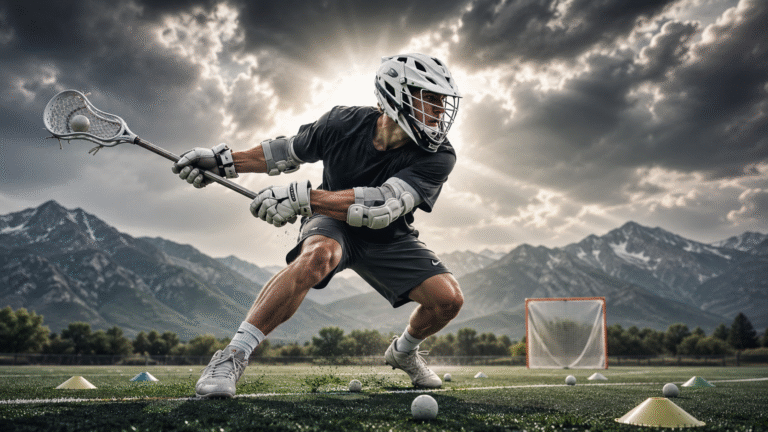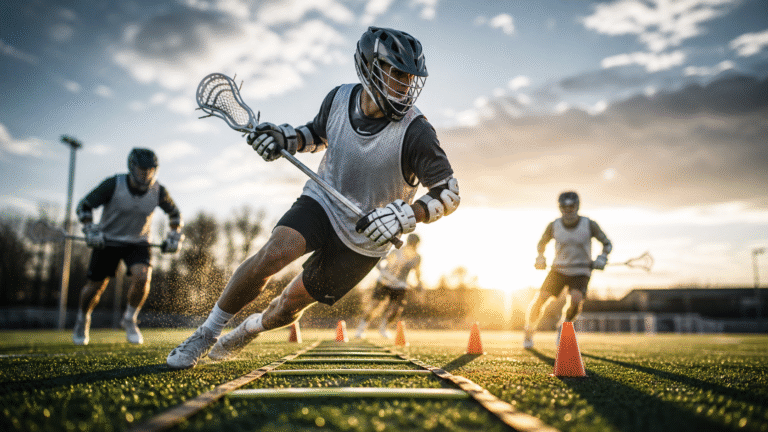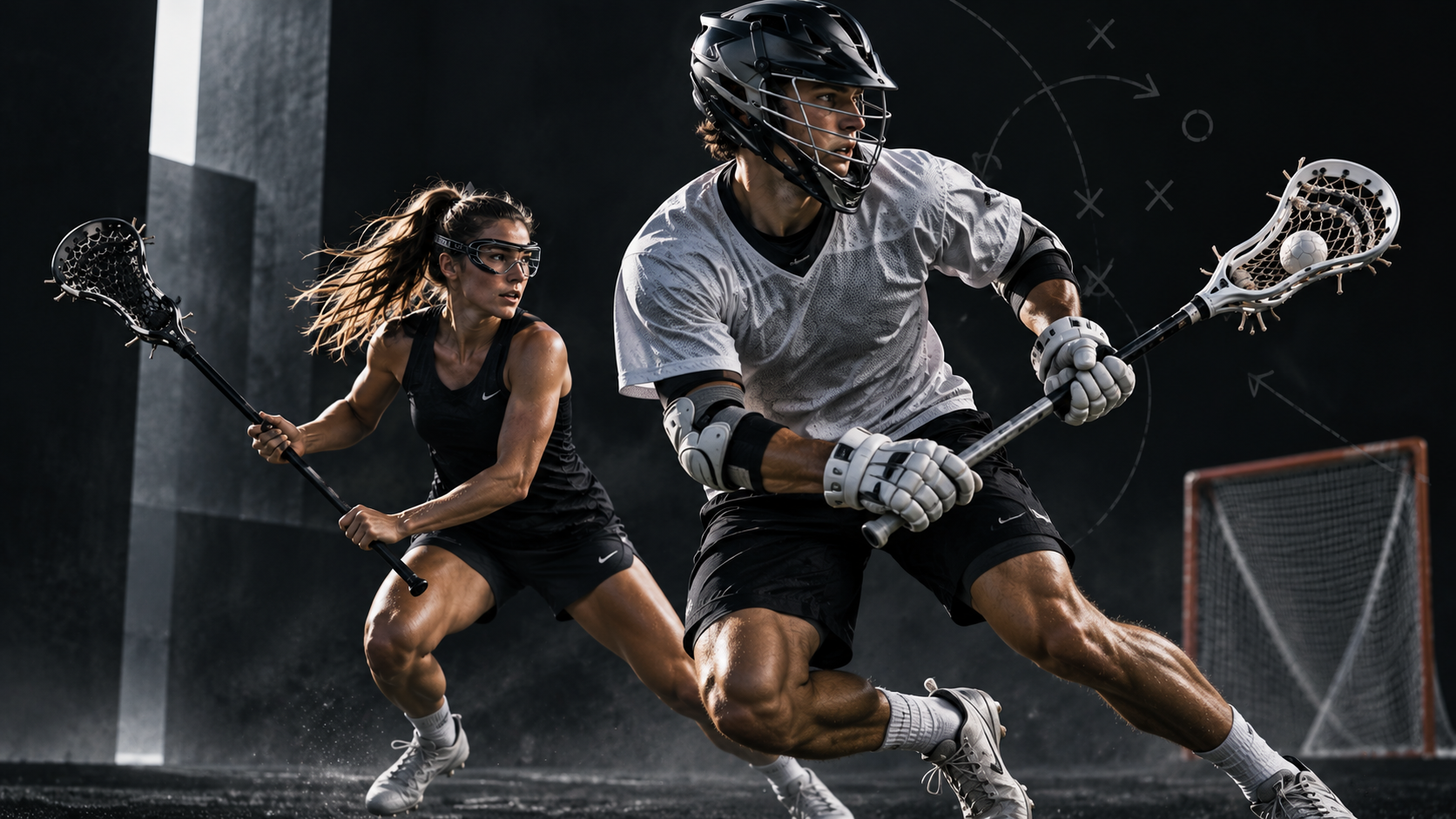
Lacrosse demands a unique combination of stick control, athleticism, decision-making, and teamwork. The 10 essential Lacrosse skills every player should master are cradling, catching, passing, ground balls, shooting, dodging, weak-hand control, footwork, defense, and field awareness. Together, these abilities create the foundation for confident, effective play at every level.
Whether you are a beginner learning the game in California or a competitive player preparing for a tournament in New York, developing these fundamentals will make you more reliable in every situation. Master the basics first, then build speed, creativity, and game intelligence on top of them.
Build Elite Lacrosse Stick Handling Skills
Stick control is the foundation of almost everything a player does with the ball. Before worrying about advanced moves or highlight-reel goals, players need to feel comfortable carrying, protecting, and controlling the ball under pressure.
Skill #1: Master the Lacrosse Cradling Technique
Cradling keeps the ball secure in the pocket while you move. A good Lacrosse cradling technique allows you to sprint, change direction, absorb contact, and scan the field without constantly checking whether the ball is still in your stick.
The movement should come primarily from the wrists and arms rather than exaggerated swings of the entire stick. Players should also learn to cradle with the stick in different positions because defenders will attack from different angles.
If you are learning how to cradle a Lacrosse ball while running, begin slowly. Walk while maintaining control, progress to jogging, then add full-speed sprints and changes of direction.
Practice:
- One-handed and two-handed cradling
- Cradling with both the dominant and non-dominant hand
- Switching hands while moving
- Protecting the stick with your body
- Cradling while accelerating and changing direction
The goal is not simply to keep the ball in the pocket. Cradling should eventually become automatic, allowing your eyes to stay up and focused on the field.
Skill #2: Develop Your Weak Hand
Players who can only use one hand become predictable. A defender can force them toward their weaker side and dramatically reduce their passing, shooting, and dodging options.
Learning how to improve your weak hand in Lacrosse requires repetition rather than complicated drills. Wall ball is particularly effective because it produces hundreds of touches in a short session.
A simple progression is to complete 25 catches and passes with your weak hand, then 50, then 100. Add weak-hand cradling, ground balls, and shooting as your confidence improves.
For players wondering how to improve Lacrosse stick skills overall, training both hands is one of the highest-value habits they can develop. Being comfortable on either side makes you harder to defend and gives you more solutions when a play develops unexpectedly.
Master Lacrosse Passing and Catching
Great offenses depend on players who can move the ball quickly and reliably. Lacrosse passing and catching may look basic, but these two skills separate fluid offenses from teams that constantly lose possession.
Skill #3: Catch the Ball Consistently
Learning how to catch a Lacrosse ball consistently begins with giving the passer a visible target. Keep your hands relaxed, track the ball into the head of the stick, and allow the stick to move slightly backward as the ball arrives.
This soft receiving motion helps absorb the force of the pass rather than letting the ball bounce out.
Avoid snapping aggressively at the ball. Instead, focus on tracking it all the way into the pocket.
As your technique improves, practice catching:
- On both sides of your body
- While running
- Over your shoulder
- In traffic
- With your non-dominant hand
Players in competitive Lacrosse programs from Maryland to Massachusetts rarely receive perfect passes every time. Developing a large catching radius makes you a more dependable teammate.
Skill #4: Pass With Accuracy and Timing
Knowing how to pass accurately in Lacrosse requires more than throwing directly toward another player. Good passing combines mechanics, timing, pace, and anticipation.
Keep your hands separated on the stick, rotate through your shoulders, and finish the motion toward your target. Whenever possible, lead a moving teammate rather than passing behind them.
The correct pass also depends on the situation. A short feed near the crease requires different touch than a long clearing pass across the field.
| Skill | Primary Goal | Common Mistake | Best Training Focus |
|---|---|---|---|
| Cradling | Maintain possession | Looking at the stick | Cradle while moving |
| Catching | Secure the pass | Snapping at the ball | Soft hands and tracking |
| Passing | Hit the target in stride | Passing behind teammates | Wall ball and partner passing |
| Ground balls | Win possession | Reaching with the stick | Run through the ball |
| Shooting | Combine accuracy and power | Using only the arms | Footwork and body rotation |
| Dodging | Create separation | Dodging without a purpose | Change speed and direction |
| Weak hand | Become less predictable | Avoiding the weak side | Daily repetitions |
| Footwork | Improve positioning | Crossing feet unnecessarily | Short, controlled steps |
| Defense | Disrupt the offense | Chasing checks | Position and leverage |
| Field awareness | Make faster decisions | Watching only the ball | Scan before receiving |
These essential Lacrosse skills are interconnected. Better catching creates faster passing, faster passing improves offensive movement, and better stick control gives players more time to make smart decisions.
Win Possession With Lacrosse Ground Ball Skills
Ground balls can determine possession, momentum, and ultimately games. At every level of Lacrosse in the USA, teams value players willing to compete for loose balls.
Skill #5: Scoop Ground Balls at Full Speed
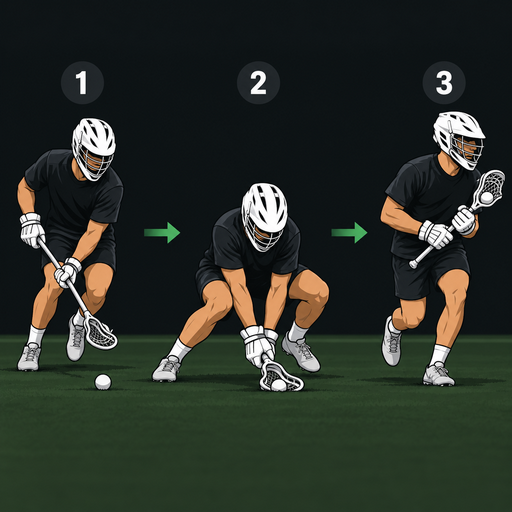
The key to strong Lacrosse ground ball skills is approaching the ball aggressively rather than slowing down and reaching for it.
If you want to know how to pick up ground balls in Lacrosse, remember three fundamentals: get low, place your hands correctly, and run through the ball.
Your front hand should remain close to the head of the stick while your back hand stays lower on the shaft. Bend your knees, lower your body, scoop through the ball, then immediately bring the stick toward a protected position.
In traffic, use your body to shield the ball from opponents. Once possession is secured, move away from pressure and look for the next pass.
Ground-ball training becomes more realistic when players practice under pressure. Coaches can roll balls into contested areas and have two players compete for possession before passing to a teammate.
A technically perfect scoop performed slowly is useful for beginners. A fast, controlled scoop under pressure is what translates to games.
Skill #6: Use Footwork to Create Better Positioning
Footwork supports nearly every Lacrosse action. It helps attackers create separation, midfielders change direction, defenders maintain leverage, and players reach loose balls before opponents.
Strong footwork starts with balance. Keep your knees slightly bent and your weight positioned so you can accelerate in any direction.
Useful training includes:
- Lateral shuffles
- Short acceleration drills
- Backpedal-to-sprint transitions
- Cone change-of-direction drills
- Approach-and-recover defensive movements
The objective is not simply to have fast feet. Players need efficient feet that put their bodies in the right position for the next play.
Create Offense With Lacrosse Shooting and Dodging Techniques
Once players can control possession, they need the ability to create scoring opportunities. Shooting and dodging transform fundamental stick skills into offensive production.
Skill #7: Develop a Repeatable Lacrosse Shooting Technique
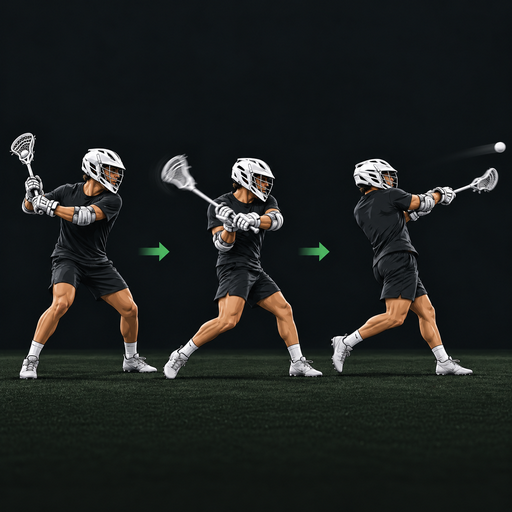
A strong Lacrosse shooting technique combines accuracy, body rotation, hand positioning, footwork, and follow-through.
Players often focus too heavily on velocity. A powerful shot that consistently misses the cage is less valuable than a controlled shot placed where the goalie has difficulty reaching it.
When learning how to shoot a Lacrosse ball accurately, start with stationary shooting and aim at specific areas of the goal. Once your mechanics are repeatable, add movement, time-and-room shots, shots on the run, and finishes from different angles.
Generate power from your entire body. Your legs initiate the movement, your hips and torso rotate, your hands drive the stick, and the follow-through completes the shot.
Accuracy should come first. Speed becomes much more valuable when you can control where the ball goes.
Skill #8: Learn Effective Lacrosse Dodging Techniques
Dodging is about creating an advantage, not performing the most complicated move possible.
The best Lacrosse dodging techniques use changes of speed, direction, and body position to force defenders to react. Common options include the split dodge, roll dodge, face dodge, and question-mark dodge.
If you are learning how to dodge a defender in Lacrosse, attack with a purpose. Approach the defender at enough speed to make them commit, then change direction or accelerate past their leverage point.
One of the most important concepts is the speed change. Moving at maximum speed throughout a dodge can actually make the player easier to read. A controlled approach followed by explosive acceleration often creates more separation.
Dodging also does not always need to end with a shot. A successful dodge may draw a second defender and create an open passing lane for a teammate.
That principle is especially important in modern team offenses, where individual movement is most valuable when it creates opportunities for the entire unit.
Develop Lacrosse Defensive Skills and Field Awareness
Physical skills can help a player execute a play. Game intelligence helps the player recognize which play to execute and when.
The final two skills connect individual technique to team performance.
Skill #9: Build Reliable Lacrosse Defensive Skills
Strong Lacrosse defensive skills begin with positioning rather than stick checks.
A defender’s first responsibility is to stay between the offensive player and the most dangerous area of the field. Good defenders maintain balance, control their approach, communicate with teammates, and understand where support is coming from.
Aggressive checks can be useful, but chasing the stick often causes defenders to lose body position. Controlled footwork and leverage are more reliable.
Defenders should practice:
- Closing space under control
- Matching an attacker’s hips rather than chasing the stick
- Forcing opponents toward less dangerous areas
- Recovering after being beaten
- Communicating slides and switches
- Transitioning immediately after possession changes
From youth leagues in Texas to competitive high school programs around Baltimore, defense works best as a coordinated unit. Communication is therefore just as important as individual technique.
Skill #10: Improve Lacrosse Field Awareness
Field awareness is the ability to recognize space, pressure, teammates, opponents, and developing opportunities before they become obvious.
Players searching for how to improve Lacrosse field awareness should begin with one simple habit: scan the field before receiving the ball.
Knowing where your next option is before the catch reduces decision time. Instead of receiving the ball, looking around, and then deciding what to do, experienced players are already processing the next action.
Field awareness includes understanding:
- Where teammates are positioned
- Where defensive pressure is coming from
- When to pass versus carry the ball
- Where open space is developing
- When a teammate needs defensive support
- How a possession may develop two or three actions ahead
Watching high-level Lacrosse can accelerate this learning. Instead of following only the ball, watch off-ball players and ask why they move when they do. Whether you are watching college Lacrosse or elite competition, pay attention to spacing, slides, rotations, and decision-making.
This is where the physical and mental parts of Lacrosse come together. The best players do not simply execute skills well—they recognize the right moment to use them.
FAQ: Essential Lacrosse Skills Every Player Should Know
What skills do I need to play Lacrosse?
The most important skills are cradling, catching, passing, ground-ball pickup, shooting, dodging, weak-hand control, footwork, defense, and field awareness. Beginners should prioritize ball control, passing, catching, and ground balls before moving toward more advanced techniques.
How can I improve Lacrosse stick skills faster?
If you are wondering how to improve Lacrosse stick skills, consistency matters more than occasional long sessions. Wall ball, cradling drills, quick-stick passing, hand switching, and weak-hand repetitions can all be practiced regularly. Short sessions several times per week generally provide more useful repetition than infrequent practice.
How can I catch a Lacrosse ball consistently?
To learn how to catch a Lacrosse ball consistently, show the passer a clear target, watch the ball into the stick, keep your hands relaxed, and cushion the catch by giving slightly with the ball. Progress from stationary catches to receiving passes while moving and under pressure.
How can I improve my weak hand in Lacrosse?
Build your non-dominant side through daily repetition. Practice wall ball, cradling, passing, catching, ground balls, and eventually shooting with the weak hand. Avoid switching immediately back to your dominant hand whenever a drill becomes difficult.
How can I improve Lacrosse field awareness during games?
Scan before receiving the ball, communicate constantly, and practice keeping your head up while carrying. Watching college and professional games can also help: focus on off-ball movement, defensive rotations, spacing, and passing decisions rather than following only the ball.
Takeaway: Master the Essential Lacrosse Skills That Build Complete Players
Becoming a complete Lacrosse player starts with fundamentals. Cradling, catching, passing, ground balls, shooting, dodging, weak-hand control, footwork, defense, and field awareness give players the tools to contribute in almost every game situation.
Do not try to master everything overnight. Build reliable technique first, then introduce speed, pressure, and game-like decision-making. The biggest gains often come from consistent repetitions of simple skills rather than constantly searching for advanced drills.
Whether your next game is in Los Angeles, Chicago, New York, or your hometown field, strong fundamentals travel everywhere. Put in the reps, trust your stick, keep your head up—and go make the next play.
Ready to unlock your full potential ?