To stop dropping the ball in women’s Lacrosse, relax your grip, let your top hand lead, and cradle with a smooth wrist-and-forearm motion instead of shaking the stick. Keep your bottom hand loose enough for the shaft to rotate, then build control while standing before adding movement.
If drops happen during cuts or hand switches, practice those transitions slowly rather than cradling harder. Reliable possession comes from controlled movement, balanced footwork, and a properly adjusted legal pocket.
This guide breaks down the technique, identifies common mistakes, and gives you a practical progression for keeping your eyes up and the ball secure.
Women’s Lacrosse Cradling Technique: Build a Controlled Motion
Cradling moves the stick head through a curved path that helps keep the ball seated in the pocket. Your wrists and arms work together; your shoulders should stay relaxed.
Think of guiding the ball through a smooth arc rather than bouncing it inside the head.
Lacrosse Cradling Grip and Hand Placement
If you’re starting women’s Lacrosse, begin with this basic two-handed grip:
- Place your top hand a few inches below the throat, where the head meets the shaft
- Position your bottom hand near the butt end
- Let the handle rest toward your fingers rather than burying it tightly in your palms
- Keep your elbows comfortable and your knees slightly bent
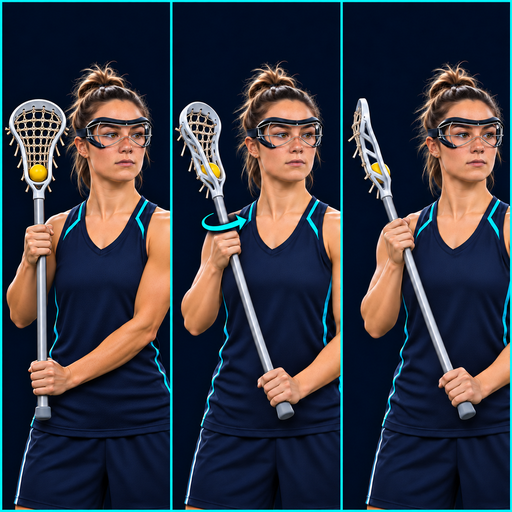
Your top hand controls the cradle. Your bottom hand supports the stick while allowing the shaft to turn. USA Lacrosse’s teaching materials describe this combination of top-hand rotation, relaxed lower-hand support, and coordinated wrist-and-elbow movement in the women’s game.
How Tightly Should You Hold a Women’s Lacrosse Stick?
Hold it firmly enough to control the shaft, but loosely enough to rotate your wrists freely. If your forearms tense or your bottom hand prevents rotation, ease your grip.
Start with a gentle palm-in, palm-out movement of your top hand. Allow your forearm to follow naturally. Keep the head comfortably outside your face area, and avoid sweeping it across your face.
A useful cue is: soft hands, steady arc.
Common Lacrosse Cradling Mistakes: Diagnose the Drop
“Why does the ball fall out when I cradle in Lacrosse?” The answer often becomes clearer when you identify exactly when the drop happens.
A ball lost while standing suggests a different problem from one lost during a sprint. Change one thing at a time so you can recognize what helps.
| When the ball drops | Likely issue | First adjustment |
|---|---|---|
| During stationary practice | Jerky motion or a rigid grip | Relax your bottom hand and slow the cradle |
| As you start running | Abrupt acceleration or a changing stick angle | Progress from walking to jogging |
| During a sharp cut | Wide arm swing or poor balance | Shorten your steps and control the head |
| While switching hands | Interrupted motion or an unsupported exchange | Rehearse the switch slowly with both hands involved |
| Immediately after catching | Stiff reception or rushed movement | Cushion the catch before carrying |
These are troubleshooting starting points, not definitive diagnoses. A coach watching several repetitions can distinguish technique problems from equipment issues.
Check the Pocket Before Changing Everything
Does pocket depth affect cradling in women’s Lacrosse? Yes. Pocket shape, depth, and string tension affect how the ball settles and releases.
A poorly formed pocket may make learning harder, but deepening it beyond legal limits is not a solution. Ask a knowledgeable coach or stringer to check both its function and legality under your competition’s rules. USA Lacrosse provides separate youth and high school rules resources, so use the guidance that matches your level.
If your cradle suddenly feels different, check your stick setup for loose or damaged strings or changes in the pocket after wet practice.
Beginner Lacrosse Cradling Drills That Build Eyes-Up Control
The best beginner Lacrosse cradling drills add one challenge at a time: movement, visual attention, then decisions.
These women’s Lacrosse cradling drills to practice at home require only a stick, ball, and clear space. Use a soft practice ball indoors and stay away from windows, pets, and other people.
Stationary Control: Establish Your Baseline
Cradle for 20 seconds with your dominant hand on top, then repeat with your other hand on top. Complete three rounds per side.
Focus on relaxed shoulders and a consistent arc. If the ball drops repeatedly, shorten the interval to 10 controlled seconds.
Count clean intervals rather than chasing a long streak with deteriorating form.
Eyes-Up Recognition: Stop Watching the Pocket
Wondering how to cradle in women’s Lacrosse without looking at the ball? Give your eyes a simple task.
Ask a partner to hold up different numbers of fingers while you cradle. Call out each number without stopping your stick movement.
Practicing alone? Choose three objects ahead of you and name them in a changing order. Begin stationary, then walk.
Keeping your eyes up while you carry helps you stay aware of what’s around you while you keep the ball secure.
Walk, Turn, and Reset
Set two markers several yards apart. Walk between them while cradling, make a controlled turn, and return.
Complete five trips with each hand on top. Progress to an easy jog only when walking feels repeatable.
A practical benchmark is five clean trips with your eyes mostly up. It is a training target, not an official standard. Whether you practice in a driveway or at a community field, repeatable control matters more than speed.
Running While Cradling a Lacrosse Ball: Cuts and Hand Switches
Running introduces acceleration, impact, and changing body positions. Your cradle needs to adapt without becoming a large, frantic arm swing.
Start at a walking pace, then jog, then accelerate over short distances. Keep your knees responsive and avoid locking your upper body.
How to Keep the Ball in Your Lacrosse Stick When Changing Direction
Approach your marker under control. Use the same footwork you’d use to dodge here. Shorten your final steps, lower your hips slightly, and push into the new direction while keeping your cradle smooth.
Avoid throwing your stick outward as a counterbalance. That exposes the ball and makes the head harder to control.
Practice gentle curves before sharp cuts. Then add a partner who points left or right so you must react rather than follow a memorized route.
Switching Hands in Women’s Lacrosse
Learn the exchange while stationary:
- Bring the shaft into a comfortable position in front of your torso
- Slide your current top hand lower to create room
- Move your other hand up to become the new top hand
- Settle your lower hand near the butt end and resume the cradle
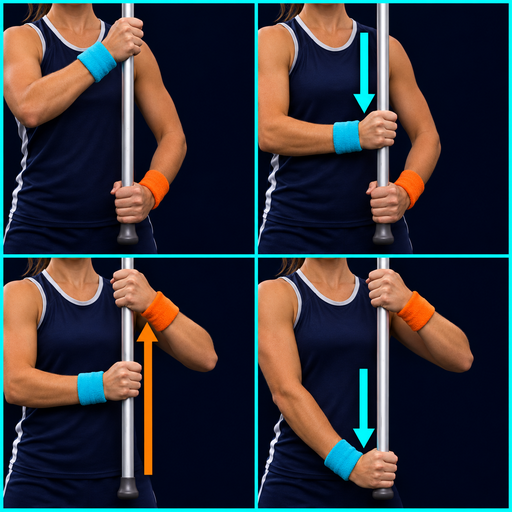
Keep control of the shaft throughout the exchange. Do not toss it between your hands or swing the head across your face.
Next, switch while walking. Finally, practice switching before a directional change when doing so moves your stick away from an approaching defender.
Women’s Lacrosse Ball Protection: Carry With a Purpose
Women’s Lacrosse stick control should help you create the next play. Keeping possession matters, but carrying without scanning can leave an open teammate waiting.
Protect the Ball With Position and Footwork
Learning how to protect the ball without body checking in women’s Lacrosse starts with spacing.
Move your feet to keep your body between the defender and your stick, while maintaining legal stick positioning. Change direction to create separation rather than pushing through an opponent.
Do not use your free arm to shove or hold a defender. Avoid trapping the stick head against your body or holding it close to your head to prevent a check; USA Lacrosse identifies these positions in its illegal-cradle guidance. Checking permissions also vary by age and competition.
Practice protection first against a shadow defender who follows without checking. Add pressure with coach supervision and the rules appropriate to your level.
How to Transition From Cradling to Passing in Women’s Lacrosse
Find your target early. Move your hands into your normal passing position, bring the stick into a controlled throwing setup, and release toward your teammate.
Avoid adding an automatic extra cradle after every catch. Sometimes the best decision is an immediate pass.
Try this sequence with a partner: catch, carry three steps, pass. Then vary the number of steps so the release follows a decision rather than a fixed rhythm.
FAQ: Women’s Lacrosse Cradling Questions Answered
In Lacrosse, should beginners cradle with one hand or two?
Start with two hands. This gives beginners support and makes the transition to passing easier. Add one-handed carrying after you can control the stick consistently and understand legal protection.
Can I cradle too much in Lacrosse?
Yes. Unnecessary cradles can delay a pass, advertise your next move, or expose your stick. Cradle to maintain possession while moving and assessing options, then release when the opportunity appears.
Should my Lacrosse cradle match every running step?
No fixed step-to-cradle ratio is required. Aim for coordinated, comfortable movement. Forcing one cradle per step can make your motion rigid when your stride changes.
How often should I practice cradling a Lacrosse ball?
A manageable starting routine is five to ten focused minutes on most practice days. Work both sides and stop or reset when fatigue makes your technique sloppy.
Why can I cradle a Lacrosse ball while standing still but not during games?
Games add pressure, movement, and divided attention. Bridge that gap with progressive drills: walking, jogging, reacting to a partner, and finally carrying against controlled defensive pressure.
Takeaway: Build Confident Women’s Lacrosse Cradling
Better women’s Lacrosse cradling starts with relaxed hands and a smooth, controlled motion. Establish your grip, identify when the ball drops, and check that your pocket works properly within the rules.
Build from stationary repetitions to eyes-up walking, running, cuts, and hand switches. Use footwork and legal positioning to protect possession, then rely on sound throwing mechanics to deliver the pass when a teammate opens up.
Measure progress by clean, purposeful repetitions, not how fast you can shake the stick. Give both hands consistent attention and raise the challenge gradually.
Step onto the field ready to carry with confidence, find your teammate, and make the next play count.
Ready to unlock your full potential ?