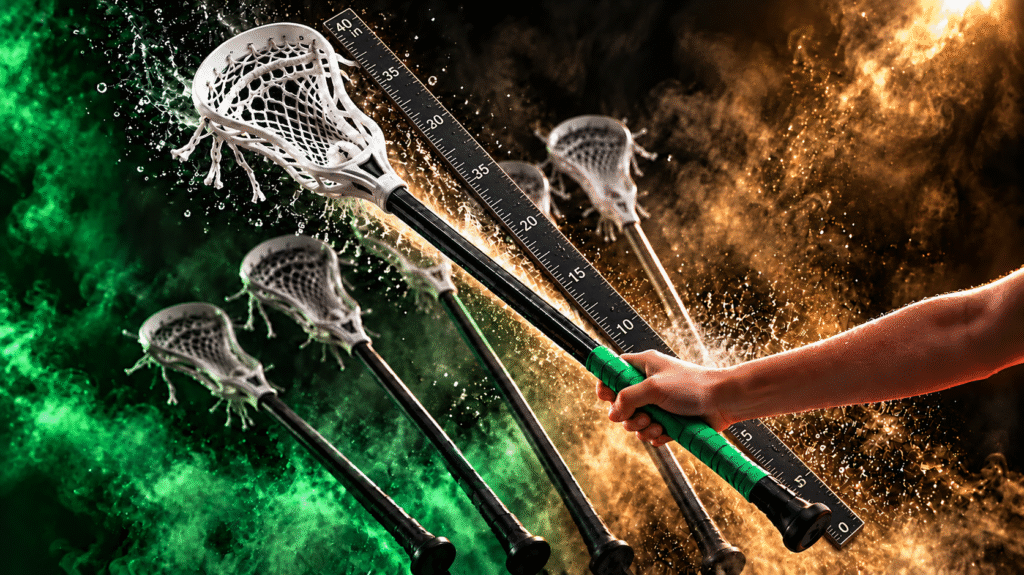
The right youth Lacrosse stick is legal for your child’s division and easy to control today.
Under USA Lacrosse’s 2026 boys’ rules, short sticks measure 37–42 inches for 8U and 10U, and 40–42 inches for 12U and 14U, including the head. Girls’ youth divisions have different requirements, with smaller sticks allowed at younger levels.
Start with your league’s rules, then consider your child’s strength, grip, and ability to pass, catch, and scoop comfortably. Age identifies the rules; practical fit guides the choice.
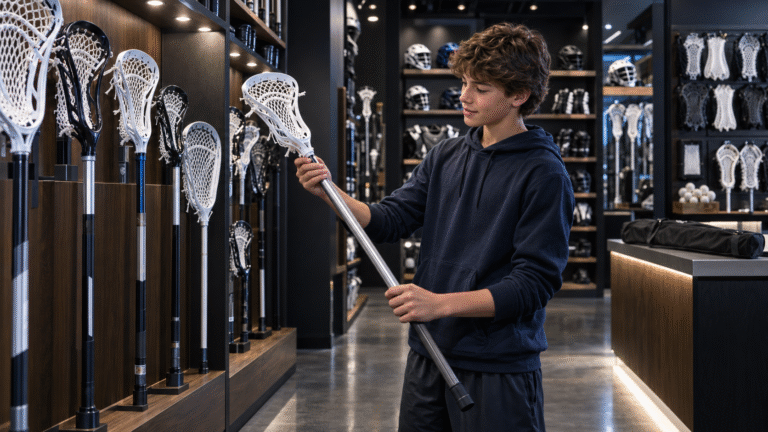
Choosing Lacrosse gear for your child starts with a stick they can control; this guide explains how to measure, compare, and adjust one before the first practice.
Youth Lacrosse Stick Size Chart: Start With Your Division
A useful youth Lacrosse stick size chart separates equipment rules from personal fit. When choosing the right Lacrosse stick, treat the legal range as a boundary, not a reason to buy the longest option.
Youth Lacrosse stick length requirements differ between boys’ and girls’ divisions. Use the chart below as a starting point, then confirm your league’s requirements. All measurements include the head, shaft, and end cap.
| Division | Boys’ short stick | Boys’ defensive long stick | Boys’ goalie stick | Girls’ field stick | Girls’ goalie stick |
|---|---|---|---|---|---|
| 8U | 37–42 inches | Not permitted | 37–54 inches | Smaller sticks allowed; confirm with league | Goalies not recommended at this level |
| 10U | 37–42 inches | 47–54 inches | 37–54 inches | Smaller sticks allowed; confirm with league | 35½–52 inches |
| 12U | 40–42 inches | 52–72 inches | 40–72 inches | 35½–43¼ inches | 35½–52 inches |
| 14U | 40–42 inches | 52–72 inches | 40–72 inches | 35½–43¼ inches | 35½–52 inches |
Girls’ defenders use the same field-stick length range as other girls’ field players; they do not use the boys’ defensive long-stick ranges. These measurements reflect USA Lacrosse’s 2026 youth rules and the NFHS field-stick specifications referenced for older girls’ divisions.
For 6U, the equipment appendix recommends a stick no longer than the distance from the ground to the player’s waist, with no minimum. However, the rulebook’s summary chart groups 6U with 8U differently. Confirm your program’s interpretation before buying or cutting equipment.
Boys’ Youth Lacrosse Stick Length
For an 8U beginner, start by comparing legal short sticks near the lower end of the range. Have the coach watch your child cradle, pass, and scoop with each option before deciding.
Playing defense does not automatically mean your child needs a long stick. Check with the coach before purchasing a defensive pole.
Girls’ Youth Lacrosse Stick Length
Within your division’s permitted range, choose a length your child can control comfortably. Watch whether she can change hands, scoop ground balls, and pass without the butt end catching on her clothing or equipment.
Before shortening a stick, have the coach assess her grip and technique to determine whether length is actually the problem.
How to Measure a Lacrosse Stick Correctly
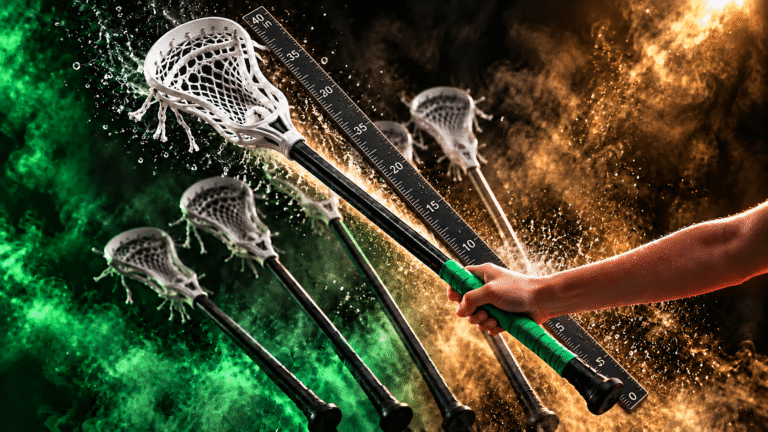
Measure the assembled stick from the end of the butt cap to the top of the head’s scoop. A shaft’s advertised length does not tell you the complete playing length.
Does Lacrosse Stick Length Include the Head?
Yes. When comparing a complete stick with a legal length range, include the head and installed end cap.
Follow these steps:
- Attach the head securely to the shaft
- Install the end cap fully
- Lay the stick straight on a flat surface
- Extend a tape measure along its length, from the butt end to the scoop’s farthest edge
- Record the measurement in inches
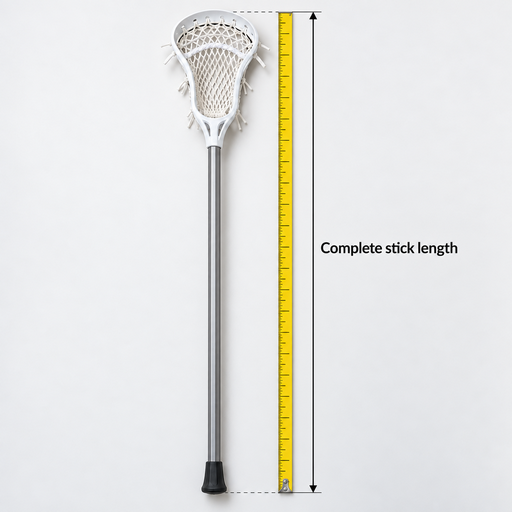
Measure the equipment itself rather than following the curve of the pocket or including loose strings.
Avoid the Shaft-Length Shopping Mistake
A product labeled “30-inch shaft” is not a 30-inch complete stick. The head adds length, while its connection to the shaft creates overlap.
When shopping online, look for:
- Complete-stick length
- Shaft-only length
- Intended age division and playing position
- Whether the listing includes a head
If the assembled measurement is unclear, ask the manufacturer or retailer. Confirming the assembled length is especially useful when choosing a Lacrosse shaft to pair with a separate head.
Remeasure after replacing either component. A familiar handle paired with a different head may produce a different overall length.
Lacrosse Stick Length by Age: Check Height and Control
Age helps identify the applicable rules, but it cannot fully describe fit. Two children in the same Chicago youth program may differ significantly in height, strength, and experience.
Should Lacrosse Stick Length Depend on Height or Age?
Use division first, then body size and control.
Lacrosse equipment sizing involves more than height: reach, grip strength, coordination, and equipment weight all affect how comfortably a child handles a stick. A tall beginner may handle a lighter, shorter legal stick better than a longer one.
Run a short comparison with a coach:
- Cradle: Can the child keep the ball controlled while walking and jogging?
- Pass: Can they throw without repeatedly dragging the butt end across their body?
- Catch: Can they present the head comfortably?
- Scoop: Can they bend their knees and collect a ground ball smoothly?
- Switch hands: Can they move the stick across their body without struggling?
Use the same drills with two legal lengths when possible.
How Can I Tell if My Child’s Lacrosse Stick Is Too Long?
Look for a pattern rather than one missed pass:
- The butt end repeatedly catches on clothing or equipment
- The child constantly moves both hands unusually close to the head
- Ground balls require awkward reaching or exaggerated movements
- The player struggles to reposition the head quickly
- Control noticeably improves with a shorter legal stick
These signs can also reflect technique, excess weight, or poor pocket setup. Have a coach assess the whole stick before shortening it.
What Size Lacrosse Stick Does a 7-Year-Old Need?
A child assigned to boys’ 8U generally needs a 37–42-inch complete short stick under the 2026 national framework. Start by testing manageable options within that range. For girls’ introductory play, ask about the program’s smaller-stick allowance before choosing a length.
Junior vs. Standard Lacrosse Stick: Match the Equipment to the Player
“Junior,” “youth,” and “standard” are shopping labels, not guarantees of legal length or suitability. Compare the actual specifications.
A junior model may offer a shorter handle, slimmer grip, lighter construction, or a head intended for younger players. Those features vary by manufacturer.
Look Beyond Overall Length
Before buying, check:
- Grip diameter: Can your child hold and rotate the shaft comfortably?
- Balance: Does the head feel difficult to lift or reposition?
- Pocket quality: Does the ball release consistently?
- Compatibility: Will replacement heads and shafts fit?
- Game eligibility: Does the complete setup meet the division’s requirements?
For boys, test the grip while wearing playing gloves. A comfortable barehanded grip may feel different once equipment is on.
When Should My Child Move From a Junior to a Standard Lacrosse Stick?
Move when the current equipment becomes unsuitable, rather than at an arbitrary birthday.
Good reasons include an upcoming division change, a cramped grip, or clear improvement when testing a standard setup. A child who handles a legal junior stick comfortably does not need an upgrade simply because teammates have one.
Defense and Goalie Sticks Need Separate Decisions
What length should a youth Lacrosse defense stick be? Check the youth Lacrosse rules for your child’s division, then choose a permitted length the player can control. Girls’ defenders do not use the boys’ long-pole sizing system.
What size goalie stick does a youth player need? Boys’ and girls’ ranges differ. The 2026 girls’ youth rulebook specifies 35½–52 inches overall for goalkeeper sticks. Have the goalie coach assess balance, saves, and outlet passing before choosing a length.
Cutting a Lacrosse Stick Shorter: Plan Before You Cut
Shortening a shaft can improve fit, but removing material is permanent. Confirm the legal minimum, manufacturer guidance, and desired assembled length first.
How Much Can I Cut Off My Child’s Lacrosse Shaft?
Calculate the difference between the current complete length and your target complete length.
For example, reducing a 41-inch assembled stick to 39 inches requires removing approximately two inches from the shaft, assuming the same head and cap remain installed. The target must be legal for the player’s division.
Never calculate the cut from the shaft measurement alone.
Make the Adjustment Carefully
Have a knowledgeable equipment shop handle the cut if you lack suitable tools or experience.
The process should include:
- Confirming which end the manufacturer permits you to trim
- Removing the cap and marking the cut accurately
- Using tools appropriate for the shaft material
- Smoothing the cut edge and removing debris
- Reinstalling a secure, compatible end cap
- Measuring the finished stick again
Composite shafts need particular care because unsuitable cutting methods can damage fibers. Check warranty implications before modifying any shaft.
Whether your child plays in New York or Colorado, have the coach check the finished setup before game day.
FAQ: Youth Lacrosse Stick Sizes and Length Rules
Can My Child Use a Mini Lacrosse Stick for Games?
Do not assume so. Many mini sticks are recreational toys. A stick must meet the program’s equipment requirements; being short enough is insufficient. Ask the coach about the specific model before bringing it to a game.
Should I Buy a Longer Lacrosse Stick for My Child to Grow Into?
Choose equipment your child can control now. Extra length provides little value if it makes passing, scooping, and handling harder. Borrowing or buying a suitable used stick can help manage future replacement costs.
Are Youth Lacrosse Stick Length Rules Identical Across the USA?
Check your league’s adopted rules and any tournament requirements. USA Lacrosse publishes national youth rules, but your competition’s governing documents determine the equipment requirements you need to follow.
Can My Child Temporarily Choke Up on a Longer Lacrosse Stick?
Moving the hands closer to the head can help during certain skills and fit comparisons. It does not change the stick’s measured length, and the remaining shaft can still interfere with movement.
How Often Should I Recheck My Child’s Lacrosse Stick Size?
Check before each season, after a growth spurt, and before moving divisions. Also remeasure after replacing the head, shaft, or end cap, and reassess fit if handling becomes uncomfortable.
Takeaway: Choose a Youth Lacrosse Stick That Builds Confidence
The best youth Lacrosse stick combines legal length, comfortable handling, and room to develop sound technique.
Start with your child’s division and position, measure the entire assembled stick, and compare options using Lacrosse stick handling drills, along with cradling and ground-ball practice. Treat age charts as a starting point, then assess strength, grip, and coordination.
Junior equipment can be useful, while defense and goalie sticks require separate decisions. Before shortening a shaft, confirm the rules and get an accurate measurement.
Buy for the player your child is today, and let better control build tomorrow’s skills. Get fitted, hit the field, and play with confidence!
Ready to unlock your full potential ?