Choose attack if you enjoy creating scoring chances, midfield if you like running and contributing at both ends, defense if you enjoy anticipating opponents, and goalie if you want a specialized role built around saves and communication.
The best position for you in women’s Lacrosse matches your interests, developing skills, and team’s needs—not simply your height or speed.
Beginners should try several roles before specializing. You do not need a powerful shot to explore attack or perfect endurance to start learning midfield.
This guide explains the responsibilities, compares the skills each position requires, and gives you a practical way to find your fit.
Women’s Lacrosse Positions Explained: Understand the Field
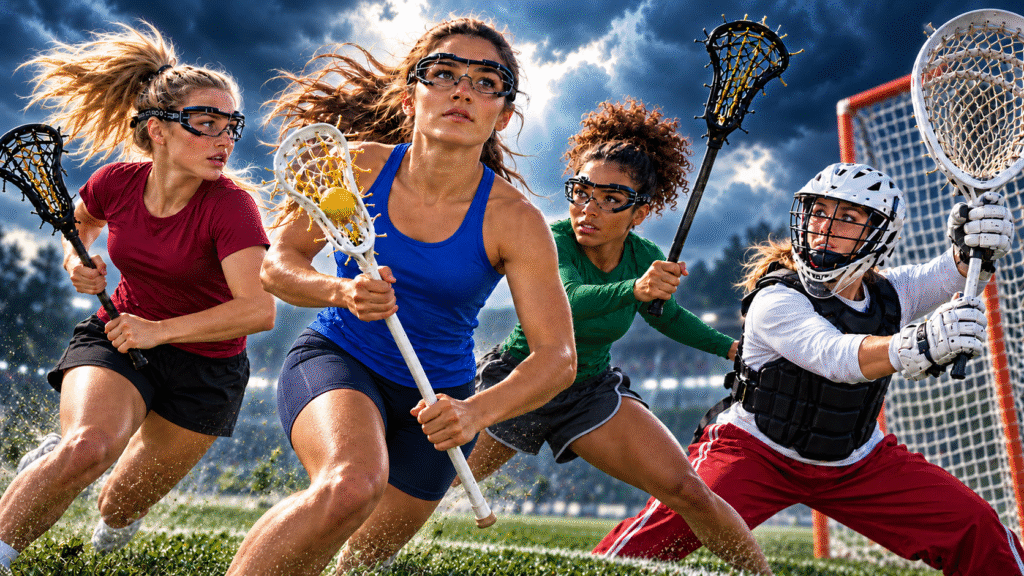
What are the positions in women’s Lacrosse? The four main groups are attackers, midfielders, defenders, and a goalie.
Under traditional women’s field Lacrosse rules, each team has 12 players on the field, including the goalie. Younger age groups may use smaller formats, so confirm which version your program plays. This guide focuses on the traditional field game familiar to US high school and college players.
Women’s Lacrosse position roles at a glance
If you are wondering what does each position do in women’s Lacrosse, start with this comparison:
| Position | Main responsibility | Skills to develop | You might enjoy it if… |
|---|---|---|---|
| Attacker | Create and finish scoring opportunities | Catching under pressure, cutting, passing, shooting | You like creative decisions near the goal |
| Midfielder | Connect offense and defense | Endurance, transition passing, ground balls, recovery runs | You enjoy variety and repeated involvement |
| Defender | Limit scoring chances and help regain possession | Footwork, anticipation, communication, clearing passes | You like solving problems and stopping opponents |
| Goalie | Make saves and organize the defense | Positioning, reactions, communication, outlet passing | You enjoy focused responsibility and leadership |
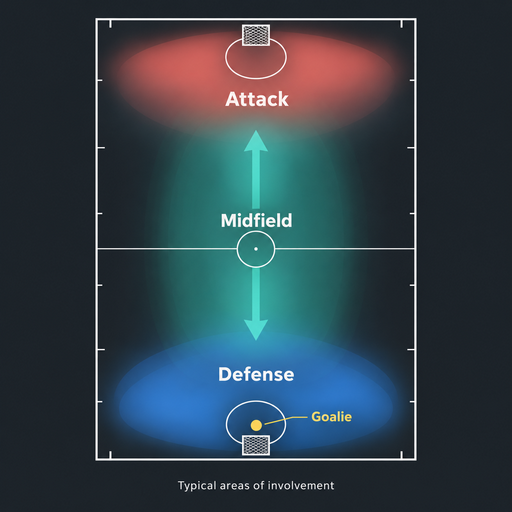
The difference between attacker, midfielder, and defender in women’s Lacrosse is mainly where each role concentrates its work. Their skills overlap: attackers apply defensive pressure after turnovers, defenders handle the ball, and midfielders need both offensive and defensive awareness.
Position names describe responsibilities, not permission to ignore the rest of the game.
Attack or Midfield: Choose Your Offensive Involvement
Attack and midfield both offer opportunities to score. The choice is whether you prefer working around the offensive goal or helping move the game between both ends.
Women’s Lacrosse attacker position: Create chances
Attackers help an offense produce good shots. That includes scoring, but also feeding teammates and creating space through off-ball movement.
You might enjoy attack if you like:
- Finding an opening before a defender notices it
- Catching a pass while moving toward goal
- Drawing defensive attention and passing to an open teammate
- Making quick decisions in crowded spaces
A beginner attacker’s useful first goal is becoming a dependable receiver. Secure the catch, protect possession, and recognize whether to shoot, pass, or reset.
You do not have to dominate every possession. A well-timed cut that opens space for someone else can be valuable even when you never touch the ball.
Women’s Lacrosse midfielder position: Connect both ends
Midfielders contribute to offense, defense, and transitions—the moments when possession changes and teams move upfield.
This role may suit you if you enjoy:
- Repeated runs followed by quick decisions
- Collecting ground balls and moving possession forward
- Recovering defensively after an attacking play
- Switching between creating chances and preventing them
Midfield generally demands sustained running, but speed alone does not make someone effective. A fast player who misses an open passing option may contribute less than a composed player who moves the ball early.
Some midfielders also take draws or compete for possession around the draw circle. These are distinct skills worth exploring; playing midfield does not automatically make you the team’s draw specialist.
Defense or Goalie: Choose How You Want to Prevent Goals
If you enjoy reading opponents, communicating, and disrupting plans, consider defense or goalie. Both roles reward concentration, but their responsibilities differ considerably.
Women’s Lacrosse defender position: Anticipate and organize
Defenders work to reduce dangerous scoring opportunities. They track cutters, pressure ball carriers, communicate about help, and support the move into offense after possession is regained.
Defense may suit you if you enjoy:
- Watching an opponent’s movement and anticipating the next step
- Staying composed when someone tries to beat you
- Calling out cutters and helping teammates organize
- Turning a defensive stop into a controlled clearing pass
Good defense starts with positioning and footwork. Chasing stick checks can pull you out of position and create openings.
Learn your competition’s rules, especially shooting space, three seconds, and permitted checking. USA Lacrosse provides separate resources for youth, high school, and other levels, so your coach should explain the rules that apply to your team.
Women’s Lacrosse goalie position: Save, communicate, reset
Goalies protect the goal, direct defenders, and help start clears with accurate outlet passes.
Consider goalie if you enjoy focused challenges, speaking up, and responding to the next play after a setback. Beginners can learn these qualities; they do not need to arrive fearless.
A useful first session should include:
- A coach explaining stance and positioning
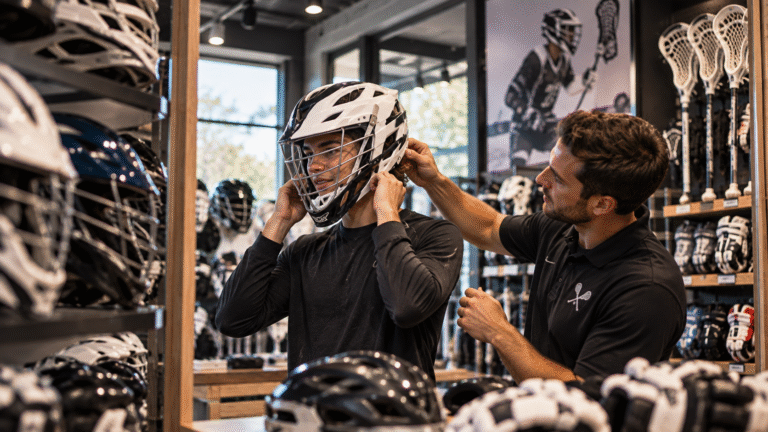
- Properly fitted, required goalie equipment
- Controlled shots appropriate to your experience
- Practice making simple outlet passes
Try the role because it interests you, rather than because nobody else volunteers. It deserves instruction and a willing player.
How to Choose Your Women’s Lacrosse Position
If you are asking, “What position should I play in women’s Lacrosse?” evaluate three things together: what you enjoy, what you currently do well, and what you want to develop.
Your first assignment can be a starting point rather than a permanent identity.
What skills do you need for each women’s Lacrosse position?
Use your existing habits as clues:
- Reliable catching and creative passing: Explore attack
- Repeated running and quick changes of responsibility: Explore midfield
- Patient footwork and awareness of opponents: Explore defense
- Concentration, communication, and interest in stopping shots: Explore goalie
Skills from other sports may offer useful starting points. Basketball can help with spacing and defensive movement; soccer can help with off-ball runs and transitions. You still need to develop essential Lacrosse stick skills and learn the rules.
Match the role to your interests, not your body type
The best women’s Lacrosse position for fast players is not automatically midfield. Speed also helps attackers separate from defenders and helps defenders recover.
Likewise, there is no single best women’s Lacrosse position for tall players. Reach may be useful in certain situations, but balance, coordination, timing, and decision-making matter across the field.
Whether you join a school program or a beginner club, bring your coach observations rather than a fixed label: “I enjoy tracking cutters,” or “I like receiving passes near goal.”
That gives your coach something practical to evaluate.
Test Your Position Before You Commit
Reading about positions helps narrow your options. Playing them reveals which responsibilities you actually enjoy.
Ask your coach to arrange a short trial across several practices. Where possible, compare roles in similar drills or small-sided games.
Use a three-practice trial
Practice one: Explore attack and defense.
Try cutting and receiving passes, then guarding a cutter. Notice whether you prefer creating an opening or anticipating one.
Practice two: Explore midfield.
Join transition activities that require attacking, recovering, and communicating. Assess your decisions as you tire—not just your fastest sprint.
Practice three: Revisit your favorites.
Repeat two promising roles. If goalie interests you, arrange a separate supervised introduction with the appropriate equipment.
After each practice, record:
- One responsibility you enjoyed
- One skill that needs work
- One piece of specific coach feedback
Evaluate progress beyond goals
An attacker can improve through better spacing. A defender can succeed by preventing a pass. A midfielder can help through a recovery run, and a goalie through clearer communication.
Ask your coach: “Where am I helping the team most, and what should I practice next?”
Choose a primary role when useful, but keep learning other responsibilities. Understanding a teammate’s job makes your own decisions better.
FAQ: Choosing the Best Women’s Lacrosse Position
Which women’s Lacrosse position is best for beginners?
There is no universal best position. Attack or defense can provide a more focused introduction to one end of the field, while midfield offers broader experience. Coaching support, playing opportunities, and your interests should guide the choice.
What is the best women’s Lacrosse position for fast players?
Midfield is worth trying if you enjoy repeated runs and contributing at both ends. Attack and defense also benefit from speed. Acceleration matters most when you combine it with control, awareness, and timely decisions.
What is the best women’s Lacrosse position for tall players?
Height does not determine your position. Reach can help with some catches and defensive plays, but every role requires coordination and positioning. Test several positions before treating body size as the deciding factor.
Can I switch positions in women’s Lacrosse?
Yes. Coaches may change assignments as players develop or team needs change. Practice the new role’s responsibilities first. Moving to goalie requires additional preparation, appropriate equipment, and specialized instruction.
Do women’s Lacrosse attackers need to score to contribute?
No. Attackers also create space, feed teammates, maintain possession, and pressure opponents after turnovers. Goals matter, but judging an attacker only by scoring overlooks much of the role.
Takeaway: Find Your Best Women’s Lacrosse Position Through Experience
The best women’s Lacrosse position is the one where your interests, developing skills, and team needs meet. Attack rewards creative movement and scoring decisions. Midfield connects both ends through running and awareness. Defense relies on anticipation and coordinated positioning. Goalie combines saves, communication, and composure.
Try multiple roles, seek specific coaching feedback, and judge your contribution beyond goals or highlight plays. Your first position does not have to be your final one.
Keep building the fundamentals that travel with you everywhere: catching and passing, movement, and communication. Step onto the field, compete with purpose, and earn your next opportunity!
Ready to unlock your full potential ?