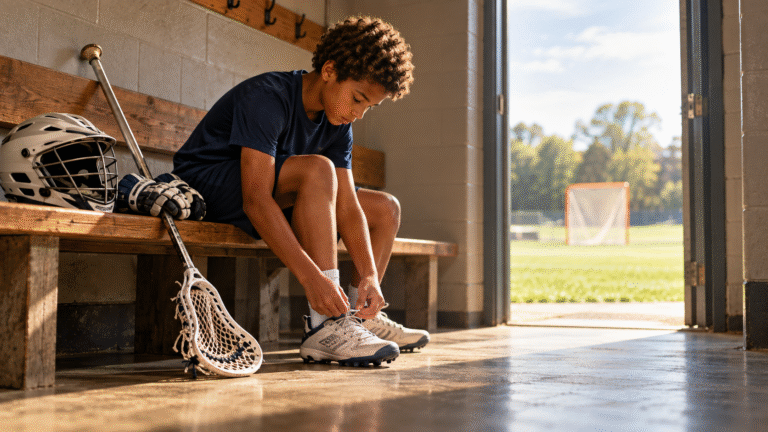
Learning how to get your child started in Lacrosse is easier when you focus on the basics: choose the right age and program, get essential beginner equipment, introduce a few fundamental skills, and make the first experience fun.
Your child does not need previous Lacrosse experience or advanced athletic ability to join most beginner programs. Across the USA, youth leagues, recreation departments, clubs, and introductory clinics offer opportunities for new players.
Instead of trying to prepare your child for everything at once, take it step by step. The goal at the beginning is simple: build confidence, learn safely, and develop an enthusiasm for playing Lacrosse.
How to Start Playing Lacrosse: Choose the Right Time
One of the first questions parents ask is what age should a child start playing Lacrosse? There is no single perfect age. Children can be introduced to the sport at different stages depending on their coordination, maturity, interest, and local opportunities.
Many youth organizations offer introductory programs for elementary-school-age children, while older beginners can enter the sport successfully through recreational teams, clinics, or school programs.
Start With Your Child’s Readiness
Age matters, but readiness matters more. Before registering, consider whether your child:
- Enjoys running and active games
- Is curious about learning a new sport
- Can follow basic coaching instructions
- Is comfortable participating in a team environment
- Is willing to practice unfamiliar movements
A young player does not need excellent hand-eye coordination immediately. Catching, throwing, cradling, and scooping are learned through repetition.
For younger children, the best introduction is usually centered on movement, simple stick skills, and fun rather than competition. Older beginners may progress more quickly because they already have coordination and experience from sports such as basketball, soccer, hockey, or football.
Does My Child Need Lacrosse Experience to Join a Team?
Usually, no. Many youth Lacrosse programs specifically welcome beginners.
Parents in established Lacrosse areas such as Maryland, New York, Pennsylvania, and Massachusetts may find numerous local clubs and leagues. In developing markets around Los Angeles, Texas, Colorado, or other parts of the USA, introductory clinics and recreational programs can provide an equally useful entry point.
When contacting an organization, simply ask whether the team accepts first-time players at your child’s age. A good beginner program should expect children to arrive with different levels of experience.
The best starting age is ultimately the age when your child has access to an appropriate program and is excited to try the sport.
Find Youth Lacrosse Programs and Complete Registration
Once your child is interested, the next step is finding an environment designed for beginners. The right program can have a major influence on whether a child wants to keep playing.
If you are wondering how to find a youth Lacrosse program near me, start locally rather than immediately searching for an elite club.
Look at:
- Local recreation departments
- Community Lacrosse associations
- Youth sports organizations
- School and after-school programs
- Beginner clinics and camps
- Local Lacrosse clubs
Parents can also use USA Lacrosse resources to identify playing opportunities and learn more about youth participation.
What to Look for in Youth Lacrosse Programs
Do not choose a program based only on wins, reputation, or competitive level. For youth Lacrosse for beginners, coaching quality and the learning environment are more important.
Ask prospective programs about coach training, age-group structure, practice frequency, safety policies, equipment requirements, playing time, and expectations for beginners.
Also consider logistics. A program that requires four long drives every week may not be sustainable for your family, even if it looks impressive on paper.
A nearby recreational league with supportive coaching can be a much better introduction.
Youth Lacrosse Registration: Questions to Ask First
Before completing youth Lacrosse registration, confirm exactly what is included in the fee.
Some organizations provide uniforms or loaner equipment. Others require families to purchase almost everything separately.
Ask:
- What equipment does the program provide?
- Are there additional uniform or tournament fees?
- How many practices and games are scheduled?
- Are beginners separated by age, experience, or both?
- Does the organization offer equipment rentals?
- What happens if my child decides the sport is not a good fit?
This is particularly useful if your child is trying Lacrosse for the first time. Renting or borrowing equipment and attending a clinic before committing to a full season can reduce both financial pressure and uncertainty.
Lacrosse Equipment for Kids: What Beginners Actually Need
Parents frequently ask what does my child need to start Lacrosse? The answer depends partly on whether your child plays boys’ or girls’ Lacrosse because equipment requirements differ.
You do not need to buy the most expensive equipment available. Beginner gear should primarily fit correctly, meet applicable safety requirements, and allow your child to move comfortably.
What Lacrosse Equipment Does a Beginner Need?
Here is a basic starting point:
| Equipment | Boys’ Lacrosse | Girls’ Lacrosse | What Parents Should Know |
|---|---|---|---|
| Lacrosse stick | Yes | Yes | Choose a beginner-friendly stick in the correct size |
| Mouthguard | Yes | Yes | Proper fit is important for comfort and protection |
| Cleats/Athletic footwear | Yes | Yes | Check whether the program recommends cleats |
| Helmet | Yes | Generally no* | Must fit securely; avoid buying oversized |
| Gloves | Yes | Generally no* | Should protect without limiting hand movement |
| Shoulder/chest protection | Yes | Generally no* | Check current safety standards before buying |
| Arm protection | Yes | Generally no* | Fit should allow comfortable arm movement |
| Protective eyewear | No | Yes | Choose eyewear that meets current requirements |
Correct sizing is especially important with Lacrosse equipment for kids. Oversized protective gear can restrict movement, while a poorly sized stick can make fundamental skills unnecessarily difficult.
Whenever possible, have your child try equipment on before buying it.
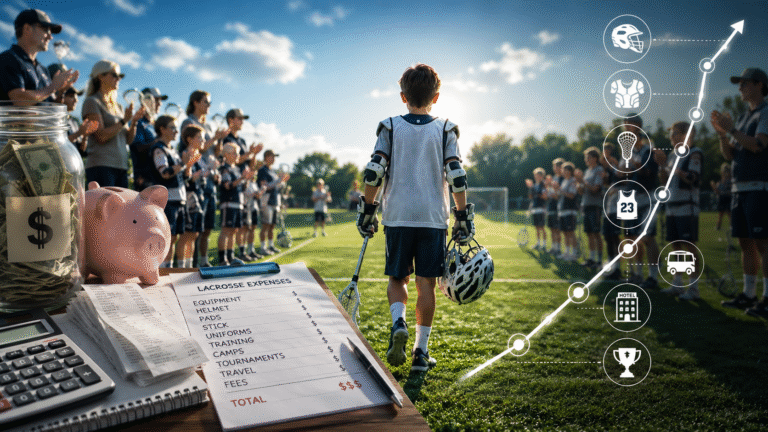
How Much Does It Cost to Start Youth Lacrosse?
The cost of getting started varies significantly by location, program, and equipment choices. Families may need to budget for registration, equipment, uniforms, travel, camps, or tournament fees.
Competitive club Lacrosse can eventually become expensive, but a child does not need an elite club budget to discover the sport.
For a first season, consider:
- Borrowing equipment from a local program
- Buying a beginner equipment package
- Looking for quality used gear where appropriate
- Attending a low-cost introductory clinic
- Waiting before purchasing premium sticks or accessories
A family trying Lacrosse in Chicago, for example, may encounter different registration and travel costs than one joining a community league in suburban Baltimore. Ask for the complete expected seasonal cost before registering so there are no surprises later.
Teach Lacrosse Skills for Beginners Before the First Practice
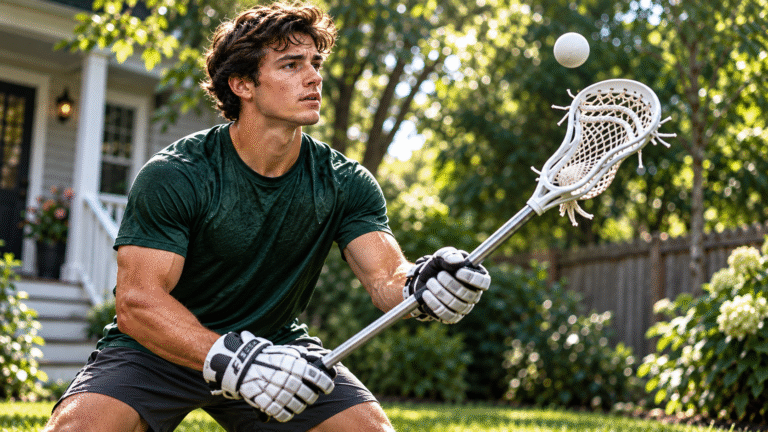
You do not need to become your child’s personal Lacrosse coach. A few simple introductions at home can, however, make the first Lacrosse practice feel much less intimidating.
The objective is familiarity—not mastery.
How to Help a Child Learn Basic Lacrosse Skills
Start with four fundamental Lacrosse skills for beginners:
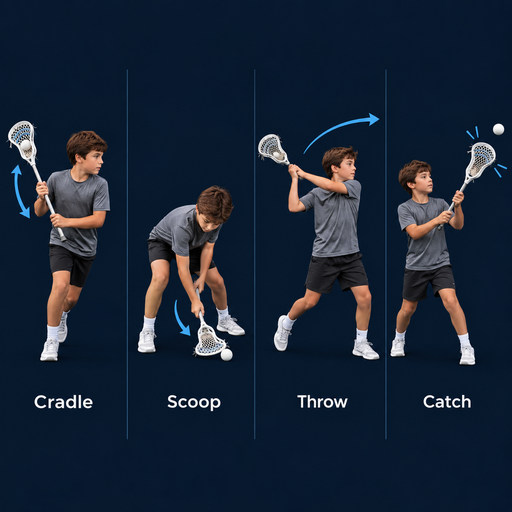
Cradling: Teach your child to control the ball in the stick while standing and then while walking.
Scooping: Place a ball on the ground and practice getting low, moving through the ball, and scooping it cleanly.
Throwing: Begin with short, controlled passes rather than trying to generate maximum speed.
Catching: Use gentle passes and focus on receiving the ball comfortably before increasing distance.
Ten or fifteen minutes can be enough for a beginner session. Short practices usually work better than turning the backyard into a demanding training camp.
If your child becomes frustrated, simplify the activity. For example, practice scooping stationary balls before combining scooping with running.
Learn Basic Lacrosse Rules for Kids
Children do not need to memorize an entire rulebook before joining a team. They should simply understand the basic objective and a few concepts.
Explain that players use their sticks to carry, pass, catch, and shoot the ball while working with teammates to score. Introduce ideas such as boundaries, possession, basic positions, and safe play.
Because boys’ and girls’ Lacrosse have meaningful differences in rules, contact, equipment, and field play, make sure the information you give your child matches the version they will actually play.
Keeping Lacrosse rules for kids simple prevents information overload. Coaches can teach the details progressively.
Make Practice Feel Like Play
Beginners learn through repetition, but repetition does not have to feel repetitive.
Try mini challenges such as:
- Five successful scoops in a row
- Catching from progressively longer distances
- Cradling around backyard obstacles
- Hitting a large target with a pass
- Switching between the dominant and non-dominant hand
Praise effort and improvement rather than comparing your child with teammates who may have been playing for years.
Prepare Your Child for the First Lacrosse Practice
The first team practice is often more intimidating for a child than parents realize. New players may worry about dropping passes, not understanding drills, or being noticeably less experienced than teammates.
You can help by setting realistic expectations.
What Should Kids Know Before Their First Lacrosse Practice?
Before leaving home, tell your child three things: listen to the coaches, keep trying after mistakes, and have fun learning something new.
That is enough.
For the first Lacrosse practice, arrive early so your child has time to meet the coach, organize equipment, and become familiar with the field.
Bring everything requested by the program, including appropriate protective equipment, stick, mouthguard, footwear, and water.
It can also help to tell the coach privately that your child is a complete beginner. Coaches can then provide extra guidance without putting the player on the spot.
How to Prepare Your Child for Lacrosse Tryouts
If your child must attend evaluations or tryouts rather than joining an open-registration program, focus preparation on fundamentals.
In the weeks beforehand, prioritize:
- Consistent throwing and catching
- Ground balls
- Basic cradling
- Running and general conditioning
- Listening and responding to instructions
- Teamwork and effort
Do not make the mistake of believing that preparation means complicated drills. Coaches evaluating young players often notice attitude, athleticism, coachability, effort, and decision-making alongside technical ability.
Keep the First Season in Perspective
Your child will drop passes. They may struggle to cradle while running. Another player may already shoot harder or use both hands comfortably.
That is normal.
After practices and games, avoid immediately analyzing every mistake. Questions such as “Did you have fun?” or “What did you learn today?” can encourage your child to take ownership of the experience.
The first season is about creating a foundation. Confidence and enjoyment are more valuable than immediate performance.
FAQ: How to Get Your Child Started in Lacrosse
How do I get my child started in Lacrosse?
Find an age-appropriate beginner program, confirm registration requirements, obtain correctly fitting equipment, and introduce a few basic stick skills before the first practice. Prioritize a supportive environment where learning and enjoyment come before competitive results.
What age should a child start playing Lacrosse?
There is no universal best age. Many children begin during elementary school, while others successfully start later. The right time depends on your child’s interest, maturity, physical readiness, and access to an appropriate youth program.
What does my child need to start Lacrosse?
At minimum, your child will need an appropriate Lacrosse stick, mouthguard, athletic footwear, and any protective equipment required for their version of the game, position, age group, and league. Check with the program before purchasing equipment because some organizations provide loaner gear.
Does my child need Lacrosse experience to join a team?
Many recreational and beginner youth programs require no previous experience. Look specifically for introductory clinics, recreational leagues, or teams that welcome first-time players, and tell the coach that your child is new to the sport.
How much does it cost to start youth Lacrosse?
Costs vary widely based on registration fees, equipment, location, and the type of program. Community programs can be considerably less expensive than travel clubs. Families can reduce first-season expenses by borrowing or renting equipment, buying appropriate used gear, and choosing recreational programs before committing to competitive Lacrosse.
Takeaway: Give Your Child a Great Start in Lacrosse
Learning how to get your child started in Lacrosse does not require expensive equipment, years of preparation, or previous experience.
Start by finding a welcoming youth program, understanding registration and equipment requirements, and introducing simple skills such as cradling, scooping, throwing, and catching. Most importantly, choose an environment where your child can make mistakes without losing confidence.
From community fields in New York and Maryland to growing Lacrosse programs in California, Texas, and across the USA, every player starts somewhere.
Keep the first season fun, celebrate progress, and let confidence develop one practice at a time. Stick ready, cleats on—time to hit the field!
Ready to unlock your full potential ?