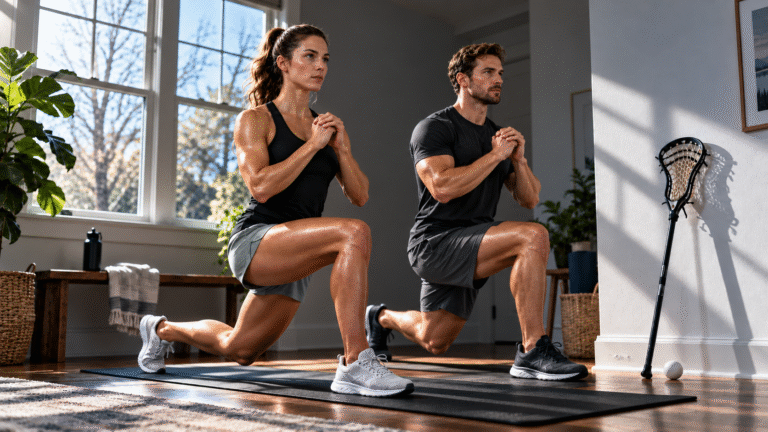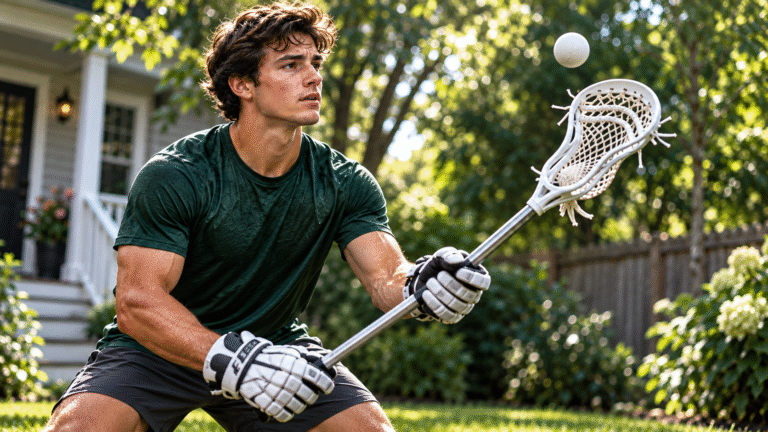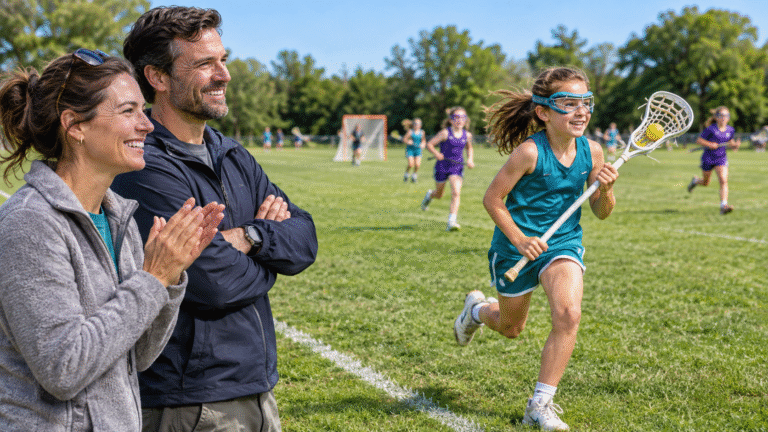
A 30-minute Lacrosse practice gives you time for five minutes of warm-up, seven minutes of wall ball, four minutes of ground balls, four minutes of dodging, and ten minutes of shooting.
Before you start your Lacrosse skills training, pick one result to track, such as how many weak-hand catches you make cleanly or how many shots hit your target. That gives you a focus for the session and a result to compare next time.
This guide walks you through each drill, shows you how to track your progress, and explains how to finish with passing accuracy work if you don’t have a goal.
Set Up Your 30-Minute Lacrosse Practice Plan
Before you start the clock, grab your stick, a ball, a timer, and two markers. For solo Lacrosse practice, pick a spot with enough room to move, a wall where ball work is allowed, and a clear shooting lane if you’ll use a goal. Set out your markers ahead of time so you can move straight from one drill to the next.
| Time | Drill | What to work on |
|---|---|---|
| 0:00–5:00 | Warm-up | Move in several directions and get comfortable with the stick |
| 5:00–12:00 | Wall ball | Catch cleanly and reset quickly with either hand |
| 12:00–16:00 | Ground balls | Scoop on the move and carry through the pickup |
| 16:00–20:00 | Dodging | Change direction and accelerate out of the cut |
| 20:00–30:00 | Shooting or target passing | Hit a specific spot from a repeatable setup |
How to Track Lacrosse Practice Progress
Choose a count you can repeat, such as clean catches out of 10 weak-hand attempts. Use the same ball, wall, distance, and target for your next check. If you catch six cleanly today and eight next time, you have a comparison you can use to decide whether to keep the drill as is or make it harder.
Add one observation that tells you what to work on. “Missed low when I rushed the reset” gives you a cue for next time. If a drill feels harder because you moved farther back or sped up, record that change alongside the score.
Start With a Quick Lacrosse Warm-Up
Set aside five minutes for the warm-up. Start at an easy pace and build toward the movements you’ll use later in the session.
- Minute 1. Walk briskly or jog easily with your stick in hand.
- Minutes 2–3. Work in some basic Lacrosse footwork with lateral shuffles, gentle turns, and short jogs. Give yourself room to slow down before changing directions.
- Minutes 4–5. Cradle while walking or jogging, switch hands, then make a few easy throws and catches. Start close enough to receive the ball comfortably.
On a chilly morning, start the faster drills once you feel ready to move freely, even if that means taking a minute from a later block. On a tight court, use shorter movement lanes so you can slow down before you reach the boundary.
Build Both Hands With a Lacrosse Wall Ball Routine
Pick a spot on the wall around chest height. Stand where the rebound gives you enough time to see the ball and get your stick into position. Keep your feet ready to adjust if a throw comes back slightly wide.
- First two minutes. Throw and catch with your strong hand. Aim for the same spot and reset your feet between reps.
- Next three minutes. Switch to your weak hand. Count a catch when you control the rebound in your stick without a bobble.
- Final two minutes. Alternate hands after each clean catch. If the switch makes you rush, take one extra beat to get your hands and feet set.
How Can You Improve Your Weak Hand With Wall Ball?
Move a step closer and take some pace off your throw until the rebound is manageable. If the ball keeps hitting the edge of your stick head, watch where you present it before the catch. Bring it into the rebound’s path early so you can receive the ball in front of you. Once your catches feel consistent, make your wall ball routine harder by changing one variable at a time. Take a step back or shorten the reset between throws.
Pair Lacrosse Ground Ball Drills With Dodging
A ground ball rep continues after the scoop. A dodge continues after the cut. In both blocks, give yourself a few steps to finish the movement.
Practice Ground Balls by Yourself
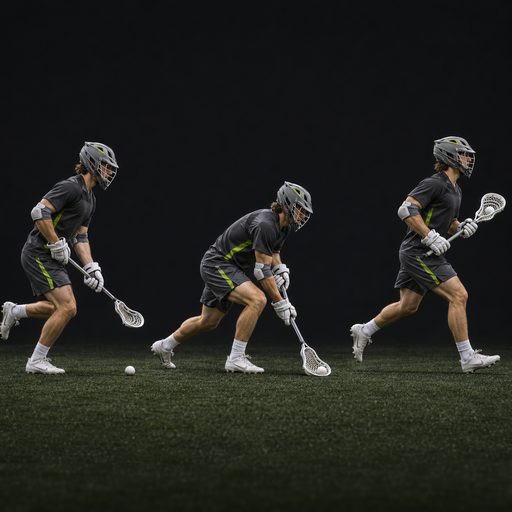
Roll the ball several steps ahead and approach at a light jog. Bend your knees, lower the stick head, and scoop through the ball as you step forward. Carry it for three strides before you reset. Alternate the side you approach from so you get comfortable picking up the ball from different angles.
If the ball skips past your stick, slow the approach and check how low the stick head is when you reach it. Once you can scoop cleanly on a straight approach, roll the ball diagonally across your path so you have to adjust your feet before the pickup.
Run Lacrosse Dodging Drills Without a Defender
Use one marker as the defender and place a second a few strides away to mark your exit. Approach the first marker, plant, change direction, and accelerate toward the second. Work on one move, such as a split dodge, and practice exiting to both sides.
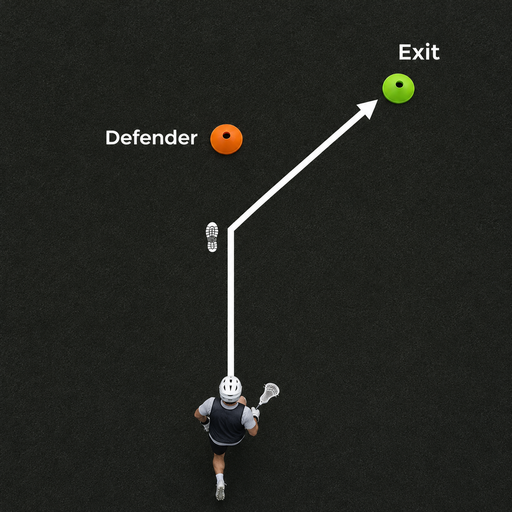
Start at a speed that lets you control the stick through the cut. As you get comfortable, vary the angle of your approach. Check whether you can get to the exit marker in three quick strides with the ball still secure in your stick.
Finish With Lacrosse Shooting Drills or Target Passing
Improve Shooting Accuracy in 10 Minutes
Pick one target inside the goal and one distance you can shoot from with control. Use a clear lane and a suitable backstop. If you’re practicing with one ball, let the clock determine how many reps you take, including retrieval time.
- Two minutes. Take controlled shots from a set position and find a release you can repeat.
- Five minutes. Aim at the same target. After a miss, check one detail, such as where your lead foot landed.
- Three minutes. Add one step into the shot. Keep the same target and see whether you can still place the ball while moving into your release.
If your shots start drifting wide when you add the step, slow it down and see whether your accuracy returns.
Adapt Your Lacrosse Practice Without a Goal
Finish with target passing. On a wall where ball work is allowed, pick an existing mark or a spot between two seams. Use the same passing mechanics on every rep. Step toward the target, follow through, count direct hits, and reset before throwing again.
If you’re sharing a park or practicing in a small space, a softer practice ball and a shorter passing distance can help keep rebounds manageable.
FAQ: 30-Minute Lacrosse Practice for Solo Players
What Lacrosse drills should I do if I only have 30 minutes?
Warm up, then use wall ball for throwing and catching, rolling pickups for ground balls, a cone for dodging, and a small target for shooting or passing. Set out the equipment before you start so you can switch drills quickly.
How long should I warm up before a short Lacrosse practice?
Start with five minutes. Begin with easy movement, add direction changes, then work in light stick handling and throws. Take a little longer if you still feel stiff when it’s time to pick up the pace.
How can I make this 30-minute Lacrosse practice easier if I’m a beginner?
Stand closer to the wall, walk into ground ball pickups, and rehearse your dodge at half speed. Use a larger target for shooting or passing. Increase speed or distance once you can repeat the movement with control.
Should I practice one Lacrosse skill or several in 30 minutes?
Use several drills when you want a balanced session. If one skill is limiting your play, give it more of the session. For example, you can move a few minutes from dodging to weak-hand wall ball if you struggle to receive passes on that side.
How do I know if my Lacrosse stick skills are improving?
Look for more clean catches, controlled pickups, or target hits under the same conditions. Then add a small challenge, such as catching after a shuffle, and see whether you can keep that control while moving.
Takeaway: Make Every Minute of Lacrosse Practice Count
Start with five minutes of movement, then use wall ball, ground balls, and dodges to work on receiving, securing, and carrying the ball. Finish by putting your shot or pass on a specific target.
Whether you’re tracking your own progress or helping a young player set practice goals, use the next session to repeat one drill under the same conditions and compare the results. If you’re making more clean catches or hitting your spot more often, add a step, change the angle, or pick up the pace.
You can get quality work in with a stick, a ball, and a plan. Set the clock, grab your stick, and get after it!
Ready to unlock your full potential ?