To set up a women’s Lacrosse stick, secure the head, check the overall length, shape a legal pocket, and test the release before adjusting shooting strings. Add a little grip tape where your hands need it, then practice short passes to confirm the stick feels comfortable and throws consistently.
You do not need to restring a new stick or make every adjustment immediately. Start with its existing setup and change only what testing shows needs attention.
This guide helps beginners in women’s Lacrosse set up their field-player sticks for confident catching, cradling, and passing while avoiding equipment changes that create more problems than they solve.
Understand Women’s Lacrosse Stick Parts and Secure the Head
Before making adjustments, identify what each component does. Understanding how women’s and men’s Lacrosse sticks differ helps you identify the parts on your stick and avoid applying setup advice meant for the men’s game.
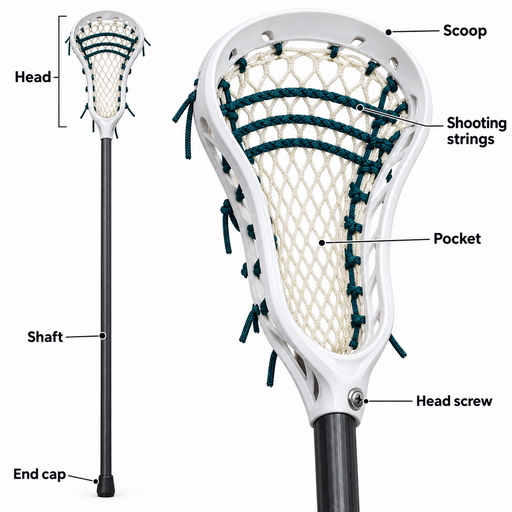
| Part | Purpose | Beginner setup check |
|---|---|---|
| Head | Holds the pocket and guides the ball | Look for cracks or distortion |
| Scoop | Upper edge used to collect ground balls | Check for damage and sharp edges |
| Cushions catches and carries the ball | Check depth, symmetry, and free movement | |
| Shooting strings | Help shape the ball’s release | Look for uneven tension or snagging |
| Shaft | Provides reach and hand control | Check for cracks, bends, or sharp damage |
| Head screw | Secures the head to the shaft | Confirm it is snug |
| End cap | Covers the bottom of the shaft | Make sure it is firmly attached |
Gather a ball, tape measure, correctly sized screwdriver, and sports grip tape. Photograph the pocket before changing anything so you can restore its starting setup.
How to Check If a Women’s Lacrosse Stick Head Is Loose
Hold the shaft just below the head. With your other hand, gently twist the head and rock it forward and backward.
Movement at the connection, clicking, or a visible gap suggests a loose fit. Tighten the attachment screw carefully, following the manufacturer’s instructions. Stop when snug; overtightening can strip the hole.
If movement remains, ask a shop to check head-and-shaft compatibility or damaged hardware. Normal plastic flex is different from movement at the connection.
Choose the Right Women’s Lacrosse Stick Length
The best women’s Lacrosse stick length allows comfortable handling while meeting your competition’s rules.
Under NCAA women’s field rules, the complete stick measures 35½–43¼ inches. Measure the assembled stick from the bottom end to the top of the scoop, rather than measuring the shaft alone. Younger youth divisions may permit shorter sticks, so confirm your team’s requirements before cutting.
Check Fit Before Making a Permanent Cut
Try several basic movements:
- Cradle with relaxed shoulders and bent elbows
- Switch hands without repeatedly catching the shaft on your body
- Scoop a ground ball without struggling to control the head
- Make short passes with comfortable hand spacing
A shorter legal stick may feel easier to manage, but extra reach can also be useful. Avoid choosing length solely by age or height.
If you’re starting women’s Lacrosse with a recreation program or school team, have a coach watch your handling before making an irreversible change.
How Short Can You Cut a Women’s Lacrosse Stick?
Your minimum finished length depends on the applicable rules. Leave room for the head and end cap when calculating how much shaft to remove.
Have a shop handle cutting if you lack suitable tools, particularly with composite shafts. Afterward, reinstall the end cap securely and remeasure the complete stick.
Make a Legal Women’s Lacrosse Pocket Adjustment
A useful beginner pocket cushions the ball without trapping it. Deeper does not automatically mean better: excessive depth can affect release and fail an equipment check.
Women’s Lacrosse pocket adjustment varies by construction. Mesh, traditional runners, and proprietary pockets may use different adjustment points. Follow the manufacturer’s guidance instead of assuming every bottom string works the same way.
How to Break In a Women’s Lacrosse Stick Pocket
Start with normal use:
- Gently press a ball into the existing catching area
- Play short, controlled catch
- Add easy cradling and ground-ball repetitions
- Recheck the pocket as the materials settle
Avoid boiling water, ovens, heavy weights, or aggressive stretching. These shortcuts can damage components or distort the pocket.
If adjustment is needed, use only the intended adjustment strings. Make small, balanced changes, secure the knots, and test again. Leave structural sidewall knots alone unless you understand the pattern.
How to Check If a Women’s Lacrosse Pocket Is Legal
For USA Lacrosse 12U and 14U play, place a ball in the pocket and hold the stick horizontally. The ball’s top must remain visible above the top of the entire sidewall. The ball must also move freely and fall out when the stick is inverted. Younger divisions have different pocket allowances.
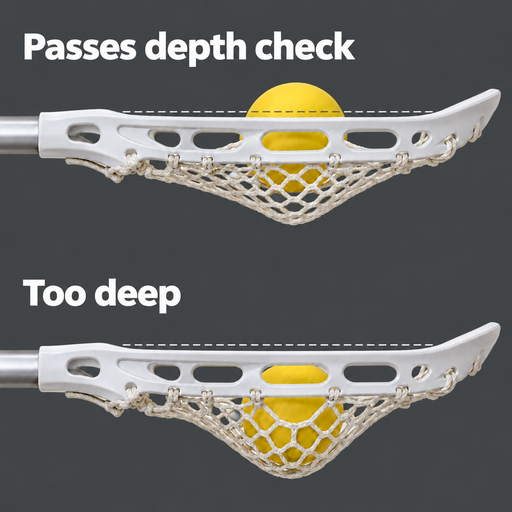
Check the women’s Lacrosse rules for your competition with your coach before judging pocket legality. An approved head can still have an illegal pocket after adjustment.
Fine-Tune Women’s Lacrosse Shooting String Adjustment
Shooting strings influence how the ball travels out of the pocket. Too much tension can create a catching point; uneven tension can produce an inconsistent release.
Start women’s Lacrosse shooting string adjustment only after checking pocket shape and depth. Otherwise, you may compensate for one problem by creating another.
How Tight Should Women’s Lacrosse Shooting Strings Be?
There is no universal tension setting. Aim for a smooth release without a pronounced snag.
Keep the original legal placement and make tiny changes to one string at a time. Test several passes before deciding whether the change helped. Some pockets need little adjustment, and shooting strings are not required under the cited USA Lacrosse youth equipment rules.
Diagnose Women’s Lacrosse Stick Throwing Problems
If you are asking, “Why does my women’s Lacrosse stick throw into the ground?” check both equipment and technique.
Possible causes include:
- A shooting string that catches the ball
- A pocket that has stretched or become uneven
- A late release or downward throwing motion
- A changed grip or hand position
Ask a coach to make a few passes with your stick. If it releases cleanly for them, focus on throwing and catching technique before changing more strings.
If both players notice the same snag, inspect the release path and slightly loosen the suspected shooting string. Change one variable at a time so the result tells you something useful.
Learn How to Tape a Women’s Lacrosse Stick, Test It, and Maintain It
Tape should improve grip while allowing your hands to slide. A thick, sticky wrap along the entire shaft can make switching hands harder.
Where to Put Tape on a Women’s Lacrosse Stick for Beginners
Start with a short wrap near your bottom-hand position. Add a small reference strip for your upper hand only if it helps you find a comfortable passing grip.
To apply tape:
- Clean and dry the shaft
- Wrap with a slight overlap
- Keep the layers thin and smooth
- Press down loose edges
Keep tape off the pocket and head attachment screw, and make sure the end cap stays secure.
How to Test a Women’s Lacrosse Stick After Adjusting the Pocket
Use the same short routine after each adjustment:
- Throw 10 easy passes with your dominant hand
- Throw 10 with your other hand
- Catch several passes at different heights
- Cradle while jogging and changing direction
- Scoop a few ground balls
Watch for repeatable patterns rather than judging one missed pass. Begin at short range before adding power.
Women’s Lacrosse Stick Maintenance After Practice
Check the screw, end cap, strings, and pocket regularly. Replace peeling tape and address frayed strings before they break.
After a rainy practice in New York or a damp evening session in Los Angeles, blot away moisture and let the stick air-dry at room temperature in a ventilated space. Avoid radiators, hair dryers, and hot cars.
Recheck pocket depth and release once dry; wet materials can behave differently.
FAQ: Women’s Lacrosse Stick Setup for Beginners
Do I need to adjust my new women’s Lacrosse stick?
Not necessarily. Inspect the assembly, check legality, and try short passes first. A well-strung complete stick may work immediately. Adjust only when you identify a specific problem with fit, catching, or release.
Can beginners adjust their own Lacrosse pocket?
Yes, if the pocket has clearly identified adjustment points. Photograph the starting setup and make small changes. Ask a coach or experienced stringer for help with structural knots, damaged strings, or unfamiliar proprietary systems.
Should I wet my Lacrosse pocket to break it in?
Usually, normal catching and cradling are a better starting point. Do not soak the pocket unless its manufacturer recommends it. Water can change tension, particularly in traditional pockets, making the final setup harder to judge.
How often should I check whether my Lacrosse pocket is legal?
Check before games and after adjustments, rain, or noticeable stretching. A quick pre-practice check also helps you catch changes early. Use the requirements for your age division and competition rather than copying another player’s setup.
How do I dry my women’s Lacrosse stick after rain?
Remove surface moisture with a towel, take the stick out of its bag, and air-dry it away from direct heat. Once dry, inspect the strings and test the release before making permanent tension changes.
Takeaway: Set Up Your Women’s Lacrosse Stick for Confident Play
A reliable setup starts with a secure head, comfortable legal length, and a pocket that catches cleanly while releasing freely. Test before you adjust, then make small changes to pocket depth or shooting-string tension only when there is a clear reason.
Use thin tape where you need grip, keep the end cap secure, and let wet equipment dry naturally. Your coach can help confirm legality and separate equipment issues from developing technique.
Across the USA, better fundamentals begin with equipment you trust. Get your setup dialed in, build consistency with Lacrosse wall ball, and bring that confidence to your next practice!
Ready to unlock your full potential ?