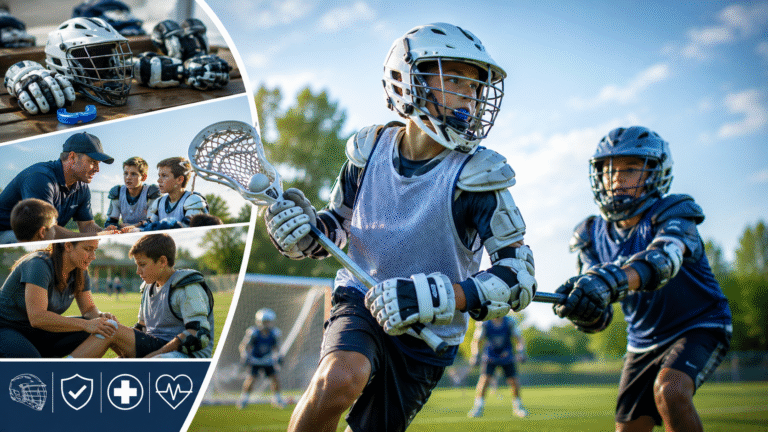
Lacrosse can be a great sport for kids who enjoy running, learning new skills, and playing with a team. A child does not need to be especially athletic or have played another sport first.
The better question is whether the program suits your child: are beginners welcomed? Are the rules appropriate for their age? Can your family manage the cost and schedule? In the USA, youth Lacrosse is designed to develop skills through age-appropriate play.
This guide will help you weigh the benefits, safety, commitment, and your child’s own reaction before signing up.
How Do I Know if Lacrosse Is Right for My Child?
What kind of child enjoys playing Lacrosse?
Lacrosse may appeal to a child who likes movement and variety. In a single game, players run, pass, catch, defend, and make quick decisions. They do not have to arrive knowing how to do any of those things well.
Watch for curiosity rather than instant talent. Does your child want another turn after missing a catch? Do they enjoy practicing with a friend? Are they interested when they see a game? Those reactions tell you more than how they perform during their first 20 minutes with a stick.
A beginner’s enthusiasm matters more than early ability. Some children love the speed of a team game; others prefer the satisfaction of practicing a skill until it clicks. Lacrosse offers both. A child who dislikes crowded or competitive settings might still enjoy a relaxed introductory clinic before deciding whether a team feels right.
Can a child play Lacrosse without prior sports experience?
Absolutely. Running experience may help, but passing and catching with a stick are new to most beginners. That gives first-time athletes room to grow alongside kids who have played other sports.
Ask the coach how they teach new players. A good beginner session should let children handle the ball often, practice in small groups, and learn without being embarrassed by mistakes. If your child comes home talking about what they tried, even if it did not work yet, that is a promising start.
What Are the Benefits of Lacrosse for Kids?
What skills do kids develop by playing Lacrosse?
The benefits of Lacrosse for kids go beyond fitness. Catching and throwing develop hand-eye coordination; moving into open space builds awareness; and changing direction challenges balance and agility. Because play shifts quickly, children also practice paying attention and choosing what to do next.
Team habits develop through small moments: calling for a pass, helping a teammate after a turnover, or listening to a coach’s adjustment. These are useful experiences, though no sport guarantees confidence or social growth for every child.
| What children practice | How it shows up in Lacrosse |
|---|---|
| Coordination | Catching, cradling, passing, and shooting |
| Movement | Running, stopping, turning, and finding space |
| Decision-making | Choosing when to pass, move, or defend |
| Teamwork | Communicating and responding to teammates |
| Persistence | Trying a skill again after a dropped ball |
Does my child need to be athletic to start Lacrosse?
No. Beginners develop at different rates, and a child does not need to be the fastest runner to contribute. A thoughtful pass, good positioning, or willingness to keep practicing can matter as much as speed.
That said, your child should enjoy at least some of the game’s physical activity. If they are unsure, try a short clinic first. It gives them a chance to discover whether the movement feels exciting or tiring in a way they do not enjoy.
For parents, the most valuable question is often: Does this experience make my child want to come back?
What Age Can Kids Start Lacrosse, and Is It Hard to Learn?
Start with readiness, not a perfect age
What age can kids start Lacrosse? There is no single age that fits every child or every local program. Some programs offer introductory activities for very young children, while others begin with elementary school age groups. USA Lacrosse provides youth guidance through 14U and uses modified rules to match players’ developmental stages.
Look for a group where your child can follow simple instructions, take turns, and enjoy learning with peers. A playful introduction with plenty of touches on the ball is more useful than pushing a young beginner into a highly competitive setting.
Is Lacrosse hard to learn for kids?
The first skill hurdle is usually controlling the ball in the stick. Catching can feel awkward, and that is normal. Children do not need to master it before they can enjoy playing.
A welcoming program makes the learning curve manageable by building from simple actions:
- Hold and move with the stick
- Scoop a ground ball
- Toss and catch at a comfortable distance
- Pass while moving
- Try those skills in small games
You can help at home with a few relaxed minutes of throwing and catching. Keep it playful and stop before practice turns into a chore. Progress in Lacrosse is rarely a straight line: a child may struggle one week and suddenly make several catches the next.
Is Lacrosse Safe for Kids? Understand the Different Games
Boys’ vs girls’ youth Lacrosse
Parents often hear conflicting descriptions of contact because boys’ and girls’ youth Lacrosse use different rules and equipment. The boys’ game includes more permitted physical contact and requires additional protective gear. The girls’ game has different contact rules and equipment requirements. Both youth games modify rules by age group, so ask which rules your local program follows.
This distinction matters when buying gear, too. Do not assume a sibling’s equipment is suitable for another child’s program. Get the club’s current equipment list before shopping, and check fit as carefully as you check the label.
What are the injury risks in youth Lacrosse?
Like other running team sports, Lacrosse carries a risk of falls, collisions, and injuries involving a ball or stick. Rules and protective equipment reduce risks; they cannot remove them. USA Lacrosse emphasizes age-appropriate rules, properly worn equipment, and safe play.
When observing a practice, look beyond the gear. Are coaches teaching players how to use their sticks safely? Do they stop unsafe contact? Is water available, and do children get breaks? Ask who handles an injury and how parents are informed. A clear answer is a stronger sign than a general promise that the sport is “safe.”
If safety is your main concern, discuss your child’s circumstances with their healthcare professional and ask the program specific questions about its rules and supervision.
How Much Does Youth Lacrosse Cost, and How Do You Choose a Program?
Plan for the full season
How much does youth Lacrosse cost? It depends on the program, location, equipment needs, and travel. A community league near Chicago may ask much less of your time and budget than a travel team playing tournaments across several states. The registration price alone will not tell you the whole story.
Before enrolling, ask about:
- Registration and any required membership fees
- Required equipment and whether loaner gear is available
- Uniforms, tournament fees, and travel
- The number of practices and games each week
- Refund or withdrawal policies
Equipment loans and lower-cost introductory options do exist, so it is worth asking before buying a full set of gear.
Choosing a youth Lacrosse program
What should parents look for in a beginner Lacrosse program? Start with coaching and fit. Ask whether new players receive instruction, how teams are grouped, and whether the program prioritizes participation and skill development. Then compare its schedule with your child’s energy and your family’s other commitments.
How much time does youth Lacrosse take each week? There is no universal answer. Request the actual weekly practice schedule, typical game times, and expected travel before you commit. A program can be excellent and still be the wrong choice if its schedule overwhelms your child.
In New York, Los Angeles, or a smaller town, the best first program is the one your child can attend consistently and enjoy. If possible, watch a session: you will quickly see whether beginners spend time learning and playing or waiting in lines.
FAQ: Is Lacrosse a Good Sport for Kids? Quick Answers for Parents
Can my child try Lacrosse before joining a team?
Often, yes. Ask local clubs, schools, or recreation programs about introductory clinics and whether they provide a stick or other equipment for the session.
What if my child doesn’t enjoy Lacrosse after starting?
Ask what they dislike: the sport, the team atmosphere, or simply being new at it. Give them some time to adjust, then listen seriously if they still want to stop. Check the program’s withdrawal policy.
Is Lacrosse a good sport for a shy child?
It can be, especially in a welcoming beginner group. Small-sided activities give children chances to participate. Watch how the coach includes quieter players rather than assuming the sport itself will build confidence.
Should my child start with recreational or travel Lacrosse?
For most first-time players, a recreational or introductory program offers a manageable way to learn. Compare the coaching, schedule, cost, and your child’s interest before considering a larger commitment.
Does my child need their own stick to try Lacrosse?
Ask the organizer first. Some introductory programs supply sticks, allowing your child to try the sport before your family buys equipment.
Takeaway: Is Lacrosse a Good Choice for Your Child?
Lacrosse can be an excellent choice for kids who enjoy active play, learning a new skill, and being part of a team.
Beginners do not need prior sports experience or standout athletic ability. What matters most is a welcoming program with age-appropriate rules, sound safety practices, and a schedule and cost your family can sustain.
Let your child try it if possible, then pay attention to their experience afterward: are they curious, engaged, and eager to return? If so, you may have found their next favorite game. Give them a stick, give them a chance, and let them take the field!
Ready to unlock your full potential ?