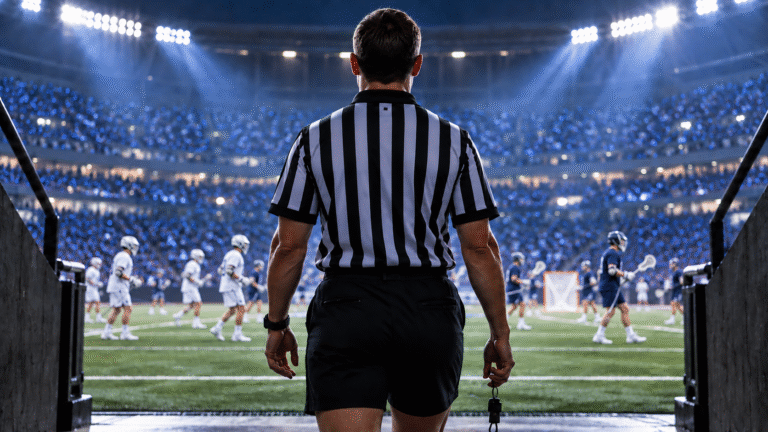
A Lacrosse Sixes game has 32 minutes of regulation play, divided into four eight-minute quarters. For Los Angeles 2028, that is the confirmed game format.
Watching takes longer than the playing clock suggests: quarter breaks, halftime, timeouts, and other stoppages add time. World Lacrosse describes Sixes games as approximately 45 minutes, so setting aside about an hour is a practical viewing plan, with extra flexibility for overtime.
Whether you are cheering for Team USA or discovering Lacrosse at Los Angeles 2028, understanding the two clocks—and what happens after a goal—makes the action much easier to follow.
Lacrosse Sixes Game Length: Playing Time vs. Viewing Time
The most useful distinction is between the minutes assigned to play and the time you spend watching.
Under the Sixes rules for the 2028 Games, teams play with six players per side across four eight-minute quarters. That gives newcomers a compact contest with clear checkpoints: the end of each quarter and the halftime reset.
How long is a Lacrosse Sixes game including breaks?
Under the current rules, the scheduled intervals produce this basic timeline:
| Part of the game | Duration |
|---|---|
| First quarter | 8 minutes |
| First quarter break | 2 minutes |
| Second quarter | 8 minutes |
| Halftime | 5 minutes |
| Third quarter | 8 minutes |
| Third quarter break | 2 minutes |
| Fourth quarter | 8 minutes |
| Playing time plus scheduled breaks | 41 minutes |
The 41-minute calculation excludes timeouts, additional stoppages, and overtime. It is a baseline, not a guaranteed finishing time.
World Lacrosse’s approximately 45-minute description is useful for understanding the format’s intended pace. For personal planning, an hour gives you breathing room without treating every game as a lengthy afternoon commitment.
If you are attending in Los Angeles, keep arrival, security, and departure separate from game duration. Likewise, a ticketed session or streaming window may cover more than one contest.
Lacrosse Sixes Quarters and Halftime: How the Game Flows
Four short quarters make the score, remaining time, and possession especially useful viewing cues. At each break, ask three questions: Who is ahead? Who is creating better chances? Which team is struggling to recover defensively?
Those questions help explain momentum more clearly than watching the score alone.
What the Los Angeles 2028 Lacrosse format looks like
Sixes uses five field players and a goalkeeper on each side, with play on a compact outdoor field. Field players move between attacking and defending rather than remaining in specialist positional groups.
For a first-time viewer, the rapid transitions that challenge even Team USA are a useful place to focus: watch what happens immediately after possession changes. The player who just took a shot may suddenly need to sprint back and defend.
That quick change of responsibility gives you something useful to follow even before you recognize individual players or tactical patterns.
Sixes vs. field Lacrosse duration
When comparing Sixes vs. field Lacrosse duration, remember that “field” covers multiple competitions and age groups. A school tournament, college contest, and professional event should not automatically be assigned the same viewing window.
For the 2028 Games, use the event’s confirmed Sixes structure instead of applying the timing from a competition you already follow.
An experienced fan may recognize the stick skills immediately. A newcomer may be learning everything from scratch. Both can start with the same simple approach: follow possession, then check the quarter and score.
Lacrosse Sixes Clock Stoppages and Timeouts Explained
A running clock helps keep the contest moving, but it does not mean time runs continuously under every circumstance.
When does the clock stop in Lacrosse Sixes?
The clock stops for timeouts, time-served penalty administration, and quarter endings. Dead-ball whistles also stop it during the final two minutes of the fourth quarter; every whistle stops it in overtime.
This makes the closing stretch different from the opening minutes. When a game is close, watch how Sixes officials manage clock stoppages after a whistle instead of assuming another few seconds have disappeared.
A timeout can also change how you read the next possession. Look for a different attacking setup, a deliberate attempt to involve a particular player, or a defensive adjustment.
How many timeouts does each team get in Lacrosse Sixes?
Each team receives one 60-second timeout per half under the current rules.
For spectators, timeout availability is another small detail that adds meaning to the finish. A coach with a timeout available has an opportunity to organize the next sequence.
Your practical takeaway: avoid making a firm appointment immediately after an estimated finish. The most compelling final minutes may also be the least predictable in real time.
Lacrosse Sixes Scoring Rules and the Shot Clock
You do not need to memorize every foul to enjoy Sixes. Start with the score, possession, and the difference between the main clock and the possession countdown.
How many points is a goal worth in Lacrosse Sixes?
Each goal adds one point. A long-range finish does not receive an extra point under international Sixes scoring.
That makes reading the Lacrosse scoreboard straightforward. If the score is 10–8, the trailing team needs two unanswered goals to draw level.
The more interesting question is how those opportunities develop. Watch whether attackers create space through passing, beat a defender individually, or capitalize before the defense gets organized.
How the Lacrosse Sixes shot clock shapes possession
The Lacrosse Sixes shot clock gives a team 30 seconds after gaining possession. It creates urgency within the larger game clock.
Think of the displays as answering different questions:
- Game clock: How much time remains in the quarter?
- Shot clock: How much time remains for this attacking opportunity?
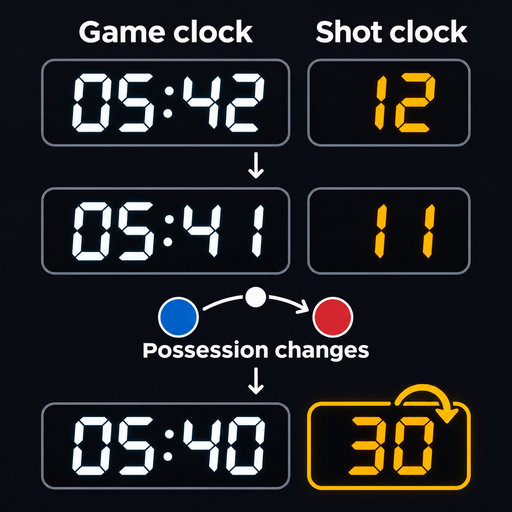
When the possession countdown gets low, look for defenders pressuring the ball and attackers trying to create a clear shooting lane.
What happens when the shot clock expires in Lacrosse Sixes? Without a qualifying shot on goal, possession goes to the defense. Simply throwing wide does not satisfy the requirement.
How does play restart after a goal in Lacrosse Sixes?
The conceding goalkeeper retrieves the ball for a quick restart, rather than the teams returning to midfield for a draw after every score.
Keep your eyes on the goalkeeper after a finish. A celebration at one end can become an attacking opportunity at the other, making the seconds after a goal part of the entertainment.
Lacrosse Sixes Overtime Rules: Planning for a Close Finish
A tie changes both the competitive situation and your viewing plans.
What happens if a Lacrosse Sixes game ends in a tie?
Under the current 2026–2028 rules, teams play a full three-minute, stopped-time overtime period after a two-minute break. The team ahead afterward wins. If still tied, the sequence repeats. Overtime is not sudden death.
That last distinction matters enormously for viewers. A goal during overtime can change the lead without ending the contest, so stay with the action until the period finishes.
Treat these as the current published rules and check event updates closer to Los Angeles 2028.
How much time should I set aside to watch Lacrosse at the 2028 Games?
My practical recommendation is about one hour per game, with additional flexibility when you want to guarantee seeing the finish. This is a planning allowance, not an official broadcast slot.
For a watch party or a family viewing session:
- Open the stream before the listed start
- Keep food and drinks nearby once play begins
- Avoid scheduling something inflexible immediately afterward
- Check whether the listing refers to one game or an entire session
The format is approachable, but a close finish deserves your full attention.
FAQ: Los Angeles 2028 Lacrosse Sixes Game Time
How many quarters are played in Lacrosse Sixes?
Four. The Los Angeles 2028 event uses eight-minute quarters, giving fans a short, clearly divided contest.
Do men’s and women’s Lacrosse Sixes games last the same amount of time?
Yes. Both use the same regulation timing structure. Individual games can still take different amounts of real time because of stoppages or overtime.
Is the shot clock the same as the game clock in Lacrosse?
No. The game clock tracks the quarter; the shot clock tracks the attacking possession. Watching both helps explain why a team may rush despite plenty of quarter time remaining.
Can I assume a Lacrosse game will finish within an hour?
No. An hour is a useful personal allowance, not a finishing guarantee. Leave extra room if missing the final possession would spoil your plans.
Should I use a local Lacrosse Sixes tournament’s timing to plan my viewing?
Check the event rules first. Local adaptations may differ from international play, so use Los Angeles 2028 information when planning to watch the 2028 Games.
Takeaway: Know the Lacrosse Sixes Timing Before Los Angeles 2028
For Los Angeles 2028, remember the core numbers: four eight-minute quarters and 32 minutes of regulation play. Build your viewing plans around the full experience, including breaks and the possibility of a close finish. About an hour is a practical personal allowance, with flexibility afterward.
Once play starts, follow possession, watch both clocks, and stay alert after every goal. You do not need expert knowledge to start reading the game and appreciating a smart pass, a big save, or a perfectly timed finish.
Pick your team, get comfortable, and bring the energy—every possession is a chance to make something happen!
Ready to unlock your full potential ?