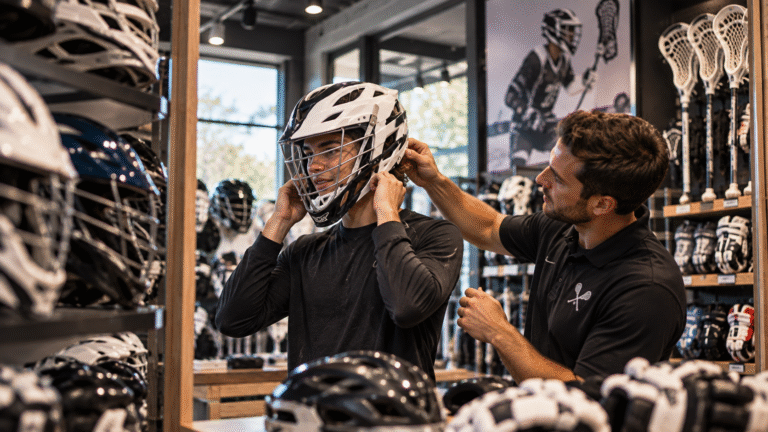
Lacrosse gloves should fit snugly without squeezing, with your hand fully seated, your fingers comfortably inside the protective padding, and enough flexibility to grip your stick naturally. Your fingertips should sit near the ends without pressing painfully against them, while the palm should stay smooth instead of bunching around the shaft.
Secure coverage and unrestricted movement matter more than the size label. Whether you’re buying your first pair or replacing worn Lacrosse gear, start with the manufacturer’s sizing guide, then test both gloves while holding a stick.
This guide explains how to measure, recognize fit problems, and choose confidently.
How Should Lacrosse Gloves Fit Across Your Fingers, Palm, and Wrist?
A glove can feel comfortable with an open hand yet become restrictive when you grip a shaft. Check each area with your hand relaxed, then repeat with your fingers curled.
Lacrosse Glove Finger Fit
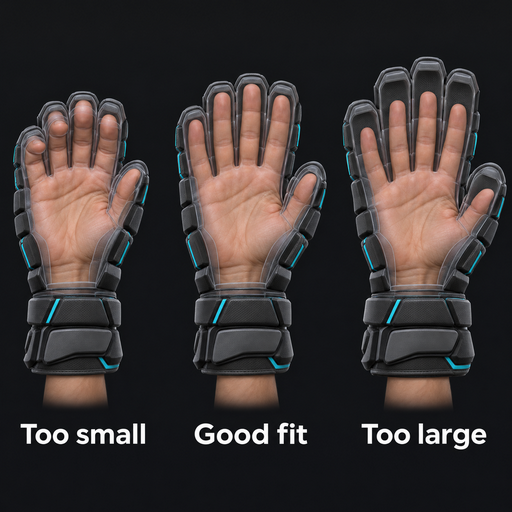
Your fingers should settle into their individual compartments without curling, crowding, or pulling against the seams. Open and close your hand several times, paying attention to your thumb and little finger as well as your middle finger.
How much room should be at the fingertips of Lacrosse gloves? Aim for minimal unused space without pressure. There is no universal fingertip clearance that works across every brand and model. Light contact with the lining may be comfortable; fingertips being driven into the ends when gripping is a warning sign.
Lacrosse Glove Palm Fit
The palm material should follow your hand closely enough to give you a clear feel for the shaft. Some natural creasing is expected, but thick folds beneath your fingers can interfere with control.
Check the web between your thumb and index finger. Your hand should settle fully into the glove without that area pulling tight or stopping your fingers from reaching their compartments.
Lacrosse Glove Wrist Coverage
The cuff should stay positioned around your wrist as you cradle, pass, and change hand positions. It needs room to articulate without digging into your forearm or letting the glove migrate off your hand.
Check how the glove cuff sits alongside your Lacrosse protective equipment, especially your arm pads. A cuff that looks protective while standing still may shift when you extend your arms.
How to Measure Hands for Lacrosse Gloves and Read the Size Chart
Use a Lacrosse size chart by age and position as a broad starting point, then check the chart for the specific glove model rather than relying on your age, height, or previous pair.
Sizing methods differ. STX’s printable guide, for example, considers finger length and palm width and instructs users to print at 100% scale. Follow the chart’s illustrated hand placement rather than substituting a different measurement method.
Measure Both Hands Before Ordering
For a chart that requests hand length:
- Lay your hand flat with your fingers comfortably extended
- Measure between the exact starting and ending points shown
- Record the measurement in the chart’s units
- Measure your other hand and compare both results
If the guide requests width or circumference, measure that separately. Hand length alone cannot describe a broad palm or unusually long fingers.
Lacrosse Glove Size Chart: What Each Measurement Tells You
Use this table to interpret a manufacturer’s chart. It is a fitting reference, rather than a universal conversion between inches and glove sizes.
| Chart information | What it helps assess | What to verify when trying on |
|---|---|---|
| Hand or finger length | Finger compartment length | No curled fingers or painful end pressure |
| Palm width | Space across the hand | No sideways squeezing |
| Hand circumference, if requested | Overall hand volume | Comfortable closure around the shaft |
| Letter or inch size label | Size within that product range | Actual fit in the chosen model |
| Age recommendation | Broad shopping starting point | Fit based on the player’s hands |
A size label is not a substitute for checking the chart. When ordering online, confirm the return policy and keep the gloves clean until you finish your indoor fit checks.
Check Lacrosse Glove Fit While Holding a Stick
The best way to check Lacrosse glove fit while holding a stick is to move through the hand positions you actually use during play.
Bring your own stick when possible. The Lacrosse shaft you use and its tape setup can affect how the gloves feel.
Run This Practical Fit Test
With both gloves on and their closures adjusted as designed:
- Grip normally: Hold the shaft without squeezing harder to stabilize the gloves
- Cradle: Rotate your wrists and check for cuff interference
- Switch hands: Notice whether the palm twists or catches
- Slide your hands: Move between passing and shooting positions
- Extend your arms: Check that your hand stays seated and the cuff remains positioned
Repeat the sequence for a few minutes. A pressure point that seems minor during the first grip may become obvious with repeated movement.
Whether you’re preparing for spring practice or a summer tournament, test the movements you will use on the field.
Recognize Gloves That Are Too Small or Too Big
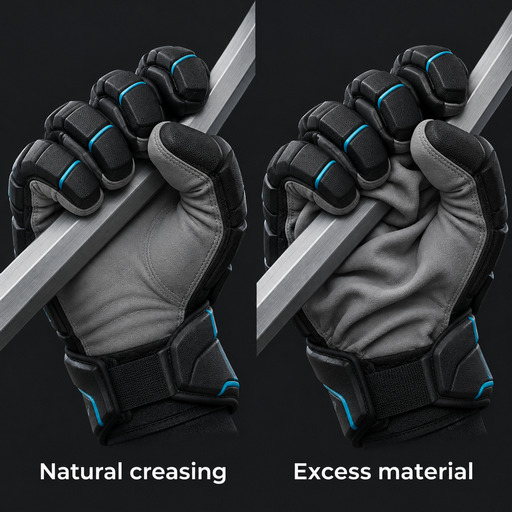
If you’re wondering how to tell if Lacrosse gloves are too small, look for fingers forced into a bent position, persistent seam pressure, or difficulty closing your hand naturally.
Oversized gloves create different problems: empty finger ends fold, palm material bunches, or the glove rotates independently of your hand.
A good fit lets your hand control the glove. You should not need to reposition it after every movement or grip excessively hard to keep it stable.
Choose the Right Size for Wide Hands and Growing Players
Not every fit problem requires a larger size. Sometimes the glove’s proportions simply do not match your hand.
What Size Lacrosse Gloves Should I Get Between Sizes?
Follow the manufacturer’s guidance, then compare the adjacent sizes in person whenever possible. STX’s printable guide suggests sizing up between sizes, but the larger option still needs to pass the movement test.
If the smaller pair squeezes your palm while the larger pair leaves excessive finger space, try another model. Neither compromise is ideal.
How Should Lacrosse Gloves Fit Wide Hands?
Wide hands need enough room across the palm and knuckles without unnecessary finger length. Look for a roomier fit profile rather than automatically choosing longer gloves.
Fit profiles can differ between product lines. For example, STX describes its Cell VII gloves as having an expanded fit profile. That description can help you shortlist options, but trying them on remains essential.
Youth Lacrosse Glove Sizing
Should you size up Lacrosse gloves for a growing child? Only when the larger pair fits securely now.
Ask the child to pick up a stick, switch hands, and make a passing motion. Watch for sliding gloves, floppy fingertips, and difficulty wrapping the fingers around the shaft.
When buying gloves for your child’s first Lacrosse practice, age ranges can help narrow the search. The child’s actual hand measurements and movement should determine the purchase. Recheck fit during the season and after noticeable growth.
Understand New-Glove Feel and Lacrosse Goalie Glove Fit
New equipment and position-specific protection require different expectations, but neither should prevent a functional grip.
Should Lacrosse Gloves Feel Tight When New?
New gloves may feel firm or less flexible than a broken-in pair. They should still allow comfortable finger movement and a natural grip from the beginning.
Distinguish stiffness from insufficient space. Padding resisting movement slightly is different from fingertips pressing hard into the ends or seams squeezing your hand.
Do Lacrosse gloves stretch after breaking in? Materials may soften and conform with use, but do not expect meaningful extra finger length. Break-in cannot reliably fix the wrong size.
Follow the manufacturer’s care instructions rather than using heat or soaking to force a fit.
Lacrosse Goalie Glove Fit
Goalies should evaluate purpose-built goalie gloves, including how the additional thumb protection sits during their normal grip. STX’s Cell VI goalie gloves, for example, include a hard shell surrounding three sides of the thumb.
Make sure your thumb seats correctly without being forced into an uncomfortable position. Practice moving the goalie stick into save and clearing positions, checking for pressure or glove rotation.
This section concerns field goalie gloves. Box goalies need equipment appropriate to their format; confirm suitability before purchasing.
FAQ: Lacrosse Glove Sizing, Comfort, and Fit Problems
Can I play with Lacrosse gloves that are too big?
Excessively large gloves can interfere with grip and allow protective padding to shift. A slightly roomier model may work if it stays secure, but rotating palms and floppy finger ends indicate a poor fit. Choose based on control during movement.
Why do my Lacrosse gloves slide off when playing?
Possible causes include excessive internal space, an incorrectly adjusted closure, incomplete hand insertion, or worn components. Check those areas first. If the gloves still migrate during normal stick movements, reassess their size and fit profile.
Can tightening the wrist strap fix oversized Lacrosse gloves?
A closure can improve retention within its intended adjustment range. It cannot shorten finger compartments or remove excess palm material. If tightening creates wrist pressure while the hand still moves inside, try a better-fitting size or model.
Should I wear thin liners under my Lacrosse gloves?
If you plan to use liners for cold-weather practices, include them during the fitting process. They change the available space. Confirm that you can still close your hand comfortably and avoid buying excessively loose gloves solely to accommodate occasional liners.
When should I replace my Lacrosse gloves?
Reassess gloves when growth changes the fit, closures stop holding, seams fail, palms develop holes, or protective components become damaged. Comfort alone does not confirm their condition. Inspect both gloves regularly and follow manufacturer guidance about repair or replacement.
Takeaway: Get the Right Lacrosse Glove Fit Before You Play
The right Lacrosse gloves combine a secure palm, comfortable fingers, and mobile wrist coverage. Measure both hands using the manufacturer’s instructions, then check the actual model with your stick.
Choose a different fit profile when extra width creates too much finger length, and buy youth gloves for reliable control today. New gloves may soften, but painful pressure should never be your break-in plan. Goalies also need correctly positioned, purpose-built protection.
Trust the movement test over the label: use Lacrosse stick handling drills to check your grip, cradling, and hand changes, then extend your arms to check wrist coverage. Get your fit dialed in, step onto the field, and play with confidence.
Ready to unlock your full potential ?