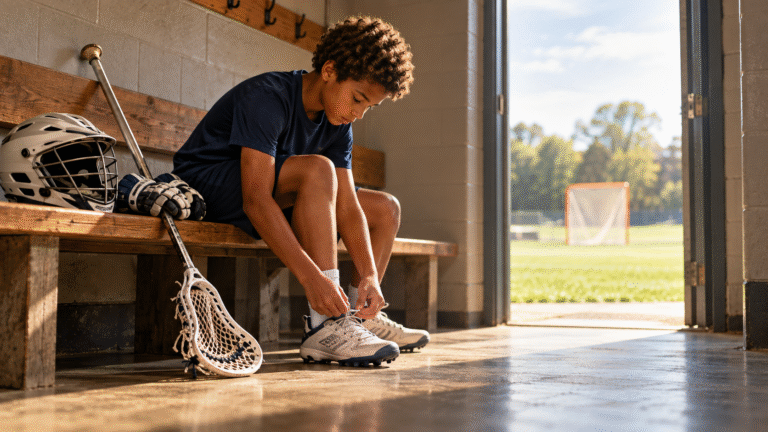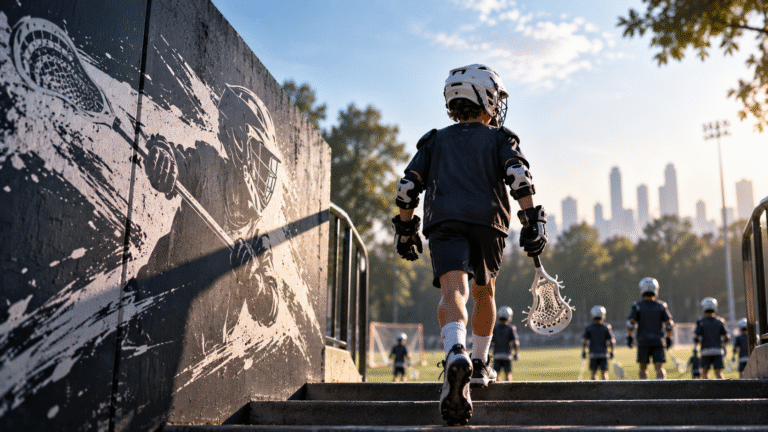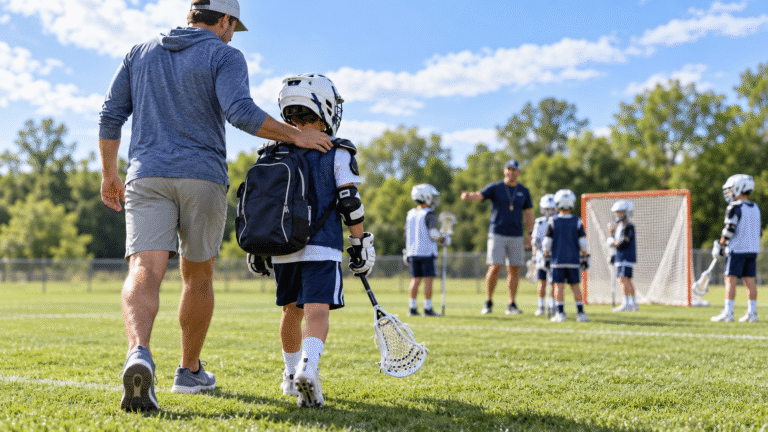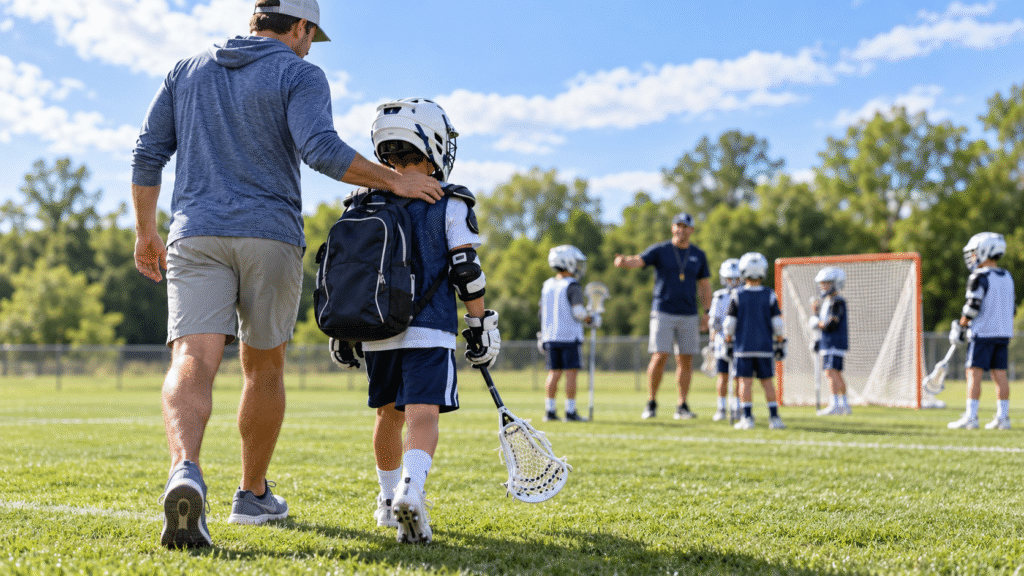
Your child’s first Lacrosse practice will usually include introductions, simple movement games, basic stick skills, and plenty of dropped balls.
Bring the equipment your program requires, a labeled water bottle, comfortable athletic clothing, and appropriate shoes. Plan to arrive about 15 minutes early so your child can meet the coach and get help with equipment.
Beginners do not need polished skills; a welcoming introductory program should teach the basics. Preparing for youth Lacrosse starts with confirming the team’s requirements, explaining what practice might look like, and keeping expectations simple: listen, try something new, and have fun.
What to Expect at First Lacrosse Practice
A beginner session should help children feel comfortable with the coach, their teammates, and an unfamiliar stick. Expect short explanations followed by opportunities to move and play.
A typical beginner practice flow
Although every coach organizes practice differently, a beginner youth Lacrosse practice plan might include:
- Welcome and warm-up: Names, boundaries, simple running games, and directions
- Stick exploration: Learning where to place each hand and how to carry the stick
- Ground balls: Scooping a ball from the grass or turf
- Throwing and catching: Trying short passes with demonstrations and encouragement
- Games and wrap-up: Applying a skill in a playful activity before gathering together
“Cradling” means gently rocking the stick to help keep the ball in its pocket. Your child may hear that word immediately, but nobody should expect instant mastery.
How long does a beginner youth Lacrosse practice last?
For planning purposes, allow roughly 45–90 minutes, depending on age and program. That is an estimate, not a national standard; confirm the actual start and finish times.
Younger beginners may spend more time on movement games, while older newcomers may rotate through skill stations. A first practice also may end without a scrimmage. Learning to scoop, stop on a whistle, and find a partner is already meaningful progress.
Beginner Lacrosse Equipment for Kids: Your Practice Checklist
Before shopping, ask whether your child is joining traditional field Lacrosse, an introductory soft-ball program, or another format. Equipment requirements differ.
What equipment is different for boys’ and girls’ youth Lacrosse?
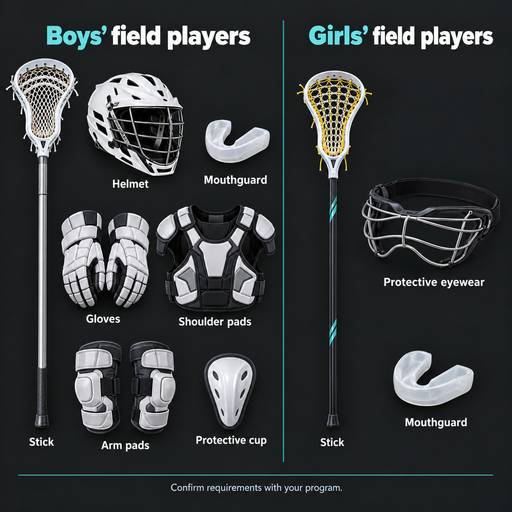
For traditional field players, USA Lacrosse lists a stick, mouthguard, and protective eyewear for girls. Boys need a stick, helmet, mouthguard, gloves, shoulder pads, arm pads, and protective cup. Goalkeepers need specialized protection beyond the field-player checklist. Local requirements and introductory formats may differ.
Boys’ field-player shoulder pads must meet the NOCSAE ND200 standard. Girls’ protective eyewear must meet the applicable ASTM standard; ordinary sunglasses are not a substitute. Have the program verify equipment compliance and fit before participation.
Youth Lacrosse practice checklist
| Bring or confirm | What parents should check |
|---|---|
| Program-appropriate stick | Coach approves its type, length, and condition |
| Required protective equipment | Everything fits and meets current program rules |
| Personal mouthguard | Prepared according to its instructions before arrival |
| Labeled water bottle | Easy to recognize and open independently |
| Athletic clothing and shoes | Suitable for the surface and weather |
| Requested practice jersey | Bring a reversible jersey only if requested |
| Weather extras | Appropriate layers, sunscreen, or a dry shirt |
| Registration details | Required forms and emergency contact information are complete |
Label removable gear, too. Identical gloves and water bottles can turn pickup into a guessing game.
Can my child borrow Lacrosse equipment for their first practice?
Ask before buying. USA Lacrosse recommends checking whether the local program provides loaners. Availability, sizes, fees, and reservation policies vary.
Arrange a fitting before practice if possible, and provide your child’s own mouthguard. Avoid buying oversized protective gear with the expectation that your child will grow into it; proper equipment fit matters from the first session.
What to Wear to Lacrosse Practice—and How to Prepare
Comfortable clothes and a calm arrival make it easier to focus on learning.
Choose an athletic shirt, shorts or flexible athletic pants, and socks that fit comfortably inside the shoes. Remove jewelry and secure long hair according to team rules.
Does my child need cleats or sneakers for Lacrosse practice?
The answer depends on the playing surface and facility policy.
- Indoor courts: Ask about required athletic shoes and nonmarking soles
- Artificial turf: Confirm whether sneakers, turf shoes, or molded cleats are permitted
- Natural grass: Ask which footwear the coach recommends for field conditions
Check before purchasing specialty footwear. A Chicago indoor clinic and an outdoor Maryland recreation program may have very different requirements.
Preparing kids for Lacrosse practice without adding pressure
Give your child a short preview: “You’ll meet the coach, learn how to hold your stick, and play some games.”
Optional preparation can be equally simple:
- Try putting on and removing equipment together
- Practice opening the water bottle while wearing gloves
- Pack the bag the evening before
- Choose one small goal, such as learning a teammate’s name
Avoid turning the backyard into an entrance exam. Being ready for Lacrosse does not mean your child needs to demonstrate catching ability before attending a beginner session.
How early should we arrive for the first Lacrosse practice?
Aim for about 15 minutes early, or follow the coach’s instructions. Allow additional time if loaner equipment needs fitting.
Check the exact field, parking entrance, and bathroom location beforehand. Arriving early helps only if you reach the correct part of the sports complex.
Youth Lacrosse Practice Safety and Parent Sideline Etiquette
Good preparation includes understanding how the program communicates, supervises players, and handles interruptions.
What questions should parents ask the Lacrosse coach before practice?
Send practical questions ahead of time rather than trying to cover everything during warm-ups:
- Is this group intended for complete beginners?
- Which equipment and footwear are required?
- Who checks protective gear and stick fit?
- Where do families receive weather cancellations?
- What are the water-break, bathroom, and pickup procedures?
- How should we privately share relevant health information or accommodations?
Ask how the program handles emergencies and suspected injuries. USA Lacrosse’s league standards call for emergency planning, heat and severe-weather policies, and concussion management procedures.
Teach your child one simple habit: tell the coach immediately when something hurts, equipment feels wrong, or they need help.
Lacrosse parent sideline etiquette: encourage without coaching
Let the coach give instructions. Calling “Shoot!” while the coach is teaching passing creates competing directions for a child who is already processing unfamiliar information.
Helpful sideline habits include:
- Watch from the designated spectator area
- Keep siblings away from active drills and goals
- Praise effort, listening, and kindness
- Save nonurgent questions for after the session
- Ask permission before photographing or posting other children
Whether practice takes place in suburban New York or Los Angeles, the same principle applies: give children space to hear their coach and make their own discoveries.
Build a Simple After Lacrosse Practice Routine
The first ride home helps shape how your child remembers the experience. Begin with connection rather than a performance review.
Try “What was the funniest part?” or “Did you learn anyone’s name?” If your child is quiet, allow some space before asking more.
Reset the bag and recognize one small win
Once home, establish a manageable routine:
- Unpack damp clothing and air out equipment
- Clean the mouthguard according to its instructions
- Refill or wash the water bottle
- Note missing items or equipment concerns
- Check the next practice time
Then recognize something specific: “You kept trying that scoop”, or “You asked for help when your glove felt uncomfortable”.
Avoid comparing your child with experienced teammates. A beginner’s useful progress markers are participation, growing comfort, and willingness to return.
If something went wrong, identify the issue before drawing conclusions. An uncomfortable helmet, confusing instruction, or worry about finding a partner may require a small adjustment rather than abandoning the sport.
FAQ: Your Child’s First Lacrosse Practice
Does my child need Lacrosse experience before the first practice?
No, provided the session is advertised for beginners. Confirm placement with the coach because some teams expect previous experience. At an introductory practice, unfamiliarity with passing, catching, and rules should be expected.
Should parents stay during their child’s first Lacrosse practice?
Follow the program’s supervision policy. If spectators are allowed, staying nearby can reassure a new player and make equipment questions easier to resolve. Watch from the designated area, and confirm pickup arrangements before leaving.
What if my child is nervous about joining Lacrosse practice?
Tell the coach discreetly before the session. Ask whether your child can meet a teammate or receive a brief introduction first. Set one achievable goal, such as joining the warm-up, rather than expecting immediate confidence.
Should my child eat before Lacrosse practice?
Plan around your child’s usual meals and comfort. Avoid arriving hungry or eating a large meal immediately before running. A familiar snack may suit an after-school practice; follow any individual dietary guidance and the program’s food-allergy policy.
What if my child cannot catch the Lacrosse ball yet?
That is a normal starting point for a beginner. Tell the coach so instruction can match your child’s experience. Celebrate attempts and small improvements. Extra practice should remain optional and playful rather than becoming homework after the first session.
Takeaway: Make Your Child’s First Lacrosse Practice a Positive Start
A successful first Lacrosse practice starts with the right equipment, a calm arrival, and realistic expectations. Confirm the program’s requirements, pack water and comfortable clothing, and give your child time to meet the coach.
Expect your child to practice basic skills such as throwing and catching a Lacrosse ball, encounter unfamiliar instructions, and make plenty of mistakes along the way. From the sideline, offer encouragement and let the coach lead. Afterward, listen before evaluating, unpack the bag, and recognize one small win.
Your child does not need to leave as a confident player. Feeling welcomed and wanting to try again is a strong first result. Gear up, show up, and let’s play!
Ready to unlock your full potential ?