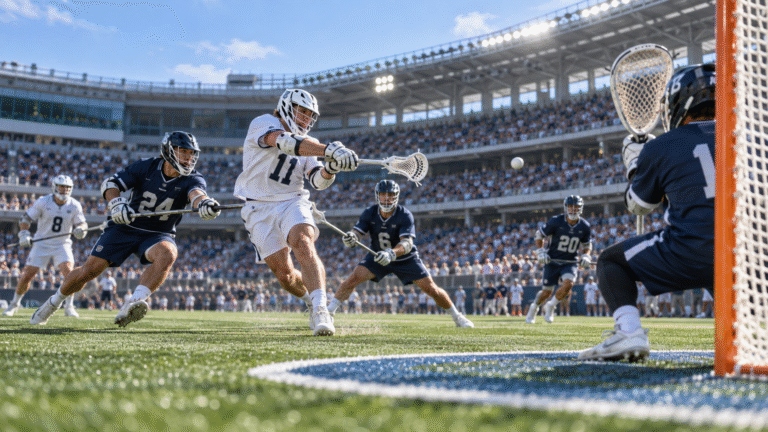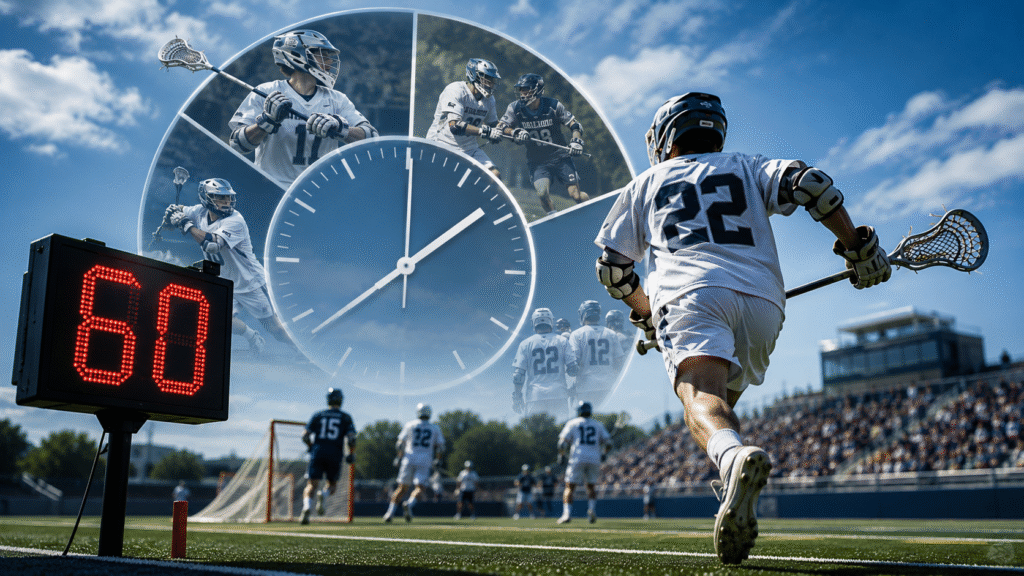
How long is a Lacrosse game? In most cases, a standard Lacrosse game lasts between 60 and 90 minutes of playing time, but the full real-time experience can stretch well beyond two hours depending on the level of play, stoppages, halftime, and overtime.
Whether you are watching high school Lacrosse or PLL action, understanding the timing structure makes the sport much easier to follow and enjoy. From youth leagues to NCAA matchups and professional play, Lacrosse game length varies by age group and competition rules.
In this guide, we will break down Lacrosse game quarters, halftime rules, overtime procedures, running clocks, and the key differences between youth, high school, college, and professional Lacrosse.
Standard Lacrosse Game Length and Quarter Structure
The first thing most new fans ask is: how many quarters are in a Lacrosse game? The answer is simple: nearly all organized Lacrosse games are divided into four quarters. However, the exact timing depends on whether the game is youth, high school, college, or professional Lacrosse.
Typical Game Length by Competition Level
Here is a quick breakdown of the average total time of a Lacrosse match across different levels in the USA:
| Level of Lacrosse | Quarter Length | Halftime | Approximate Real-Time Duration |
|---|---|---|---|
| Youth Lacrosse | 8–12 minutes | 5–10 minutes | 60–90 minutes |
| High School Lacrosse | 12 minutes | 10 minutes | 1.5–2 hours |
| NCAA College Lacrosse | 15 minutes | 10–15 minutes | 2+ hours |
| Professional Lacrosse | 12 minutes | 10 minutes | Around 2 hours |
How the Four Quarters Work
Every quarter begins with a faceoff at midfield. Teams attempt to control possession and score before the clock expires. Between quarters, players regroup, coaches adjust strategies, and officials handle substitutions.
Typical break structure includes:
- 2-minute breaks between the 1st and 2nd quarters
- Halftime lasting 10–15 minutes
- Another short break before the 4th quarter
For fans attending games, these pauses create a more social and strategic viewing experience.
Why Lacrosse Timing Feels Fast
Even though a game may last two hours in real time, Lacrosse moves quickly because of:
- Continuous transition play
- Fast possessions
- Shot clocks in many leagues
- Frequent scoring chances
That fast pace is one reason Lacrosse continues to grow in popularity across the United States.
College and High School Lacrosse Game Time Rules
The biggest differences in game timing usually appear between NCAA and high school competition.
College Lacrosse Game Length Explained
A standard NCAA men’s game includes:
- Four 15-minute quarters
- 10-minute halftime
- Clock stoppages for penalties, goals, and timeouts
So, how long is a college Lacrosse game including halftime? Most games last approximately two hours, especially in nationally televised matchups.
In college programs, TV coverage can slightly extend the total experience because of commercial breaks and replay reviews.
Women’s NCAA Lacrosse has evolved over the years as well. While older formats used halves, modern NCAA women’s games now also feature quarters, improving consistency across the sport.
High School Lacrosse Game Time Rules
The high school Lacrosse game time rules differ slightly by state associations, but most schools follow this structure:
- Four 12-minute quarters
- 10-minute halftime
- Running or stopped clocks depending on the situation
So, how long does a high school Lacrosse game last with breaks? Generally, games run about 90 minutes to 2 hours.
In states with major Lacrosse cultures like New York, Maryland, and Massachusetts, playoff games often feel longer because of larger crowds, ceremonial introductions, and overtime possibilities.
Clock Stoppages That Extend Games
Many fans wonder why do Lacrosse games sometimes last over two hours even though regulation time seems shorter.
The main reasons include:
- Injuries
- Penalties
- Timeouts
- Replay reviews
- Overtime periods
- Television broadcasts
Professional and NCAA contests especially can stretch beyond expected timing because of media coverage and higher game intensity.
Youth Lacrosse Game Duration by Age Group
Youth Lacrosse follows different timing rules because younger athletes require shorter playing periods and more recovery time.
How Long Are Youth Lacrosse Quarters by Age Group?
The youth Lacrosse game duration depends largely on player age and league organization.
Typical formats include:
- Ages 6–8: 8-minute quarters
- Ages 9–10: 10-minute quarters
- Ages 11–14: 12-minute quarters
Leagues may adopt slightly different standards, but shorter quarters help maintain player energy and safety.
Developmental Focus Over Game Length
Youth Lacrosse emphasizes:
- Skill development
- Sportsmanship
- Learning positioning
- Safe physical play
Because of that, many youth organizations use running clocks to keep games moving efficiently.
This also helps parents and tournament organizers manage scheduling during weekend events.
Tournament Play and Condensed Timing
Large youth tournaments often shorten quarters to fit multiple games into one day.
Instead of standard lengths, tournament games may use:
- 20-minute halves
- Running clocks
- Limited halftime breaks
These adjustments reduce fatigue while helping teams complete full event schedules.
Men’s vs Women’s Lacrosse Game Length Differences
Many fans ask whether there is a major difference between men’s and women’s Lacrosse timing.
Are Women’s Lacrosse Games Shorter Than Men’s Games?
Today, the answer is usually no at the college level.
Modern NCAA women’s Lacrosse uses:
- Four 15-minute quarters
- Similar halftime structure
- Comparable overtime systems
However, there are still rule variations affecting game flow.
Men’s vs Women’s Lacrosse Game Length and Pace
The main differences involve style rather than pure duration.
Men’s Lacrosse features:
- More physical contact
- Heavier protective equipment
- Faster shot velocity
- More faceoffs
Women’s Lacrosse generally emphasizes:
- Ball movement
- Spacing
- Reduced body contact
- Different restart mechanics
Even though the clocks are similar, gameplay rhythm can feel very different for spectators watching games.
Professional Lacrosse Timing
Professional leagues such as the PLL use slightly modified timing systems to enhance entertainment value.
Many professional games include:
- 12-minute quarters
- Shot clocks
- Faster restarts
- Television-friendly pacing
This structure keeps the sport exciting for modern audiences while maintaining traditional Lacrosse strategy.
Lacrosse Overtime Rules Explained
Overtime is one of the most exciting parts of Lacrosse because games can end suddenly with a single goal.
What Happens During Overtime in Lacrosse?
The answer depends on the league or competition.
In most men’s NCAA games:
- Teams play sudden-death overtime
- The first goal immediately wins
- Extra periods continue until someone scores
This creates intense, high-pressure moments that often become instant highlights.
Does Professional Lacrosse Use Sudden Death Overtime?
Yes, many professional leagues use variations of sudden-death overtime.
For example, PLL games often include:
- Short overtime periods
- Possession-focused faceoffs
- Immediate game-ending goals
Fans in sports-heavy cities like Los Angeles and Atlanta often compare Lacrosse overtime excitement to NHL sudden-death hockey.
How Overtime Changes Total Game Time
Because overtime has no guaranteed length, the average total time of a Lacrosse match can increase significantly.
An overtime game may add:
- 5–20 extra minutes
- Additional commercial breaks
- Extra player recovery periods
That is why some championship games can exceed two and a half hours in total duration.
FAQ: How Long Is a Lacrosse Game?
What is the average real-time duration of a Lacrosse game?
Most games last between 90 minutes and two hours in real time, depending on the level of play, clock stoppages, and overtime.
How many quarters are in a Lacrosse game?
Nearly all modern Lacrosse games use four quarters, including high school, college, and professional competition.
How much time is between quarters in Lacrosse?
Most games feature 2-minute breaks between quarters and a 10–15 minute halftime.
What happens during overtime in Lacrosse?
Most leagues use sudden-death overtime, meaning the first team to score wins immediately.
Does professional Lacrosse use sudden death overtime?
Yes. Professional leagues such as the PLL commonly use sudden-death overtime formats to create fast, exciting finishes.
Takeaway: Understanding Lacrosse Game Length Makes Watching More Fun
Lacrosse games are structured for speed, excitement, and nonstop action, but total game length varies depending on age level, competition rules, halftime, and overtime.
Youth games may finish in under 90 minutes, while NCAA and professional matchups often exceed two hours because of stoppages and intense gameplay.
Understanding Lacrosse game quarters and halftime, overtime procedures, and timing differences between men’s and women’s competition helps fans follow the sport with greater confidence.
Whether you are cheering from the stands in Baltimore, streaming a college showdown in Chicago, or attending a youth tournament in Texas, knowing the timing rules helps you enjoy every fast-paced second of America’s fastest-growing field sport. Grab your gear, follow the clock, and enjoy the action like a true Lacrosse fan!
Ready to unlock your full potential ?