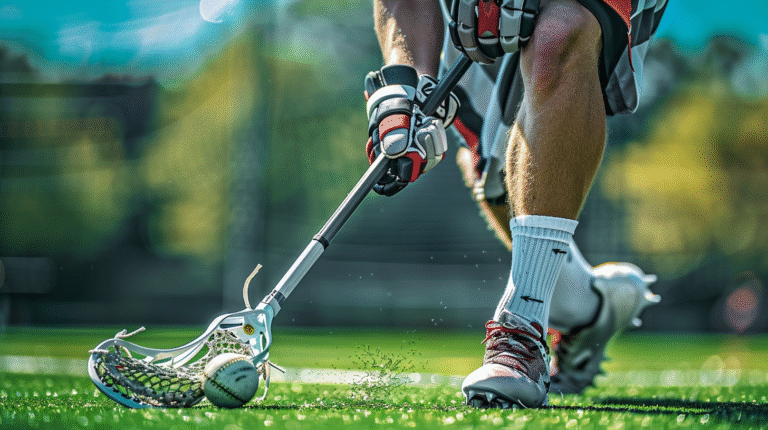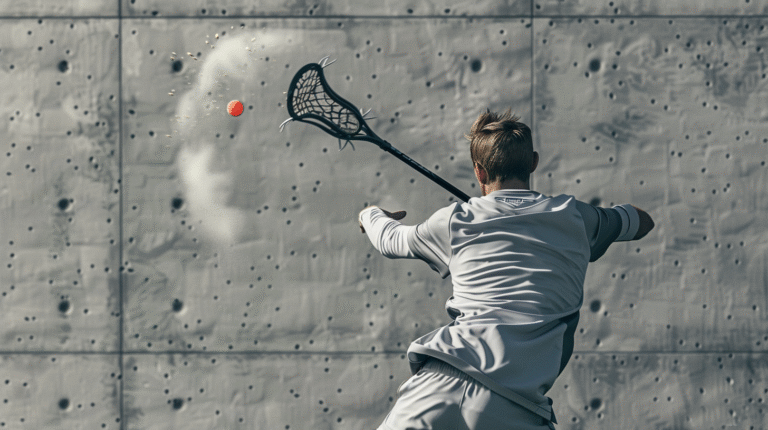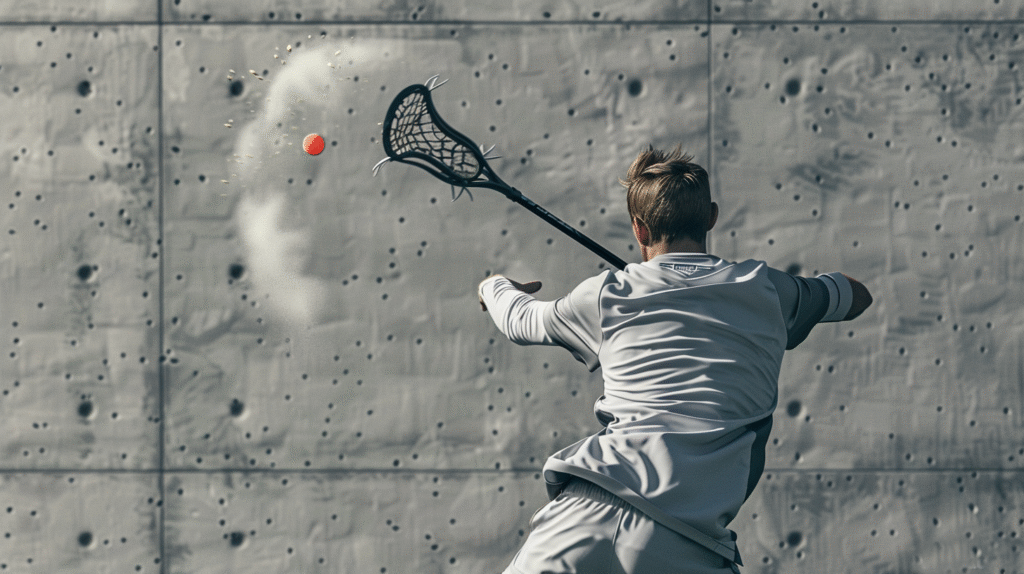
Master Lacrosse wall ball is one of the most effective ways to improve stick handling, passing accuracy, and overall field performance. Wall ball drills may seem simple, but when structured progressively, they develop hand-eye coordination, reaction speed, and muscle memory, critical skills for any serious Lacrosse athlete.
Whether you’re a high school player chasing college recruitment or a club athlete aiming to elevate your game, this progressive wall ball plan will guide you from foundational techniques to advanced, game-like drills.
Why Lacrosse Wall Ball Is Essential
Practicing wall ball regularly delivers a unique combination of physical, technical, and mental benefits. It’s one of the most efficient ways to refine your Lacrosse skills in a controlled environment.
Physical Benefits
- Improved hand-eye coordination for catching and throwing under pressure
- Enhanced forearm, wrist, and shoulder strength for quicker stick movement
- Better reaction time and reflexes for high-speed gameplay
Technical Benefits
- Sharper passing and catching accuracy
- Smooth, consistent shooting mechanics
- Increased dexterity for dodges and stick fakes
Mental Benefits
- Builds focus and concentration
- Reinforces discipline with repetitive skill practice
- Develops confidence in handling the ball under pressure
By dedicating consistent time to wall ball, athletes can see measurable improvements in their on-field performance.
Progressive Wall Ball Skill-Building Plan Overview
Below is a sample weekly progression for mastering wall ball. The plan balances technique development, speed, and reaction skills while allowing adequate recovery. Adapt intensity and volume for age and skill level.
| Day | Focus | Key Activities | Duration |
|---|---|---|---|
| Monday | Basic Catch & Throw | Stationary passes, one-handed throws, wall catches | 30–40 min |
| Tuesday | Footwork Integration | Passing on the move, shuffle & pivot drills | 30–45 min |
| Wednesday | Off-Hand Training | Left-hand passes & catches, crossover drills | 30–35 min |
| Thursday | Accuracy & Targeting | Hit specific targets, distance throws, rapid-fire wall drills | 40–50 min |
| Friday | Game-Like Simulation | Rapid reaction wall drills, combo passing/shooting | 45–60 min |
| Saturday | Active Recovery | Light wall ball, stick mobility, stretching | 20–30 min |
| Sunday | Rest & Analysis | Review video, mental visualization, strategy planning | – |
This structured approach ensures each aspect of wall ball mastery is addressed progressively while preventing burnout and overuse injuries.
Monday: Basic Catch and Throw Fundamentals
Every successful wall ball session begins with mastering the fundamentals. Correct technique ensures efficiency, prevents injuries, and builds a strong foundation for advanced drills.
Drills:
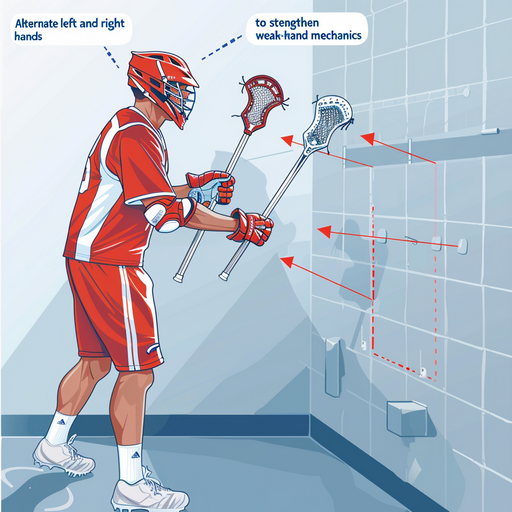
- Stationary passes: Stand 5–10 feet from the wall, focus on smooth, controlled throws
- One-handed throws: Alternate left and right hands to strengthen weak-hand mechanics
- Wall catches: Emphasize soft hands and secure cradle upon catching
Key Tips:
- Keep elbows slightly bent and relaxed to absorb impact
- Focus on a consistent throwing motion
- Begin each session with a 5-minute wrist and shoulder warm-up
💡Pro Tip: Quality over speed, control every throw before adding distance or intensity.
Tuesday: Footwork Integration
Adding movement while executing wall ball drills translates directly to in-game performance. Agility and footwork are critical for maintaining balance and accuracy under defensive pressure.
Drills:
- Side-to-side shuffle while throwing and catching
- Pivot drills: Throw, pivot, and catch in different directions
- Short sprint to wall, receive, throw back immediately
Transition Tip: Combine footwork with short bursts of speed to simulate dodging a defender while maintaining stick control.
Wednesday: Off-Hand Mastery
A strong off-hand is a game-changer. Practicing your weaker side improves versatility and unpredictability on the field.
Drills:
- Crossover passes: Switch hands mid-drill for ambidextrous development
- Weak-hand stationary throws and catches
- Wall jab drills: Quick touches with off-hand only
Pro Tip: Treat your off-hand like a new skill, start slow, gradually increase speed and complexity.
Thursday: Accuracy and Targeting
Accuracy separates good players from great ones. Hitting precise spots on the wall while moving or stationary hones aim for passes and shots during games.
Drills:
- Target circles: Stick specific marks on the wall and aim for consistency
- Rapid-fire throws: Alternate short, medium, and long distances
- Angle drills: Catch and throw at different angles to simulate game scenarios
Tips for Success:
- Focus on technique first, speed second
- Keep feet aligned to the target for proper body mechanics
- Track progress by counting consecutive target hits
Friday: Game-Like Simulation
By now, strength, dexterity, and accuracy are developing. Game simulation drills connect skills to real-field scenarios.
Activities:
- Rapid reaction wall drills: Coach or partner calls directions randomly
- Combo passing/shooting: Multiple passes followed by a shot at a target
- Simulated under-pressure wall ball: Add a defender or timed challenge
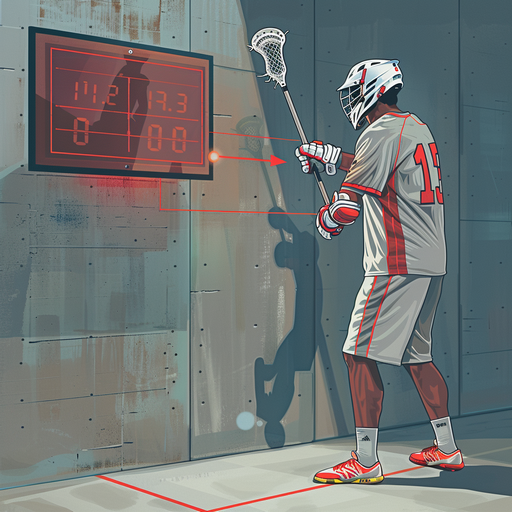
Goal: Combine technical skill with mental processing speed and decision-making.
Saturday: Active Recovery
Recovery is often overlooked but essential for long-term skill retention and injury prevention.
Suggestions:
- Light wall ball focusing on fluid movements
- Stick mobility exercises: rotate wrists, forearms, and shoulders
- Gentle stretching and yoga for flexibility
💡Pro Tip: Active recovery improves blood flow without fatiguing the muscles, allowing faster adaptation of new skills.
Sunday: Rest and Analysis
Rest isn’t just for the body, it’s for the mind. Analyze performance and visualize successful execution.
Focus Areas:
- Watch video footage to identify strengths and weaknesses
- Mental visualization of perfect catches, throws, and movements
- Plan upcoming week’s drills with slight progression
Remember: Overtraining leads to sloppy technique and fatigue. Rest is a strategic component of mastery.
Wall Ball Safety and Injury Prevention
Maintaining long-term performance requires a focus on safety:
- Warm up with dynamic stretches to prepare wrists, shoulders, and forearms
- Start with controlled throws and gradually increase speed
- Use proper stick grip and maintain soft hands to prevent strain
- Include mobility work for joints and muscles
- Avoid overuse, mix wall ball with field practice
FAQ: Lacrosse Wall Ball Training
What are the main benefits of wall ball training?
Improves stick skills, hand speed, accuracy, and consistency, all with high reps in a short time.
How often should players include wall ball in their weekly training?
3–5 sessions per week, 30–45 minutes each, is a solid balance.
Should drills change during season?
During games, reduce intensity; focus on maintenance, skill reinforcement, and injury prevention.
What’s the key to rapid improvement?
Consistency, progressive challenge, and proper mechanics are non-negotiable.
How important is recovery?
Extremely. Recovery consolidates motor learning and prevents overuse injuries.
Takeaway: Progress Your Wall Ball Mastery
A progressive wall ball plan develops stick skills, accuracy, and mental sharpness. Starting with fundamentals, gradually integrating movement, off-hand work, and game simulation ensures continuous growth.
Consistency is the secret weapon: each session strengthens muscle memory, reflexes, and confidence. Stick with the plan, focus on quality, and watch your Lacrosse skills transfer seamlessly to the field.
💡Remember: Every controlled throw, catch, and pivot builds the foundation for on-field dominance. Master wall ball today, and dominate tomorrow.
Ready to unlock your full potential ?