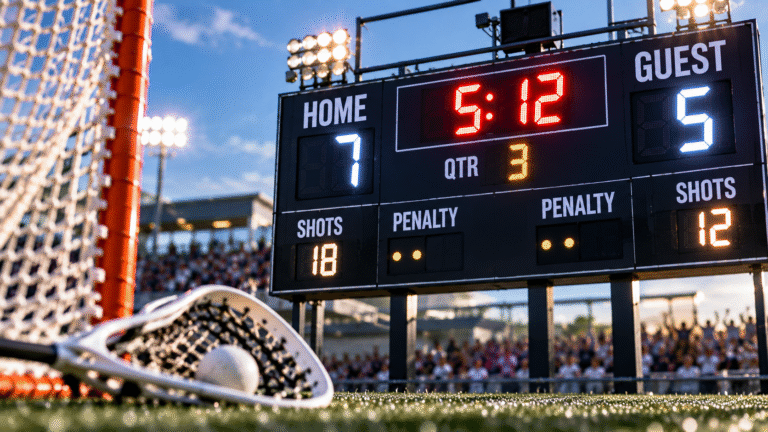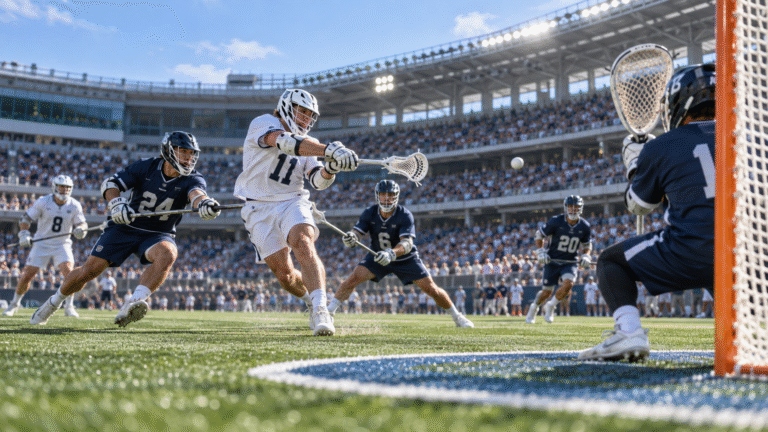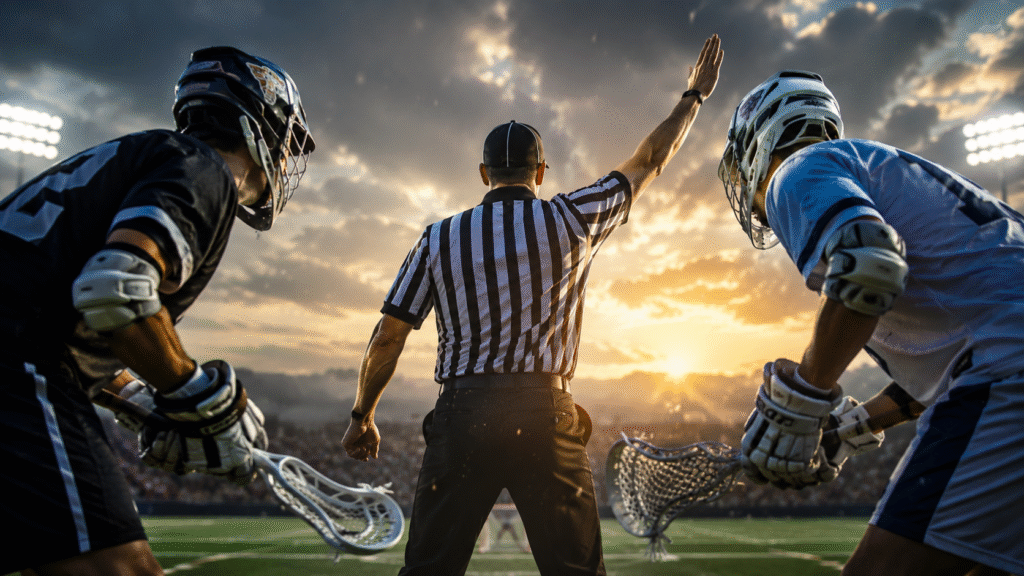
Lacrosse penalties are designed to keep the game safe, fair, and competitive.
Whether you’re watching a fast-paced high school matchup, a college rivalry, or a professional game, understanding penalties helps players, coaches, and fans follow the action with confidence.
From slashing and offsides to illegal body checks and unsportsmanlike conduct, every whistle has a purpose.
This guide breaks down Lacrosse penalty rules in plain language, including penalty time, referee signals, technical and personal fouls, and youth-specific regulations, so you can better understand what happens during every call on the field.
Understanding the Basics of Lacrosse Penalty Rules
Lacrosse is one of the fastest sports in the USA, and penalties help maintain player safety and game flow. Referees monitor contact, positioning, stick use, and sportsmanship throughout the game.
At the core of common Lacrosse fouls and penalties are two main categories:
- Personal fouls
- Technical fouls
The difference between them often determines how severe the punishment will be.
Personal Fouls in Lacrosse
Personal fouls in Lacrosse are more serious violations involving dangerous or excessive contact. These fouls usually result in longer penalty time.
Common personal fouls include:
- Slashing
- Cross-checking
- Illegal body checks
- Unsportsmanlike conduct
- Tripping
In leagues across the USA, officials are especially strict about dangerous hits involving the head or neck area.
Technical Fouls in Lacrosse
Technical fouls in Lacrosse are less severe but still impact possession and gameplay.
Examples include:
- Holding
- Interference
- Offsides
- Pushing
- Crease violations
Technical fouls are often called during defensive pressure situations, especially in close NCAA games.
What Is the Difference Between Technical and Personal Fouls in Lacrosse?
The biggest difference is severity and penalty duration.
| Foul Type | Examples | Typical Penalty Time | Result |
|---|---|---|---|
| Personal Fouls | Slashing, cross-checking, illegal hits | 1–3 minutes | Player serves time penalty |
| Technical Fouls | Holding, offsides, interference | 30 seconds or possession | Usually less severe |
| Unsportsmanlike Fouls | Taunting, arguing with officials | 1–3 minutes | May include ejection |
| Expulsion Fouls | Fighting or repeated dangerous conduct | Full-game removal | Player ejected |
This distinction is critical when learning how penalty time works in Lacrosse.
Common Lacrosse Fouls and Penalties Players Must Know
Every player, from youth leagues to elite travel programs, should understand the most frequently called penalties.
What Counts as Slashing in Lacrosse?
Slashing occurs when a player swings their stick recklessly or hits an opponent illegally.
Officials usually call slashing when:
- Contact hits the helmet
- The swing appears uncontrolled
- The stick strikes areas outside gloves or stick
Because player safety is a top priority, slashing penalties are heavily enforced at every level.
Illegal Body Checks in Lacrosse
Illegal body checks in Lacrosse are another major source of penalties.
A body check becomes illegal when:
- Contact targets the head or neck
- The player is defenseless
- The hit comes from behind
- The player is too far from the ball
Youth and high school officials are especially focused on reducing dangerous collisions.
How Does Offsides Work in Lacrosse?
One of the most misunderstood rules involves offsides.
A team is offsides when:
- Fewer than four players remain on the defensive side
- Fewer than three players stay on the offensive side
This technical foul usually results in a 30-second penalty or turnover.
Why Do Referees Throw Flags in Lacrosse?
Referees throw flags during delayed penalties.
This happens when:
- The fouled team still has possession
- Officials want play to continue temporarily
- A serious violation occurs during active play
Fans watching PLL games often see delayed flags before the whistle stops play.
How Penalty Time Works in Lacrosse Games
Understanding penalty duration is essential for players and spectators alike.
How Long Are Penalties in Lacrosse Games?
Penalty time depends on the severity of the foul.
Typical durations include:
- 30 seconds for technical fouls
- 1 minute for standard personal fouls
- 2–3 minutes for severe or intentional fouls
Some penalties are “non-releasable,” meaning the player must serve the full time regardless of goals scored.
What Happens During a Lacrosse Penalty?
When a player receives a penalty:
- The player leaves the field
- They report to the penalty area
- Their team plays short-handed
- Officials restart play after setup
This creates a “man-up” opportunity for the opposing offense.
In competitive college programs, man-up efficiency often determines game outcomes.
Can a Player Be Ejected for Penalties in Lacrosse?
Yes. Players can be removed for:
- Fighting
- Repeated unsportsmanlike conduct
- Targeting the head intentionally
- Excessive dangerous play
Officials may issue a full-game expulsion or suspension depending on league rules.
How Many Penalties Before a Player Fouls Out in Lacrosse?
Unlike basketball, Lacrosse does not always use a strict foul-out number. However, repeated personal fouls can lead to:
- Ejection
- Coach discipline
- League suspension
In many NCAA and high school leagues, accumulating five minutes of personal fouls raises serious disciplinary concerns.
Lacrosse Referee Signals and Calls Explained
Understanding officiating signals helps fans follow games more easily.
Basic Lacrosse Referee Signals and Calls
Lacrosse referee signals and calls are standardized across most US leagues.
Common signals include:
- Raised arm for delayed penalty
- Hand chop motion for slashing
- Push motion for pushing
- Crossed arms for offsides
- Pointing direction for possession
Officials in professional leagues train extensively to make calls visible and consistent.
How Officials Determine Penalties
Referees evaluate:
- Intent
- Player safety
- Positioning
- Severity of contact
- Possession impact
Many youth tournaments now use multiple officials to improve accuracy.
Advantage Situations and Delayed Whistles
Sometimes referees delay whistles to preserve offensive opportunities.
This approach:
- Prevents unfair stoppages
- Rewards possession continuity
- Creates strategic advantages
Delayed penalties are especially common during fast breaks.
Communication Between Officials and Coaches
Strong communication reduces confusion.
Officials often explain:
- Penalty type
- Time duration
- Whether the foul is releasable
At elite tournaments, referee communication is considered a critical part of game management.
Youth Lacrosse Penalty Regulations and Safety Rules
Youth Lacrosse places an even greater emphasis on safety and skill development.
Youth Lacrosse Penalty Regulations
Youth Lacrosse penalty regulations are designed to limit dangerous contact and encourage proper technique.
Common youth-specific rules include:
- Reduced body checking
- Stricter slashing enforcement
- Mandatory protective equipment
- Limited stick contact
USA Lacrosse emphasizes player development over aggressive physicality.
Most Common Youth Lacrosse Penalties Explained
The most common youth Lacrosse penalties include:
- Pushing from behind
- Stick checks to the helmet
- Holding
- Offsides
- Illegal screens
Young players often commit penalties because of poor positioning rather than intentional aggression.
How to Avoid Penalties in Lacrosse Defense Play
Defenders can dramatically reduce penalties by focusing on fundamentals.
Key defensive habits include:
- Keeping feet moving
- Maintaining body control
- Using proper stick angles
- Avoiding high checks
- Communicating with teammates
Coaches increasingly prioritize clean defensive technique over overly physical play.
Teaching Discipline and Sportsmanship
Good Lacrosse culture starts early.
Youth coaches encourage:
- Respect for officials
- Controlled aggression
- Team accountability
- Smart decision-making
This foundation helps players succeed as competition intensifies in high school and college programs.
FAQ: Lacrosse Penalties Explained for Players and Fans
What is the difference between technical and personal fouls in Lacrosse?
Technical fouls are less severe infractions like offsides or holding, while personal fouls involve dangerous contact such as slashing or illegal body checks. Personal fouls carry longer penalties.
How long are penalties in Lacrosse games?
Technical fouls are usually 30 seconds, while personal fouls range from 1 to 3 minutes depending on severity.
Why do referees throw flags in Lacrosse?
Officials throw flags to signal delayed penalties when the non-offending team still has possession, allowing play to continue temporarily.
Can a player be ejected for penalties in Lacrosse?
Yes. Fighting, repeated dangerous conduct, or severe unsportsmanlike behavior can result in ejection or suspension.
How to avoid penalties in Lacrosse defense play?
Players should focus on body positioning, controlled stick checks, footwork, and avoiding hits to vulnerable areas like the head or neck.
Takeaway: Mastering Lacrosse Penalties Improves Every Part of the Game
Understanding Lacrosse penalties gives players, parents, coaches, and fans a clearer view of how the sport works.
From technical fouls in Lacrosse to serious personal violations, every rule exists to protect athletes and maintain competitive balance.
Knowing how penalty time works in Lacrosse, recognizing referee signals, and understanding youth safety regulations can improve decision-making on and off the field.
Whether you’re coaching in Texas, cheering in Chicago, or playing in a Maryland tournament, mastering penalty rules helps you enjoy the game at a deeper level.
Play smart, stay disciplined, and bring championship-level energy every time you step onto the field!
Ready to unlock your full potential ?