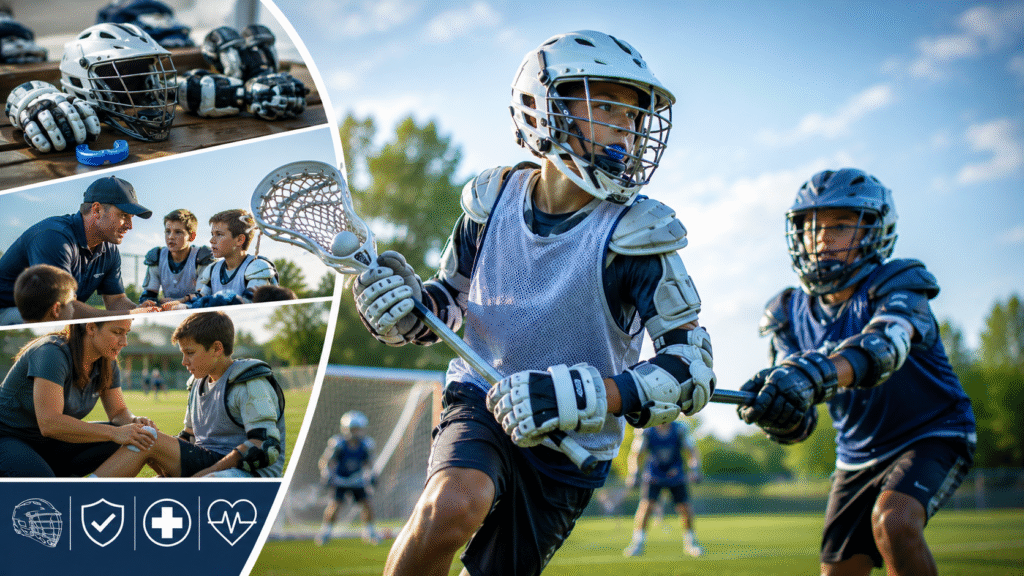
Lacrosse can be dangerous for kids, but it is generally considered a safe youth sport when proper coaching, rules, and protective equipment are used.
Like football, soccer, hockey, and basketball, Lacrosse carries some injury risk, especially in competitive environments. However, most youth-related incidents are minor and preventable.
Parents across the USA increasingly choose Lacrosse because it combines speed, teamwork, fitness, and skill development.
Understanding the real risks associated with youth Lacrosse, the role of safety rules, and how to prevent injuries helps families make informed decisions while allowing children to enjoy one of America’s fastest-growing sports.
Understanding Youth Lacrosse Injury Risks
Lacrosse is a high-energy contact sport, particularly in boys’ leagues, so some level of injury risk exists. However, many concerns about the sport are often exaggerated.
What Are the Most Common Injuries in Youth Lacrosse?
The most frequent injuries in youth players include:
- Sprained ankles
- Wrist and hand injuries
- Bruises and muscle strains
- Knee injuries
- Minor fractures
- Concussions
Most injuries happen during:
- Player-to-player contact
- Stick checks
- Falls
- Overuse from repetitive practice
According to youth sports studies, injury rates in Lacrosse are generally lower than tackle football and comparable to soccer or basketball in many age groups.
How Dangerous Is Lacrosse for Kids Compared to Football?
Here is a simplified comparison:
| Youth Sport | Contact Level | Concussion Risk | Protective Gear | Overall Injury Rate |
|---|---|---|---|---|
| Football | High | Very High | Extensive | High |
| Ice Hockey | High | High | Extensive | High |
| Lacrosse | Moderate to High | Moderate | Strong | Moderate |
| Soccer | Moderate | Moderate | Limited | Moderate |
| Basketball | Low to Moderate | Lower | Minimal | Moderate |
While Lacrosse involves physical contact, modern youth rules significantly reduce dangerous collisions, especially in younger age groups.
Are Lacrosse Injuries Usually Serious in Children?
Most youth Lacrosse injuries are not severe. Emergency-level injuries are relatively uncommon compared to high-impact sports like football or hockey. Proper supervision and conditioning dramatically lower risk levels.
Is Lacrosse Safe for Kids at Different Ages?
Parents often wonder what age is safe to start playing Lacrosse. The answer depends on the child’s coordination, maturity, and league structure.
What Age Is Safe to Start Playing Lacrosse?
Many American youth programs introduce Lacrosse as early as age 5 or 6 using non-contact formats. Many cities offer beginner leagues focused on skill development rather than aggressive play.
At younger ages:
- Contact is heavily restricted
- Softer balls may be used
- Coaches emphasize fundamentals
- Practices focus on coordination and teamwork
By middle school, rules gradually allow more physical play, particularly in boys’ Lacrosse.
Boys vs Girls Lacrosse Safety
The conversation around boys vs girls Lacrosse safety is important because the rules differ significantly.
Boys’ Lacrosse
- More physical contact allowed
- Full helmets and pads required
- Body checking permitted at older levels
Girls’ Lacrosse
- Less physical contact
- Focus on stick skills and speed
- Protective eyewear mandatory
- Concussions can still occur despite less contact
Generally, girls’ Lacrosse has fewer collision injuries but may still see concussion risks because players wear less protective padding. Rule enforcement is especially important in girls’ leagues.
Benefits and Risks of Youth Lacrosse
The benefits and risks of youth Lacrosse should always be evaluated together.
Safety is an important part of deciding whether Lacrosse is a good sport for your child, alongside their enjoyment, the program’s approach, and the commitment it asks of your family.
Benefits include:
- Excellent cardiovascular fitness
- Improved coordination
- Team-building skills
- Faster decision-making
- Social confidence
Potential risks include:
- Contact injuries
- Overtraining
- Heat exhaustion during summer tournaments
- Concussions
For many families, the benefits strongly outweigh the risks when safety standards are followed.
Common Lacrosse Injuries in Children and How They Happen
Understanding injury patterns helps parents and coaches respond proactively.
Common Lacrosse Injuries in Children
Sprains and Strains
Quick directional changes place stress on ankles, knees, and hamstrings.
Hand and Wrist Injuries
Stick handling and accidental checks often lead to bruises or fractures.
Shoulder Injuries
More common in boys’ Lacrosse due to contact and checking.
Heat-Related Illness
Summer tournaments in hot states like Texas or Arizona increase dehydration risks.
Concussion Risk in Youth Lacrosse
One of the most discussed issues today is concussion risk in youth Lacrosse.
Parents frequently ask: can kids get concussions from playing Lacrosse?
Yes, concussions can happen from:
- Head-to-head contact
- Falls
- Ball impact
- Illegal checks
However, youth leagues across the USA have implemented stronger concussion protocols over the last decade.
Tips for Preventing Concussions in Youth Lacrosse Players
Reducing concussion risk requires multiple strategies:
- Teaching proper checking techniques
- Enforcing no-head-contact rules
- Immediate removal after suspected concussion
- Certified athletic trainers at tournaments
- Neck-strengthening exercises
- Limiting unnecessary contact drills
Programs now prioritize concussion education for coaches and parents before each season begins.
Lacrosse Protective Gear for Youth Players
Safety equipment plays a major role in injury prevention.
Best Protective Equipment for Youth Lacrosse Players
The best protective equipment for youth Lacrosse players depends on age, position, and league rules.
Essential gear includes:
| Equipment | Purpose |
|---|---|
| Helmet | Protects against head injuries |
| Mouthguard | Reduces dental and jaw injuries |
| Gloves | Protect hands and wrists |
| Shoulder Pads | Absorb body contact |
| Arm Pads | Reduce impact injuries |
| Protective Eyewear | Mandatory in girls’ Lacrosse |
| Cleats | Improve traction and stability |
Modern helmets used by youth clubs are far more advanced than equipment from even 10 years ago.
Why Proper Fit Matters
Even high-quality gear fails if it fits poorly.
Parents should:
- Check helmet fit for stability and comfort
- Replace damaged helmets
- Check mouthguard condition regularly
- Ensure shoulder pads do not shift
- Avoid oversized gloves
Youth players grow quickly, so equipment should be reassessed every season.
Is Youth Lacrosse Safer Than Hockey?
In general:
- Lacrosse involves fewer high-speed board collisions
- Ice surfaces create additional risks in hockey
- Hockey has historically shown higher concussion rates
However, both sports require strong coaching and strict rule enforcement to stay safe.
How Parents and Coaches Can Reduce Injury Risk
The safest youth sports environments combine education, preparation, and supervision.
How to Prevent Lacrosse Injuries
Parents and coaches wondering how to prevent Lacrosse injuries should focus on prevention habits before the season even begins.
Key strategies include:
- Dynamic warm-ups before practice
- Strength and mobility training
- Proper hydration
- Rest and recovery days
- Certified coaching instruction
- Limiting year-round specialization
Young athletes increasingly participate in cross-training programs to avoid overuse injuries.
How Parents Can Reduce Lacrosse Injury Risk
Parents play a major role in player safety.
Here are practical ways families can help:
- Choose leagues with certified coaches
- Prioritize skill development over winning
- Encourage honest injury reporting
- Attend concussion education sessions
- Ensure proper sleep and nutrition
One of the biggest mistakes in youth sports is pressuring children to “play through pain”. Early reporting leads to safer recovery and fewer long-term problems.
Building a Safe Lacrosse Culture
Safe programs emphasize:
- Respect for opponents
- Rule enforcement
- Smart conditioning
- Positive coaching
- Age-appropriate competition
Organizations across the USA increasingly focus on long-term athlete development instead of early specialization and excessive competition.
FAQ: Understanding Youth Lacrosse Risks
Is Lacrosse safe for kids?
Yes, Lacrosse is generally safe for kids when leagues follow age-appropriate rules, proper coaching standards, and equipment requirements. Most injuries are minor and manageable.
What are the most common injuries in youth Lacrosse?
The most common injuries include ankle sprains, bruises, wrist injuries, strains, and concussions. Serious injuries are less common than many parents expect.
Can kids get concussions from playing Lacrosse?
Yes, concussions can occur in youth Lacrosse, especially from collisions or falls. Modern youth leagues now use stricter concussion protocols to improve safety.
Does girls Lacrosse have fewer injuries than boys Lacrosse?
Girls’ Lacrosse typically has fewer heavy-contact injuries because body checking rules are stricter. However, concussion risk still exists due to limited head protection.
How parents can reduce Lacrosse injury risk?
Parents can reduce risk by selecting reputable leagues, ensuring proper equipment fit, encouraging recovery time, and supporting safe play habits rather than overly aggressive competition.
Takeaway: Is Lacrosse Dangerous for Kids?
Lacrosse is not risk-free, but it is far from the dangerous sport many parents imagine. With modern rules, improved coaching standards, better protective equipment, and growing concussion awareness, youth Lacrosse has become significantly safer across the USA.
Understanding the common Lacrosse injuries in children, recognizing concussion symptoms early, and investing in proper training all help reduce injury risk.
At the same time, the sport delivers major physical, mental, and social benefits that many young athletes love.
For families seeking an exciting, fast-paced team sport, Lacrosse can be a smart and rewarding choice — so gear up, play smart, and enjoy the game with confidence!
Ready to unlock your full potential ?