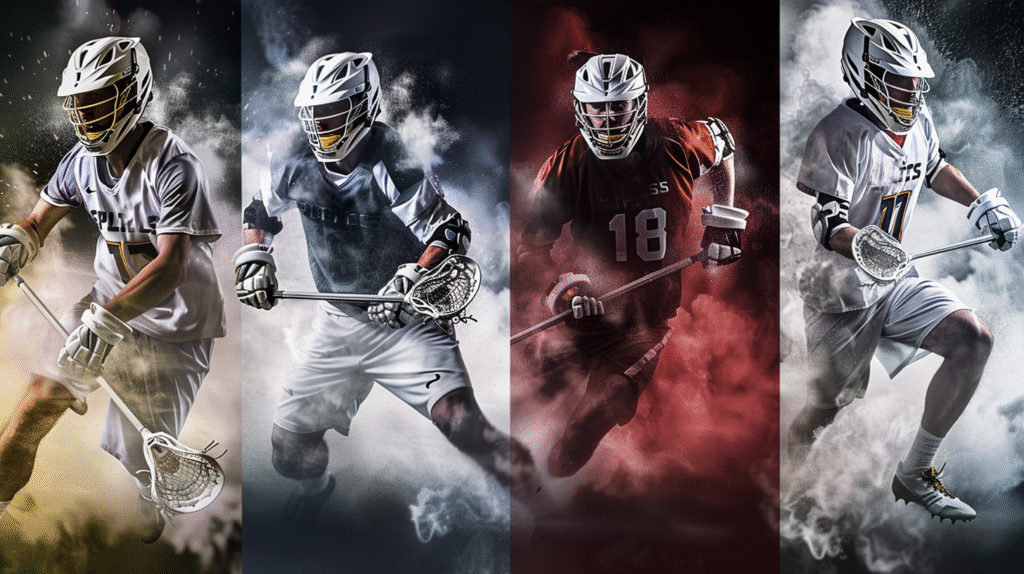
Lacrosse positions and roles explained clearly: there are four main positions, attack, midfield, defense, and goalie, and each plays a unique role in scoring, defending, and controlling the game.
Understanding how these roles function helps players improve faster, coaches build smarter strategies, and fans enjoy the game more.
Whether you’re watching a high school matchup or a college showdown, knowing how Lacrosse positions work together gives you a deeper appreciation of the sport’s speed, teamwork, and tactical depth.
Understanding the Basics: Lacrosse Positions and Roles Explained
In the USA, Lacrosse is played with different team sizes depending on the version of the game.
Men’s Lacrosse uses 10 players per team on the field (3 attackers, 3 midfielders, 3 defenders, and 1 goalie), while women’s Lacrosse uses 12 players per team (3 attackers, 5 midfielders, 3 defenders, and 1 goalie).
The Four Core Positions
- Attack: Focused on scoring goals
- Midfield: Plays both offense and defense
- Defense: Prevents scoring opportunities
- Goalie: Protects the net and directs defense
How Many Players Are in Each Position in Lacrosse
| Position | Number of Players (Men’s/Women’s) | Primary Role | Field Area |
|---|---|---|---|
| Attack | 3 | Score and create offense | Offensive zone |
| Midfield | 3/5 | Transition, offense, defense | Full field |
| Defense | 3 | Stop attackers | Defensive zone |
| Goalie | 1 | Protect the goal | Goal crease |
This structure is consistent across most levels in the USA, from youth leagues to NCAA programs.
Attack vs Midfield vs Defense Lacrosse: Key Differences
Understanding the attack vs midfield vs defense Lacrosse comparison is essential to grasp how the game flows.
Attack: The Scoring Specialists
Attackers stay on the offensive half and are responsible for:
- Finishing scoring opportunities
- Maintaining possession behind the goal
- Executing plays and assists
If you’re asking “What skills do you need to play attack in Lacrosse?”, focus on:
- Quick stick handling
- Precision shooting
- Spatial awareness
Attack players often thrive in high-pressure situations.
Midfield: The Engine of the Game
The Lacrosse midfield position responsibilities are the most demanding:
- Transitioning between offense and defense
- Supporting both ends of the field
- Winning face-offs (specialized role)
Many beginners ask: “Which Lacrosse position requires the most running?”. The answer is midfield: these players cover the entire field and must maintain stamina.
Defense: The Backbone of Protection
The defensive positions in Lacrosse overview includes close defenders and long stick midfielders (LSMs).
Key responsibilities:
- Marking attackers
- Blocking shots
- Forcing turnovers
Understanding the differences between defense and long stick midfielder is key: LSMs have longer sticks like defenders but play a hybrid midfield role, often used in transition.
What Does a Goalie Do in Lacrosse? Role and Essential Skills
Think of goalies as the team’s last line of defense, and its leader.
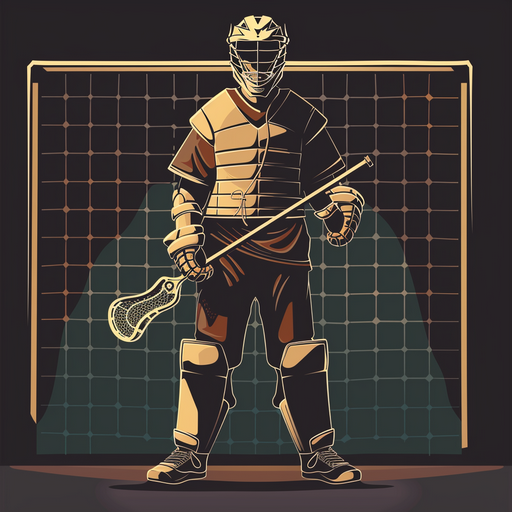
Core Responsibilities of a Lacrosse Goalie
- Stopping shots with reflexes and positioning
- Communicating with defenders
- Clearing the ball to restart play
Goalies often control the pace of the game, especially in tight matchups like those seen in high school championships.
What Does a Lacrosse Goalie Need to Be Good At?
To succeed, goalies need:
- Fast reaction time
- Strong mental focus
- Courage under pressure
- Excellent hand-eye coordination
Unlike other positions, goalie requires a unique mindset: confidence is everything.
How Lacrosse Positions Work Together on the Field
Lacrosse is not just about individual skill, it’s about how positions work together seamlessly.
Offensive Coordination
Attack and midfield players collaborate to:
- Create scoring opportunities
- Execute set plays
- Maintain ball possession
Midfielders often initiate the offense before passing to attack players near the goal.
Defensive Unity
Defenders and goalies must:
- Communicate constantly
- Rotate coverage
- Anticipate offensive moves
In top programs, defensive chemistry is often the difference between winning and losing.
Transition Play
Transition is where midfielders shine:
- Moving the ball quickly from defense to offense
- Exploiting gaps in the opposing team
This is where games can shift momentum rapidly, especially in fast-paced leagues across the USA.
Skills Needed for Each Lacrosse Position
Understanding the skills needed for each Lacrosse position helps players improve and specialize.
Attack Skills
- Shooting accuracy
- Creativity in tight spaces
- Off-ball movement
Midfield Skills
- Endurance and speed
- Versatility
- Strong passing and defense
Defense Skills
- Physical strength
- Positioning and footwork
- Stick checking techniques
Goalie Skills
- Reflexes
- Leadership
- Game awareness
Each position demands a different skill set, which is why Lacrosse is such a dynamic sport.
Choosing the Best Lacrosse Position for You
If you’re new to the sport, choosing the best Lacrosse position for you depends on your physical traits, skills, and preferences.
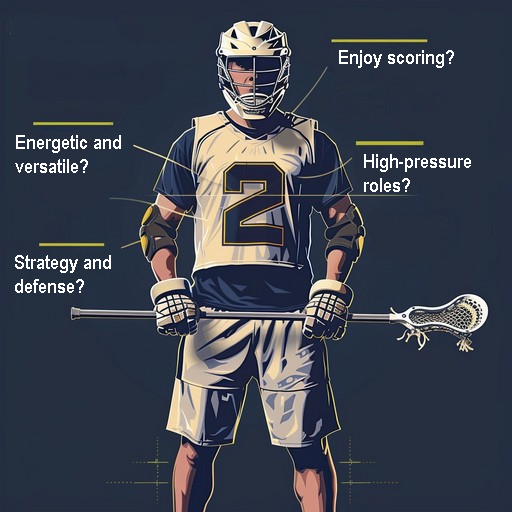
How to Choose a Position in Lacrosse for Beginners
Ask yourself:
- Do you enjoy scoring? → Try attack
- Are you energetic and versatile? → Midfield fits best
- Prefer strategy and defense? → Consider defense
- Like high-pressure roles? → Goalie might be for you
What Position in Lacrosse Is Best for Beginners?
Midfield is often recommended because:
- It teaches all aspects of the game
- Offers flexibility
- Helps develop overall skills
Can You Switch Positions During a Lacrosse Game?
Yes, players can switch positions, especially midfielders who frequently rotate. However, attack and defense typically stay in their zones.
This flexibility makes Lacrosse exciting and allows players to adapt based on team needs.
FAQ: Lacrosse Positions and Roles Explained
What are the 4 main positions in Lacrosse and what do they do?
The four main positions are attack (scoring), midfield (transition and versatility), defense (stopping opponents), and goalie (protecting the net).
What is the role of a midfielder in Lacrosse game play?
Midfielders connect offense and defense, making them the most versatile and physically demanding role on the field.
What does a Lacrosse goalie need to be good at?
Goalies need quick reflexes, strong communication skills, mental toughness, and excellent positioning.
What is the difference between defense and long stick midfielder?
Defenders stay near the goal, while long stick midfielders cover more ground and assist in transitions.
Which Lacrosse position requires the most running?
Midfielders run the most since they play both offense and defense across the entire field.
Takeaway: Mastering Lacrosse Positions for Smarter Play
Understanding Lacrosse positions transforms how you play, watch, and appreciate the game.
From the scoring precision of attack to the endurance of midfield, the strength of defense, and the courage of the goalie, every role contributes to team success.
Knowing the skills needed for each Lacrosse position and how they interact gives you a competitive edge, whether you’re playing in a local league or aiming for college recruitment.
Choose your position wisely, develop your strengths, and embrace the fast-paced, team-first spirit of Lacrosse.
Step onto the field with confidence and play like you belong, because you do.
Ready to unlock your full potential ?