
Best age to start Lacrosse is an important consideration for parents, as Lacrosse is one of the fastest-growing youth sports in the U.S., combining speed, agility, stick skills, and teamwork.
Choosing the right age ensures children develop skills safely, build age-appropriate strength and agility, and enjoy the game while gaining confidence and a lasting love for the sport.
Whether your child is just curious or already eager to play, this guide covers ideal starting ages, training tips, and essential safety strategies for young players.
Recommended Age to Start Lacrosse
Beginner Age (5–7 Years Old)
At this age, Lacrosse should focus on fun and basic motor skills. Kids are still developing coordination and hand-eye skills, so the emphasis should be on safe, non-contact play.
Tips for this age group:
- Use smaller, lightweight Lacrosse sticks
- Soft Lacrosse balls for catching and passing
- Short, playful sessions (20–30 minutes)
- Encourage games like “catch and run” rather than formal drills
Intermediate Age (8–10 Years Old)
Between 8–10 years old, children are ready to learn basic rules and team play while still prioritizing fun. This stage introduces more structured drills for passing, catching, and shooting.
Key focus areas:
- Stick handling and passing accuracy
- Basic offensive and defensive positioning
- Small-sided games to develop teamwork
- Positive reinforcement to encourage a love of the sport
Advanced Age (11–14 Years Old)
Children at this age can start full-field Lacrosse with controlled contact. They are physically capable of handling more intense training and can begin specialization in positions.
Training focus:
- Position-specific skills (attack, midfield, defense, goalie)
- Speed and agility drills for better transitions
- Competitive youth leagues
Teen Development (15–18 Years Old)
High school players focus on advanced skill development, conditioning, and college recruitment preparation. Training becomes more structured and intense, incorporating strength, speed, and strategic gameplay.
Training tips:
- Full-field scrimmages with emphasis on game strategy
- Strength and conditioning programs tailored for Lacrosse
- Injury prevention and recovery routines
Benefits of Starting at the Right Age

Physical Development
Starting Lacrosse at the right age improves:
- Coordination and agility
- Speed and endurance
- Strength gradually to prevent injuries
Mental and Social Growth
- Builds teamwork and communication skills
- Encourages focus, discipline, and resilience
- Develops confidence on and off the field
Skill Acquisition
Early exposure to Lacrosse allows for:
- Proper stick handling, catching, and shooting
- Stronger muscle memory through age-appropriate drills
- Easier transition to competitive play
Tips for Parents to Prepare Young Athletes
Choosing the Right Equipment
| Equipment | Recommendation |
|---|---|
| Lacrosse Stick | Lightweight, size-appropriate for age |
| Helmet | US Lacrosse-approved youth helmet |
| Gloves & Pads | Proper fit, adjustable for growth |
| Mouthguard | Mandatory for safety |
Finding Local Programs and Coaches
- Look for US Lacrosse-certified coaches
- Join community clubs or school teams for age-appropriate training
- Ensure small group sizes to maximize learning and supervision
Balancing Fun and Training
- Keep sessions 30–60 minutes for younger kids
- Include games and drills that develop skills naturally
- Encourage progress, not just competition results
Training and Skill Development by Age
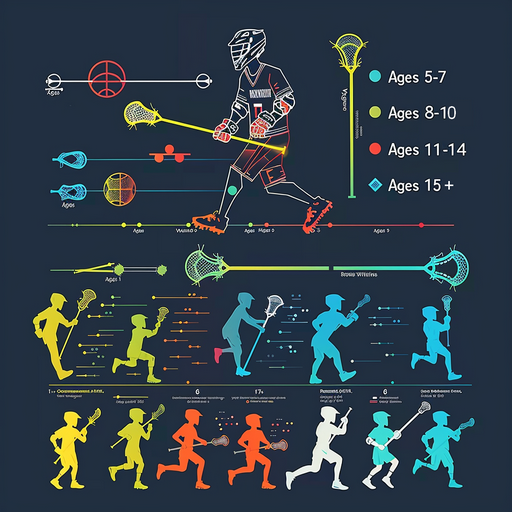
Ages 5–7
- Focus: Fundamental movement skills – running, jumping, catching
- Activities: Simple games like “catch-and-run” or mini scrimmages
- Goal: Build confidence and basic stick skills
Ages 8–10
- Focus: Basic passing, catching, and shooting
- Drills: Small-sided games, cone drills, relay passing
- Goal: Develop hand-eye coordination and teamwork
Ages 11–14
- Focus: Position-specific skills, controlled contact, agility training
- Drills: Full-field practice, advanced passing sequences, speed ladders
- Goal: Prepare for competitive youth leagues
Ages 15+
- Focus: Strength, speed, endurance, and strategy
- Drills: Full-field scrimmages, conditioning programs, reaction drills
- Goal: Optimize performance and prepare for high school/college Lacrosse
Injury Prevention and Safety Tips
- Always use US Lacrosse-approved protective gear
- Include dynamic warm-ups and stretching
- Gradually increase training intensity to prevent overuse injuries
- Teach proper body contact and field awareness
- Emphasize hydration, nutrition, and rest
FAQ: Best Age for Kids and Teens to Start Playing
What is the youngest age kids can safely start Lacrosse?
Ages 5–6, with non-contact, fun-focused sessions and proper supervision.
How often should young players train?
Beginners 1–2 times per week; intermediate 2–3 times; teens 3–4 times.
When should kids start playing competitively?
Around 11–12 years old, with full contact allowed under supervision.
Can kids start late and still succeed?
Absolutely. Focused training and dedication can allow teen starters to excel.
Takeaway: Setting Kids Up for Lacrosse Success
Starting at the right age gives your child a foundation for skill, safety, and long-term enjoyment. Parents should focus on:
- Fun and engaging age-appropriate practice
- Gradual skill and physical development
- Positive reinforcement, not just competition
With the right combination of equipment, coaching, and structured training, kids can grow confident, skilled, and passionate about Lacrosse. Remember: consistency, safety, and enjoyment are key to helping your child thrive in the sport.
Ready to unlock your full potential ?