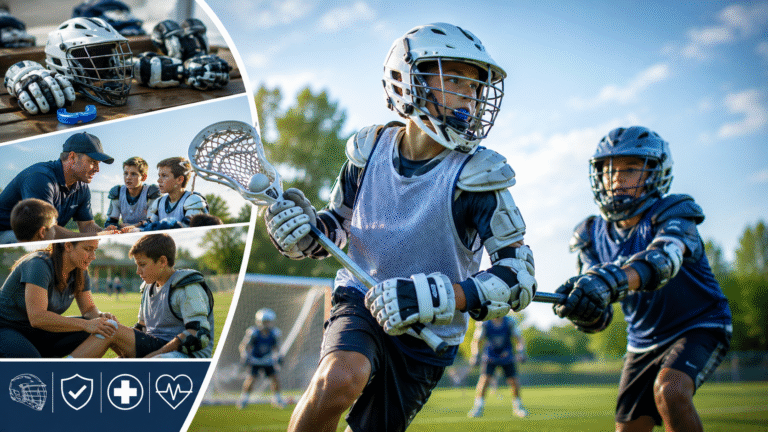
Youth Lacrosse rules for beginners are designed to teach skills, teamwork, and safety in an age-appropriate way. For parents in the USA, understanding game flow, equipment, positions, and common fouls can make the season far less confusing.
Whether your child is joining a spring league, a club, or a recreational program, the basics are similar nationwide. Most youth leagues simplify contact, shorten game times, and emphasize development over winning.
This parent guide explains what to expect, what your child needs, and how to support them confidently from the first practice to the final whistle.
What Are the Basic Rules of Youth Lacrosse for Beginners?
Youth Lacrosse combines speed, strategy, and stick skills. Players use a stick with a netted head to pass, catch, carry, and shoot the ball into the goal.
How Youth Lacrosse Games Work
Most youth leagues divide players by age groups such as U8, U10, U12, and U14. Rules often vary slightly by organization, but the structure stays consistent.
Typical game basics include:
- Two teams compete to score more goals than the opponent
- Play starts with a faceoff or possession format, depending on age and league
- Players advance the ball by passing or cradling in the stick
- Defenders try to stop scoring chances legally
- Goalies protect the net inside the crease area
How Many Players Are on the Field in Youth Lacrosse?
The number of players on the field in youth Lacrosse depends on whether it is boys’ or girls’ Lacrosse, as well as the age group and league.
Boys’ youth field Lacrosse usually uses 10 players per team on the field:
- 3 attackers
- 3 midfielders
- 3 defenders
- 1 goalie
Girls’ youth field Lacrosse often uses 12 players per team on the field:
- 4 attackers
- 3 midfielders
- 4 defenders
- 1 goalie
Some beginner and younger divisions may use smaller formats such as 7v7 or 8v8 to increase touches, improve spacing, and create more learning opportunities.
How Does Scoring Work in Youth Lacrosse?
A goal counts when the entire ball crosses the goal line inside the net. Each goal equals one point. At youth levels, leagues often prioritize balanced competition and sportsmanship over running up scores.
Youth Lacrosse Positions Explained for Parents
Understanding positions helps parents follow the game and appreciate player development.
Attack
Attack players stay mostly on the offensive end and focus on scoring or creating chances. They need stick control, quick movement, and awareness behind or around the goal.
Midfield
Midfielders run both offense and defense. They often cover the most ground and need endurance. Many beginners start here because it teaches all-around skills.
Defense
Defenders guard attackers, check legally, and protect the area near goal. They learn footwork, positioning, and communication.
Goalie
The goalie uses specialized gear and blocks shots. Goalies also start clears by passing the ball out after saves.
| Position | Main Role | Good Beginner Skills |
|---|---|---|
| Attack | Score and assist | Catching, shooting |
| Midfield | Play both ways | Speed, stamina |
| Defense | Stop opponents | Footwork, awareness |
| Goalie | Protect goal | Courage, reactions |
Parents often notice players rotate positions early on. That is a positive sign, many youth coaches want kids to learn the full game.
Boys vs Girls Youth Lacrosse Rules: Key Differences
While both versions involve passing, scoring, and teamwork, the rules differ in several key ways.
Contact and Physical Play
- Boys youth Lacrosse may introduce controlled body contact as players get older, depending on age and league. Younger levels usually limit contact.
- Girls youth Lacrosse allows less body contact and focuses more on positioning, footwork, and stick skills.
Checking Rules
- Boys games generally allow more legal stick checking.
- Girls games use stricter checking rules with added emphasis on safe distance and control.
Restarts and Game Flow
- Boys games often restart quickly after fouls or out-of-bounds calls.
- Girls games commonly use more structured restarts with player spacing before play resumes.
Style of Play
- Boys games may feel faster and more physical.
- Girls games often emphasize movement, passing, and spacing.
Both versions teach athleticism, teamwork, and discipline. Understanding these rule differences helps parents follow the game and support their child with confidence.
Youth Lacrosse Equipment Guide and Safety Rules
Start with league-approved basics.
Youth Lacrosse Equipment Guide
For boys field players:
- Helmet certified for Lacrosse
- Stick sized for age and height
- Gloves
- Shoulder/chest protection
- Arm pads
- Mouthguard
- Cleats or turf shoes
For girls field players:
- Stick sized for age and height
- Protective goggles/eyewear
- Mouthguard
- Cleats or turf shoes
Goalies need additional chest, throat, leg, and hand protection.
Youth Lacrosse Safety Rules
Safety is central to beginner development. Good leagues across the USA usually enforce:
- No dangerous hits
- Proper checking technique only where age-legal
- Mandatory mouthguards
- Safe spacing during drills
- Hydration and weather precautions
- Immediate injury evaluation when needed
Parent Tip
Ask coaches how they handle concussion awareness, heat breaks, and emergency communication. That is one of the smartest questions before registration.
Beginner Lacrosse Penalties and Fouls Parents Should Know
Understanding fouls helps sideline confusion. Most youth officials explain calls clearly, especially in beginner divisions.
What Penalties Are Common in Beginner Lacrosse Games?
Common beginner Lacrosse penalties and fouls include:
- Slashing – Swinging the stick illegally at an opponent
- Pushing – Illegal shove from behind or with excessive force
- Offside – Wrong number of players across field lines
- Holding – Restricting movement illegally
- Crease violation – Entering protected goalie area improperly
- Illegal body check – Contact not allowed for that age group
Is Contact Allowed in Youth Lacrosse for Younger Age Groups?
Usually contact is heavily restricted or removed in younger divisions. Leagues focus on fundamentals first, then introduce legal contact gradually as players age.
What Should Parents Know Before Signing Up for Youth Lacrosse?
Look for programs that prioritize:
- Certified coaches
- Age-appropriate rules
- Fair playing time
- Positive culture
- Skill development over trophies
FAQ: Youth Lacrosse Rules for Beginners
How long is a youth Lacrosse game for kids?
Most youth games run between 32 and 48 minutes of playing time, often split into quarters or halves depending on age group and league.
What age can kids start playing youth Lacrosse?
Many programs start around 5-7 years old, with modified rules and smaller fields for younger age groups.
How many players are on the field in youth Lacrosse?
Traditional field Lacrosse is 10 players per side for boys and 12 for girls, with smaller formats often used in youth divisions.
What equipment does a child need for youth Lacrosse?
At minimum, players need a stick, mouthguard, and league-required protective gear based on boys or girls rules.
What are the basic rules of youth Lacrosse for beginners?
Pass, catch, carry, defend legally, score goals, and respect boundaries, timing, and safety rules set by the league.
Takeaway: Youth Lacrosse Rules for Beginners Made Simple
Youth Lacrosse rules for beginners are easier to learn than many parents expect. Focus on the essentials: how games work, basic positions, safe equipment, and common fouls.
Remember that younger leagues across the USA are built to teach confidence, movement, and teamwork first. Ask coaches questions, learn the sideline basics, and encourage effort over stats. When parents understand the game, kids enjoy it more.
Show up positive, celebrate progress, and get ready for a fast, fun season where your young athlete grows every week. Game on!
Ready to unlock your full potential ?