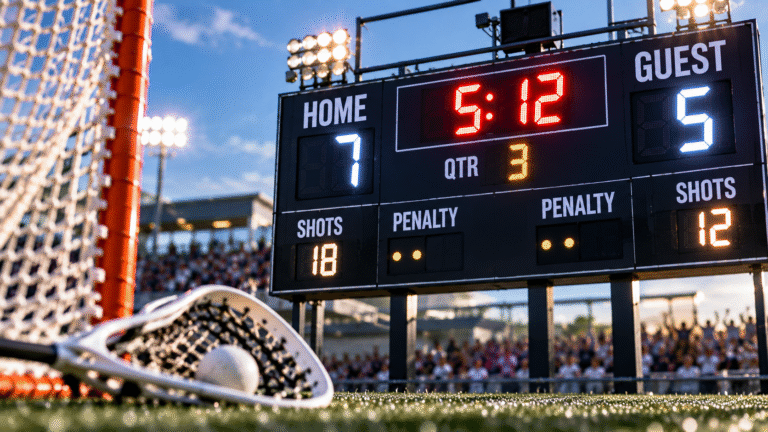
Lacrosse rules for beginners are easier to learn than many new players expect. The game combines speed, teamwork, and skill, with two teams using sticks to pass, catch, defend, and score by shooting a ball into the opponent’s goal.
How Lacrosse works comes down to possession, movement, and smart positioning. Once you understand the basics—the field, player roles, scoring, timing, and common fouls—the sport becomes exciting and simple to follow.
Whether you’re watching a college game in New York, joining a youth league in Texas, or trying pickup Lacrosse in California, this guide breaks everything down clearly.
What Are the Basic Rules of Lacrosse for Beginners?
The objective of Lacrosse is to score more goals than the opposing team before time expires. Players use a stick with a mesh pocket to carry, pass, catch, and shoot the ball.
Basic Lacrosse Game Rules Every New Player Should Know
Here are the core basic Lacrosse game rules:
- Move the ball by passing, cradling, or shooting.
- You cannot touch the ball with your hands except in limited situations.
- Body contact rules depend on age group, league, and game type.
- Teams must stay onside with the required number of players in each half.
- The team with the most goals wins.
Can You Use Your Hands in Lacrosse Gameplay?
You may use your hand briefly to catch or clamp a loose ball in some versions, but players generally rely on the stick. You cannot run while holding the ball in your hand. In most organized USA youth and high school play, stick skills are essential.
Is Lacrosse Hard to Learn for First-Time Players?
Lacrosse can feel fast at first, but beginners usually improve quickly. If you can learn passing lanes, catching, and basic movement, you can enjoy the game early. Many new players start with no experience and progress within weeks.
Lacrosse Field Layout Guide and Team Positions Explained
Understanding space makes the sport much easier. A clear grasp of the Lacrosse field layout helps beginners recognize boundaries, find the restraining lines, and position themselves for restarts.
How Many Players Are on a Lacrosse Team on the Field?
In field Lacrosse, each team usually has 10 players on the field in men’s play and 12 players on the field in women’s play:
| Position | Typical Number Men/Women | Main Job |
|---|---|---|
| Attackers | 3/4 | Score and create offense |
| Midfielders | 3 | Play offense and defense |
| Defenders | 3/4 | Stop attackers |
| Goalie | 1 | Protect the goal |
This is common in many high school and college games across the USA.
Lacrosse Positions Explained Simply
• Attack •
Attack players stay mostly on the offensive end. They dodge defenders, pass sharply, and shoot.
• Midfield •
Midfielders cover the most ground. They transition between offense and defense and need endurance.
• Defense •
Defenders use footwork, positioning, and stick checks to stop scoring chances.
• Goalie •
The goalie guards the crease and starts clears after saves.
What Is Offsides in Lacrosse Explained Simply?
Offsides happens when a team does not keep enough players on each side of the field. In men’s field Lacrosse, teams generally need four players in the defensive half and three in the offensive half (including the goalie where applicable). If too many players cross over, play stops and possession may change.
How Scoring Works in Lacrosse and How Games Start
Scoring is straightforward: put the ball in the net legally.
How Do You Score Points in Lacrosse?
In traditional field Lacrosse, each legal goal counts as one point. There are no two-point goals in traditional field Lacrosse rules, though some leagues or formats may vary.
Ways teams score:
- Fast breaks after turnovers
- Set plays around the crease
- Outside shots
- Quick passes that move the goalie
If you’re wondering how scoring works in Lacrosse, think of basketball ball movement mixed with hockey shooting angles.
How Does Faceoff Work in Lacrosse at the Start of Play?
A faceoff begins each quarter and after most goals. Two players crouch at midfield with sticks on the ground. When the whistle blows, they battle for possession.
Winning the faceoff matters because it gives your team immediate control and momentum. College programs often emphasize specialist faceoff players.
Why Possession Matters
Because goals can come quickly, possession often decides games. Teams that pass cleanly and avoid turnovers create more scoring chances.
Game Time, Flow, and Common Restarts
Knowing the clock helps fans and players understand strategy.
How Long Is a Lacrosse Game for High School Players?
Rules vary by state, but many U.S. high school games use four quarters, often 12 minutes each. Some leagues use different lengths.
Timing and restart rules differ across college, professional, and the Sixes Lacrosse format at the 2028 Games, but a typical high school field game follows this structure:
- Four quarters
- Halftime break
- Clock stoppages for goals, penalties, and timeouts
How Lacrosse Works During Transitions
Lacrosse is famous for fast transitions. A team can go from defense to offense in seconds after:
- A goalie save
- A caused turnover
- A ground ball win
- A successful clear
That speed is why games can feel nonstop and thrilling.
Common Restarts
Play may restart with possession after:
- Ball out of bounds
- Minor fouls
- Start of quarters
- Alternate possession situations
Beginners who learn restart spots quickly understand game rhythm much faster.
Lacrosse Penalties and Fouls Beginners Should Know
Understanding fouls makes watching and playing easier. Lacrosse penalties and fouls usually punish unsafe contact, illegal positioning, or technical mistakes.
What Happens When a Player Fouls in Lacrosse?
Depending on the foul:
- The other team gets possession
- The player serves penalty time
- Play restarts from a spot on the field
- A man-up opportunity is created
Common Beginner Fouls
• Slash •
Swinging the stick dangerously or illegally striking an opponent.
• Push •
Illegal shoving from behind or with excessive force.
• Hold •
Restraining a player unfairly.
• Offsides •
Too many players over midfield.
• Crease Violation •
Entering restricted goalie space illegally.
Why Discipline Wins Games
Strong teams don’t just score, they stay composed. Youth coaches often teach that avoiding penalties creates more possessions and easier wins.
FAQ: Lacrosse Rules for Beginners and How the Game Works
What equipment do beginners need for Lacrosse?
Most beginners need a stick, mouthguard, cleats, gloves, helmet (for boys’ field Lacrosse), pads where required, and comfortable athletic gear. League rules may vary.
What are the basic rules of Lacrosse for beginners?
Use the stick to move the ball, score in the opponent’s goal, stay onside, avoid illegal contact, and finish with more goals than the other team.
How many players are on a Lacrosse team on the field?
Standard field Lacrosse has 10 players per team on the field in men’s play and 12 in women’s play.
What happens when a player fouls in Lacrosse?
The other team may gain possession, or the fouling player may serve time in the penalty area.
How long is a Lacrosse game for high school players?
Many U.S. high school games are four quarters of about 12 minutes, though state associations may differ.
Takeaway: Lacrosse Rules for Beginners Made Easy
Lacrosse is fast, fun, and much simpler once you know the basics.
Learn the field layout, understand positions, know how goals are scored, and recognize common fouls. Remember that possession, teamwork, and movement drive the game.
Whether you’re joining a beginner guide to playing Lacrosse program, watching college action, or picking up a stick for the first time, the learning curve is manageable.
Start with fundamental Lacrosse skills, keep practicing, and enjoy the speed of the sport. Get out there, compete hard, and play with confidence like a true American athlete!
Ready to unlock your full potential ?