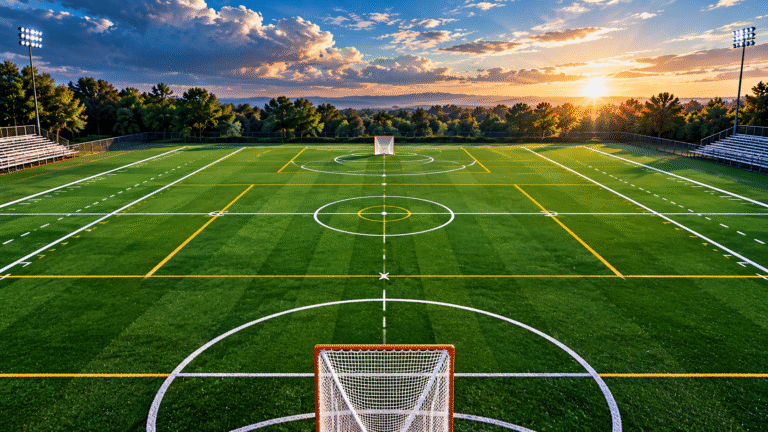
Modern tactical systems in women’s Lacrosse are defined by speed, spacing, and structured decision-making on both ends of the field. Teams across the USA are prioritizing fluid offensive formations, disciplined defensive schemes, and elite transition play.
Success now depends on mastering offensive creativity paired with defensive organization, especially in high-pressure matchups.
This guide breaks down how elite systems operate, including formations, zones, transitions, and draw control strategies, giving players and coaches a complete blueprint to compete at the highest level.
Women’s Lacrosse Offensive Systems and Formations
Understanding women’s Lacrosse offensive systems is essential for breaking down modern defenses and generating consistent scoring opportunities.
Today’s offenses rely on spacing, timing, and coordinated movement between attackers and midfielders rather than isolation play.
Core Offensive Structures in 2026
Common offensive formations in Lacrosse include:
- 3-3 Formation: Balanced setup for quick ball movement
- 2-3-1 Formation: High-control system emphasizing crease attacks
- 1-4-1 Setup: Designed to stretch zone defenses vertically
- Motion-based hybrid sets used by elite US college teams like those in the ACC and Ivy League
How the 2-3-1 Formation Works
The question “How to run a 2-3-1 offensive formation effectively in Lacrosse?” is central to modern coaching. This structure creates:
- Two players behind the goal for reset options
- Three midfielders for perimeter control
- One crease attacker to finish plays
Its effectiveness comes from constant rotation and baiting defensive slides.
Key Offensive Principles
- Maintain wide field spacing
- Use “pass-and-cut” timing
- Exploit mismatch switches
- Keep ball movement faster than defensive recovery
This system is widely used in elite club circuits for its adaptability.
Women’s Lacrosse Defensive Strategies and Structures
Elite programs in the USA win championships through disciplined women’s Lacrosse defensive strategies that blend communication, positioning, and anticipation.
Man-to-Man vs Zone Defense
Key differences and strategic comparison:
| System | Structure | Strength | Weakness |
|---|---|---|---|
| Man-to-Man Defense | Each player marks one opponent | High pressure, aggressive stops | Vulnerable to picks and switches |
| Zone Defense | Players guard areas instead of individuals | Strong in protecting space | Can allow perimeter shooting |
| Hybrid Defense | Mix of both systems | Flexible adaptability | Requires high communication |
Man-to-Man Defense in Women’s Lacrosse
Man-to-man defense in women’s Lacrosse is favored by aggressive teams. Within women’s Lacrosse rules on contact and checking, this approach emphasizes:
- Stick pressure on every pass
- Physical positioning without fouling
- Constant on-ball containment
Zone Defensive Setups
Modern Lacrosse zone defense setups often use a 3-2 or 2-3 shape, designed to:
- Protect the crease
- Force outside shooting
- Control passing lanes
Slide Package Organization
Coaches often focus on coaching tips for organizing a strong defensive slide package, which includes:
- Pre-planned help rotations
- Early double-team triggers
- Recovery assignments after slides
Lacrosse Transition Game Tactics: Ride and Clear Systems
Transition is where games are won or lost. Strong Lacrosse transition game tactics convert defensive stops into fast offensive opportunities.
Ride and Clear Systems Explained
The ride and clear systems in Lacrosse determine how teams respond after possession changes:
- Ride (defensive pressure after loss of ball): slows opponent transition
- Clear (breaking out of defensive zone): initiates offense
When to Use a Ride Strategy
It depends on game context:
- Late-game defensive stands
- Opponents with weak clearing efficiency
- Momentum-shifting opportunities
Improving Transition Offense
To answer “How to improve transition offense after gaining possession in Lacrosse?”, teams focus on:
- Fast outlet passing
- Midfield lane awareness
- Early identification of numbers advantage
Some programs emphasize strength and agility training to support fast-break execution.
Draw Control Strategies in Women’s Lacrosse Training
Possession starts with control, making draw control strategies in women’s Lacrosse one of the most decisive aspects of the game.
Importance of Draw Control
Winning the draw often determines tempo and momentum. Many teams prioritize this phase as a primary scoring driver.
Effective Training Methods
Coaches combine reaction and agility drills with draw-specific practice to improve players’ timing and movement:
- Reaction-based clamp drills
- Resistance band pull exercises
- Two-player competitive draws
- Timing synchronization drills
Tactical Impact
Strong draw control leads to:
- More offensive possessions
- Reduced defensive fatigue
- Better game tempo control
Competitive teams often dedicate entire practice blocks to draw mechanics due to its impact on possession stats.
Offensive Spacing, Movement, and Defensive Adaptation
Modern systems rely on intelligent spacing and adaptability. This section connects both ends of the field into a unified tactical approach.
Offensive Spacing Principles
A beginner-friendly breakdown of offensive spacing and movement in women’s Lacrosse systems includes:
- Maintaining triangle formations around the crease
- Avoiding clustered passing lanes
- Constant off-ball movement
Exploiting Defensive Weaknesses
Offenses should:
- Overload one side of the field
- Force defensive rotation breakdowns
- Attack soft spots between zone layers
Transition Between Offense and Defense
Top teams emphasize seamless switching between phases:
- Immediate defensive recovery after turnovers
- Quick offensive resets after clears
- Communication-driven positional shifts
FAQ: Women’s Lacrosse Tactical Systems Explained
How do women’s Lacrosse offensive systems work in modern gameplay?
They rely on structured formations, constant movement, and quick passing to create scoring opportunities while breaking defensive shapes.
What are the best defensive strategies for women’s Lacrosse teams in competitive matches?
Those that combine man-to-man pressure with zone adaptability and strong slide coordination.
What is the difference between zone and man-to-man defense in women’s Lacrosse?
Man-to-man focuses on individual marking, while zone defense protects areas of the field and prioritizes spatial control.
How to run a 2-3-1 offensive formation effectively in Lacrosse?
It requires balanced spacing, quick ball reversals, and a strong crease presence to stretch and destabilize defenses.
What does a beginner’s guide to offensive spacing and movement in women’s Lacrosse systems include?
Beginners should focus on spacing triangles, continuous motion, and passing rhythm to maintain offensive structure and avoid congestion.
Takeaway: Mastering Modern Women’s Lacrosse Systems
Modern women’s Lacrosse demands a complete understanding of offensive systems, defensive structures, and transition concepts such as rides and clears. From mastering the 2-3-1 formation to controlling draws and reading zone defenses, success comes from tactical discipline and adaptability.
Teams that combine structured spacing with aggressive defensive organization consistently outperform opponents.
Mastering these systems creates a winning foundation.
Precision, communication, and relentless execution define champions in 2026 Women’s Lacrosse.
Keep evolving, stay sharp, and dominate every possession.
Ready to unlock your full potential ?